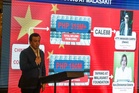
THOSE who may have wanted former senator Antonio Trillanes IV kept away from the Senate witness stand should reconsider what they have accomplished. His withdrawal from the impeachment trial of Vice President Sara Duterte gave him a different platform. At his Oct. 2 press conference, he explained his findings without defense lawyers interrupting him or hostile senator-judges deciding which connections the public would hear.
If discouraging his appearance was meant to contain the damage to Duterte, it may have achieved the opposite. The allegations escaped the courtroom's restrictive format. Trillanes presented the broader story he believed the documents revealed, while the controversy over his absence supplied oxygen to the story about some senators’ alleged unwillingness to hear him.
Trillanes said he requested his withdrawal to relieve pressure on the prosecution. He also complained that although prosecutors had included him in their subpoena request, presiding senator-judge Chiz Escudero did not issue one for him. He interpreted that omission as a signal that he was unwelcome.
The court disputes that interpretation. Its spokesman, Reginald Tongol, cited problems involving the prosecution's proposed schedule and sequence of witnesses, and said Trillanes could have testified voluntarily. The absence of a subpoena does not establish a conspiracy. But a procedural explanation cannot automatically settle the political question of how the court's conduct was perceived.
Trillanes challenged the suggestion that the senators collectively opposed his appearance. He said some former colleagues told him they had not been consulted. We should therefore resist attributing a common motive to the entire Senate. Responsibility should be examined where decisions were actually made, including whether personal antagonism influenced decisions presented as procedural housekeeping.
That possibility is especially disturbing in an impeachment trial. Senator-judges may dislike a witness, distrust his politics, or resent their history with him. None of these feelings should govern whether relevant testimony is heard. If personal enmity shapes procedural decisions, the damage extends beyond the excluded witness. The court invites suspicion that fairness depends on whom its members like.
Any political calculation behind his withdrawal may have been shortsighted. A courtroom appearance would have exposed Trillanes to cross-examination and evidentiary objections. Assertions based on information from others could have drawn hearsay challenges. His ability to authenticate particular documents could have been questioned. Senator-judges could have pressed him on the limits of his knowledge.
There would also have been opportunities for hostile interjections. A witness trying to connect transactions across years and institutions can be forced into answering isolated questions that strip away those connections. An objection sustained against one assertion can become, in partisan commentary, a declaration that the witness knows nothing. The explanation disappears beneath arguments about its admissibility.
The press conference denied the defense and senator-judges those opportunities. Journalists could ask questions, but no presiding officer could sustain an objection and order Trillanes to abandon a line of explanation. He could describe his investigative work and articulate the context he believed bank entries and corporate records required.
That freedom made his narrative easier to hear, without guaranteeing its truth. The withdrawal may therefore have been politically consequential. The public encountered a sustained account of alleged financial connections, instead of a witness whose credibility could be dismantled through interruptions before his account became intelligible.
Trillanes is correct that numbers require context. Their meaning depends on the relationships between people, entities and transactions. A deposit examined separately may seem unremarkable. Its place in a sequence may raise questions that deserve investigation. Explaining those questions requires room to connect information, while clearly distinguishing evidence from inference.
Tongol has emphasized that senator-judges must base their verdict on evidence, testimony and documents formally presented before the impeachment court. A press conference is not a formal offer of evidence. The Senate cannot simply replace its record with statements made before television cameras.
Yet that reminder carries little persuasive weight in the court of public opinion. Citizens do not suspend their judgment until exhibits have been marked and formally offered. They assess what they hear, whether documents support it, and whether those implicated provide convincing answers. The Senate controls its own evidentiary record. It cannot control the country's attention.
Questions outside that record still have political consequences. Allegations concerning financial transactions and foreign funding can affect how citizens view Duterte's judgment and interests, even before their legal significance is determined. What fails to enter the trial may still enter public debate and demand explanations that procedural objections cannot supply.
This is where excessive judicialization can defeat its own apparent purpose. Procedures intended to keep an inquiry orderly may, when applied rigidly or selectively, make the institution appear evasive. If the public suspects that technicalities are being used to discourage an inconvenient witness, explaining those technicalities at greater length may deepen the suspicion.
Duterte faces a potentially serious reputational cost. Inside the courtroom, her lawyers could challenge Trillanes immediately and senator-judges could interrogate him. Outside it, his allegations acquired an uninterrupted narrative. The controversy also invited viewers to ask whether powerful people were uncomfortable with that narrative. Neither development necessarily helps her public image.
Those seeking to protect her may therefore have increased the burden of answering him. Calling Trillanes incompetent cannot explain a financial transaction. Calling his presentation extraneous cannot resolve a question about business interests. A convincing response requires addressing the underlying records and demonstrating where his account is mistaken. Public confidence requires answers people can assess.
The Senate also has something to answer for. If its conduct creates the impression that a witness was discouraged because he was personally unwelcome, its projection of fairness suffers. An impeachment court cannot demand public trust merely by insisting that its formal rules were followed. It must demonstrate that those rules were applied without favoritism.
Trillanes still owes the public verifiable evidence. His persistence does not relieve him of that obligation. But those who may have hoped his withdrawal would weaken his disclosures should confront the possibility that they liberated his account from the very restrictions that could have contained it. They may have damaged the court's credibility while giving Duterte a larger political problem.
The author is a professor at UP Los Baños and vice chairman of the board of PTVNI.