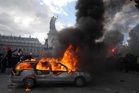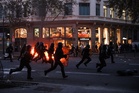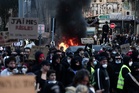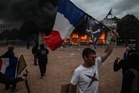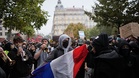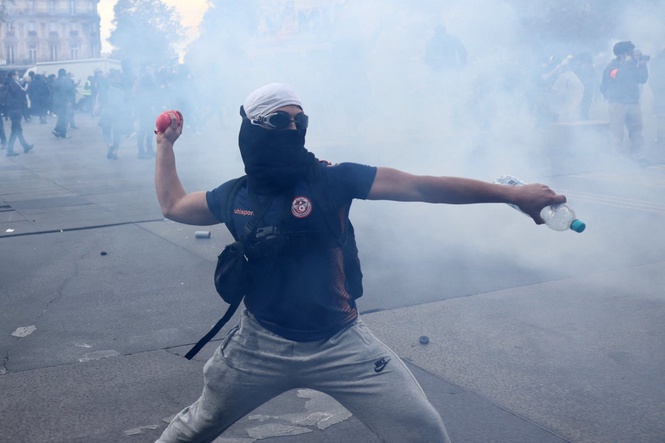
Clashes have broken out between police and protesters in cities across France as tens of thousands of people angered by rising costs and declining public services took to the streets – in some of the country's most violent protests of recent times.
More than 400 people have been arrested across the country, while in Lyon, protesters torched the tourist office. In Marseille, the mayor said the town hall had been vandalised and that additional police were being sent to the city following talks with the government.
The protesters said most people were protesting peacefully and put much of the violence down to troublemakers who had set out to cause damage and clash with the police.
The Interior Ministry said, however, that violence was increasing, and that there had been "confrontations with law enforcement, looting or attempted looting of shops, attacks on and damage to public buildings”.
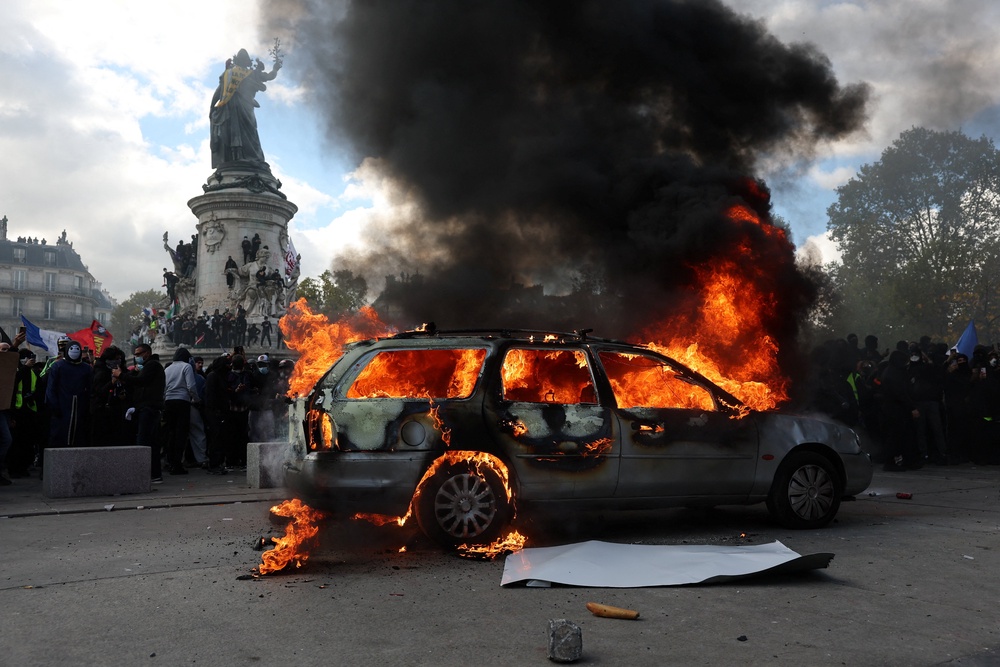
It blamed the unrest on what it described as the "ultra-left". French President Emmanuel Macron said there is “no place for violence" in France, and vowed those responsible would be "prosecuted and punished".
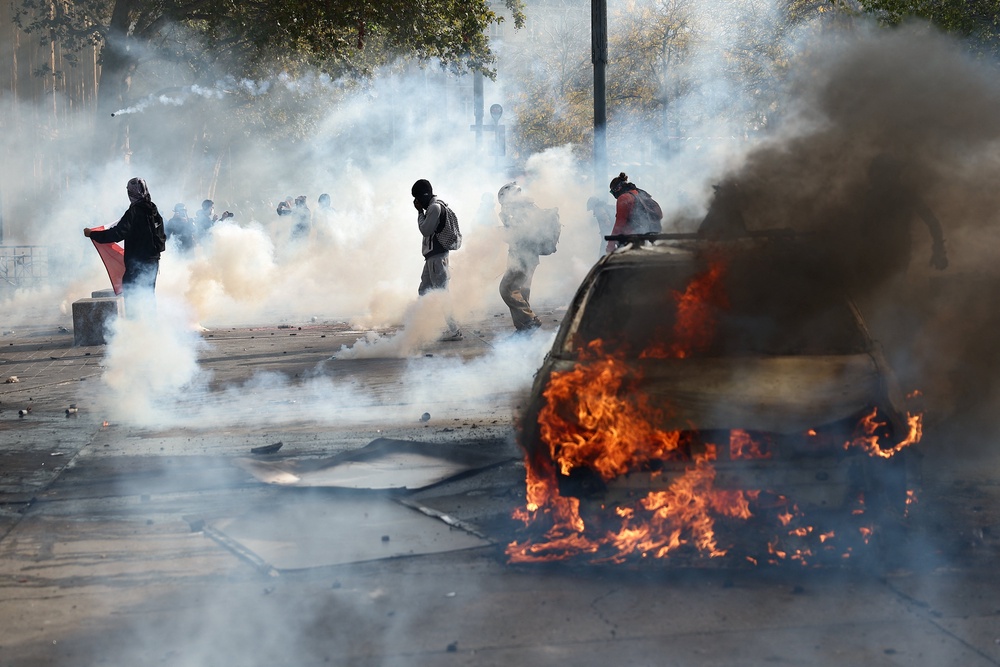
In some parts of Paris, police fired tear gas rounds as they retreated in the face of mostly young protesters, many of whom were dressed in black and wore hoodies, masks and goggles to protect against tear gas. Windows of many shops and restaurants in the capital were smashed, and cars and bins were set on fire. In the Les Halles area, a rapid-response riot police force has been deployed.
Masked protesters stormed the town hall in Marseille on Saturday morning after ramming the doors with security barriers and shouting: “It's the Revolution, we're taking the Bastille.” In Lyon, demonstrators set fire to the tourism office and smashed its windows, before trying to prevent firefighters from tackling the blaze.
"The movement is marked by a very strong mobilisation of far-left elements, whose sole intent is to incite disorder," The Interior Ministry said, adding that demonstrations have involved "targeted acts of violence" from "hooded individuals". Security forces have responded "swiftly and decisively", the ministry said. Tear gas has been fired at protesters in multiple locations.
In an update on X, Paris police said: "We do not back down in the face of rioters and those who come to attack the law enforcement forces." They accused "hostile individuals" of targeting police, adding that officers are facing them "with courage and professionalism".
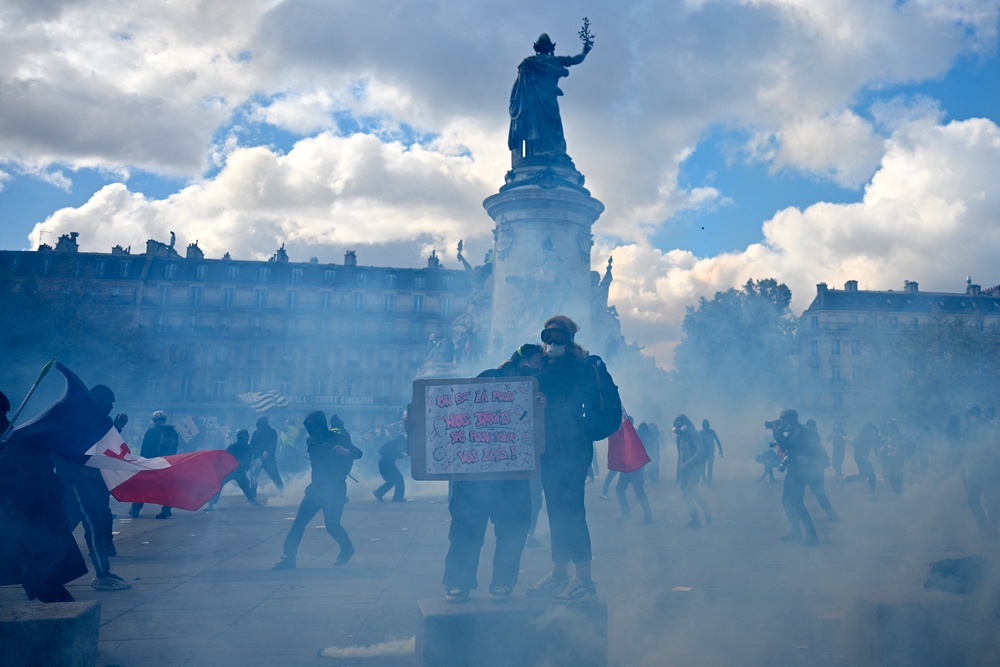
A large police presence was visible in central Paris, especially near landmarks such as the Avenue des Champs-Elysees and the Arc de Triomphe, which were excluded from the routes of the two official demonstrations.
In Avignon, individuals entered the courtyard of the government Vaucluse prefecture, while protesters in Pau, Montpellier, Toulouse and Valence vandalised businesses, the interior ministry said.
Protesters in Grenoble damaged the city hall and launched an attack on a BNP Paribas bank, smashing the windows and trying to break through the doors.
Protesters in hi-vis vests blocked streets, an echo of the unrest that dogged President Macron's previous term. The protests began last month at high schools in Paris' poor northern suburbs, where anger over teacher absences and shabby facilities quickly morphed into a nationwide movement against inequality, weak public spending and falling standards.
"We are fighting because the cost of living is too harsh, because the price of fuel is too high, because high school pupils are being violently attacked and hurt all over the country just for trying to protest and ask for more teachers and decent learning conditions," said a 19-year-old protester in Paris who gave her name as Lola.
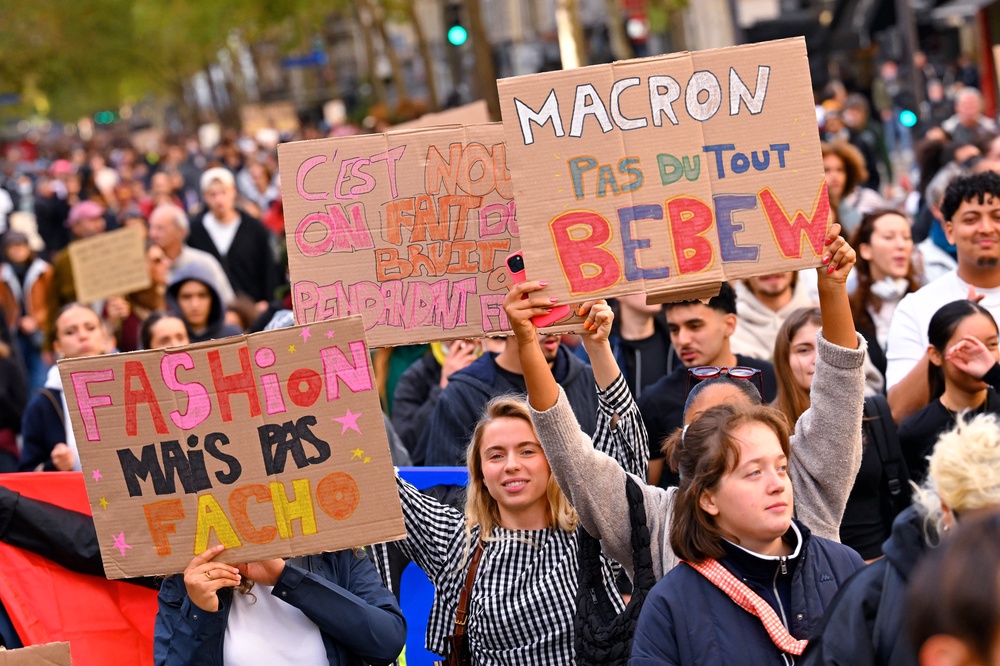
In protests partly inspired by those in France, several hundred mostly young people also protested in Brussels on Saturday, and some clashed with police. Belgian student groups have said they are protesting against rising education costs and reforms they fear will make higher education less accessible. Albania also faced more protests on Saturday, with police firing what appeared to be rubber bullets at protesters during a fifth day of mass student demonstrations calling for Prime Minister Edi Rama to step down.
The police have drawn criticism for their response due to a grisly list of injuries among demonstrators in recent weeks, including one teenager who had his hand blown off after picking up a stun grenade.
Prime minister Sebastien Lecornu said more than 900 police had also been injured.
The internal police watchdog is investigating at least two dozen cases of alleged police violence.
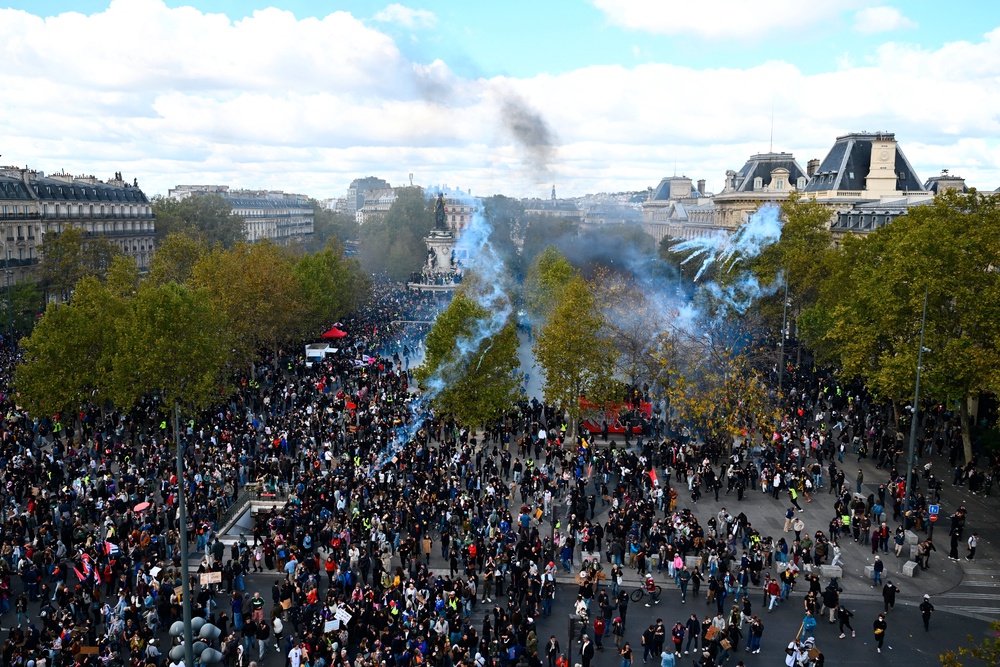
France suspended the use of stun grenades for the student demonstrations, but Interior Minister Laurent Nunez said they could be used on Saturday.
"If there were to be clashes, all types of intermediate weapons can be used," he told Telematin TV on Friday.
Mr Macron is entering the final stretch of his presidency, leaving behind a polarised electorate and a badly fragmented political landscape.
A long struggle to reduce rising public debt has not impressed investors, who are ditching French bonds, driving borrowing costs to their highest levels in more than two decades.
Mr Lecornu said on Thursday that authorities feared unrest during the protests. The government accused the hard-left France Unbowed of inflaming the protests, an accusation it denies.
Calls on social media for members of past protest movements to join the fray appear to have worked, suggesting the protests could grow significantly.
The Yellow Vests, which is helping lead Saturday’ protests in France, said there were more 1,756 mobilisations taking place, including 811 demonstrations.
It includes protests at petrol stations, refineries, oil depots, and ports, as the nationwide movement revolts against rising fuel prices.
The Yellow Vest movement started in 2018 as a protest against taxes on diesel before expanding into an outpouring of anger at high living costs and income inequality.
However, things have been largely quiet since Mr Macron agreed to billions of euros in tax cuts. Yannick Maillou, a teacher from La Crèche in western France, joined the Yellow Vests in 2018 and remains involved in the movement.
He said there were several nearby meeting points for protesters on Saturday, with unions also calling for participation.
France protests: Macron says ‘no place for violence’ as 400 arrested in clashes
Violent protests in France as police battle demonstrators, in photos
Riots in Tirana enter a fifth day as Albania's anti-government protests escalate
What sparked the fiery protests in France – and how they could spread across Europe
Violent Albanian protests sparked by luxury Trump resort ramp up
Civilians in Russian-occupied city face starvation or ‘road of death’