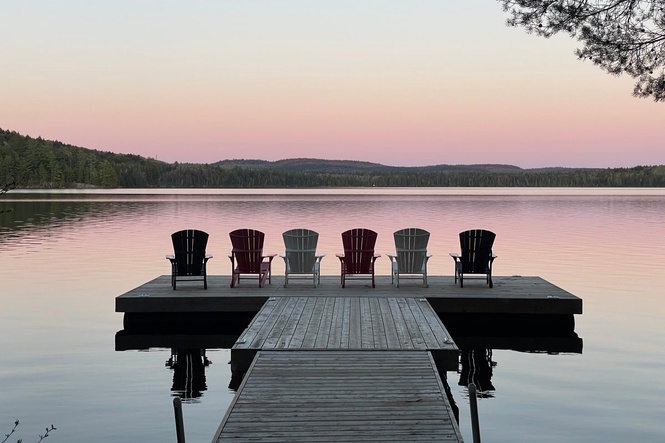
Some places can only be discovered from the water. Nowhere is this truer than Algonquin Park. It sits in the heart of Ontario, the Canadian province with the highest number of lakes, and home to one-fifth of the world’s freshwater.
Though this nugget of information couldn’t be further from my mind as I paddle my canoe on the indigo waters of Canoe Lake. The only movement breaking the lake’s stillness comes from the trees swaying in the breeze and a curious loon popping his black head out of the water to inspect me with his red, beady eyes before diving back in.
Though it’s my first time in Algonquin Park – and my first time on a canoe, escorted by an Algonquin Outfitters expert guide – I feel I’ve seen all of this before: the orange, teal, and emerald trees, their summer and autumnal palette mixing in the elements, and the lake glittering around me.
I knew the landscapes from leafing through art books. Tom Thomson’s awe-inducing painting The Jack Pine had sparked my curiosity and inspired me to seek out the real thing.
And now I was on an art-inspired pilgrimage on a mid-May weekend, exploring both Ontario's wilderness and its urban galleries. Before my trip to the lakes, I’d seen Thompson landscapes in the flesh, about 150 miles east, at the National Gallery of Canada in Ottawa.
Read more: Forget New York or Chicago – the best North American city is in Canada
With his devotion to bringing the vibrancy of Canadian wilderness to the drawing rooms of common folk in the early 20th century, Thomson started a revolutionary artistic movement. His untimely death in 1917 at 39 inspired the creation of the “Group of Seven”, an artist collective credited with bringing the mystique of Canada’s nature to the rest of the world.
Though I’d never bring my canvases and fishing rod on the canoe to paint for days on end, as Thomson did, I’m eager to see it through his eyes and those of his fellow painters, and to learn about the thousands of rarely told stories that predate their arrival.
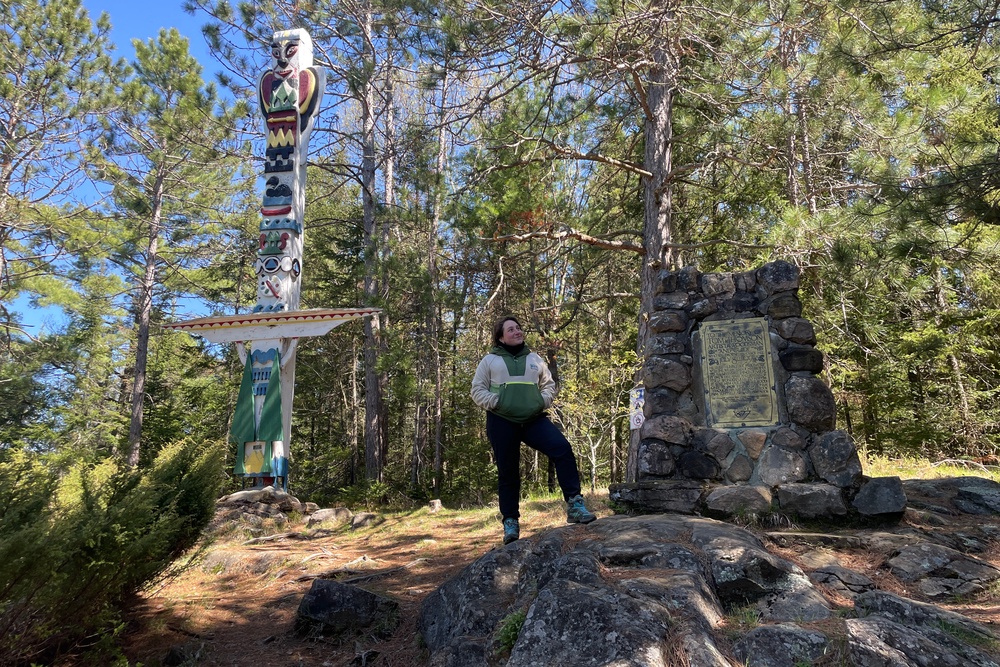
In Algonquin Park, interlinked lakes and portages are the corridors to ancient woodland, beaver dams, meadows, and cemeteries. The latter I learn about after shimmying out of my canoe and onto the eerily silent island where the Tom Thomson Memorial Cairn stands.
To my surprise, marking the memorial is a garishly coloured totem pole. Erected by Camp Ahmek pupils in the 1930s as a tribute to the artist, it mimics the style of Native totems typical of Canada’s west coast. Nobody knows what this “incongruous marker” (as Thomson biographer Roy MacGregor puts it) has to do with the artist or with Ontario, a place full of stories from its Native nations, with no need to borrow from another.
Read more: How Canada got cool – why tourists can’t get enough
Christine Luckasavitch answers my questions, having (until recently) run a company dedicated to bringing First Peoples stories and voices back to the foreground through advocacy and tours.
One of its last projects is on display at Algonquin Park’s Visitor Centre. The eye-catching birchbark canoe in the corner is no ordinary canoe. In summer 2023, it marked a milestone in reconnecting Native land to its ancestral customs.
“It was the first time in 100 years that a canoe made by an Algonquin canoe maker [Chuck Commanda], with birch from the park, took to Lake Opeongo.”
The same freedom to come and go from the park that painters like Thomson and Arthur Lismer had, did not apply to those who had lived on its grounds for millennia.
Like many other Omàmìwininì and Madaoueskarini Anishinaabe people, Luckasavitch’s family were forcibly removed from the park in 1893, which at the time was exploited as a lumbering site. Traces of the industry remain visible across the park's 19 hiking trails.
Luckily, so are the breathtaking vistas of beech trees ablaze with yellow light that inspired paintings like Lismer’s Wood Interior, Algonquin Park, and the moody skies of Franklin Carmichael’s Snow Clouds.
“Thomson’s paintings do not tell the only story”, adds Luckasavitch. “We painted here too, with red ochre on rocks to mark our sacred places, and quartz and granite tools expressing our knowledge of the landscape, and deep connection to it.”
Kevin Eshkawkogan, President and CEO of the Indigenous Tourism Association of Ontario, adds: “The Group of Seven created images of landscapes without any people in their work; however, the land they painted was taken care of by the First Peoples, who are still here ensuring the land’s beauty and purpose live on for all. The First Peoples’ historical presence, purpose as stewards of the land, and their sovereignty live on today.”
The art of the Group of Seven stretches further than Algonquin Park, as far as Canada’s West Coast. However, the group’s largest collection remains in Ontario, at the McMichael Canadian Art Collection in Kleinburg.
Painting during the interwar period, the Seven “were on the frontline of building a unique Canadian identity, distinct from being part of the Commonwealth”, according to curator John Geoghegan.
Today, the gallery displays historic works alongside contemporary art and artists, such as Two-Spirit Miss Chief Eagle Testickle (Kent Monkman’s alter ego). Its exhibitions, including Early Days, which brings Truth and Reconciliation Commission (TRC) conversations into art, intentionally redress the balance.
What first intrigued me about the Group of Seven was how they let elements and emotions shape the colours and forms of their landscapes. I find a similar sense of awe and spell-binding quality in Norval Morrisseau's (Copper Thunderbird)The Protector. The Ojibway Anishinaabe artist, considered the “father of Woodlands Art”, depicted a giant crow enmeshed with fish-like surreal figures. Morriseau was a founding member of the Professional Native Indian Artists Inc. (PNIAI), a collective born in the 1970s that Canadian media dubbed “The Indian Group of Seven”.
“The PNIAI’s approach to landscapes was different, referencing and reclaiming the visuals that First Nations had been prevented from creating freely on their native lands for decades”, Geoghegan adds.
Part of that key difference lies in the media used: bone, wood, textiles, and, most importantly, performance. I understand the importance of the physical manifestation only when visiting Mādahòkì Farm, halfway between Algonquin Park and Ottawa.
The objects I observed behind glass in museums across Ontario are alive here, restored to their everyday use. A teepee is used for gatherings in summer, alongside a ceremonial space for community members to use, and a herd of Ojibwe Spirit Horses are roaming on the farm.
Hearing the stories of dance and pow-wows from Pikwakanagan First Peoples artist Stephanie Sarazin opens a new door into the present, one in which the Algonquin landscapes – urban and non-urban – are still thriving with stories.
Leaving Algonquin Park behind and stepping back into the dusty, oppressive metropolitan jam, I can’t help thinking about the words of The Group of Seven’s main patron, Dr James MacCallum.
Thomson and his fellow painters may have “put the spirit of Canada on a piece of board eight by 10 inches”, but I feel that only now, with non-First Peoples and First Peoples art sharing space, are we starting to see the raw materials that created that board.
Rory was a guest of by Ottawa Tourism and Destination Ontario
Read more: The charming Canadian island where you’ll find art and literature
How to do it
AirTransat flies direct from London Gatwick to Ottawa.
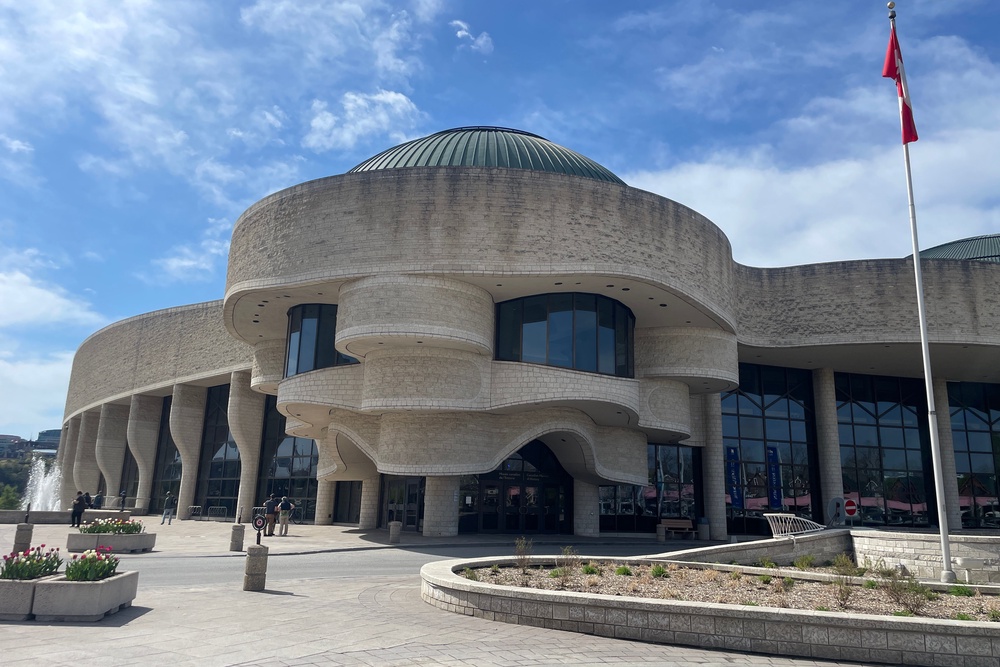
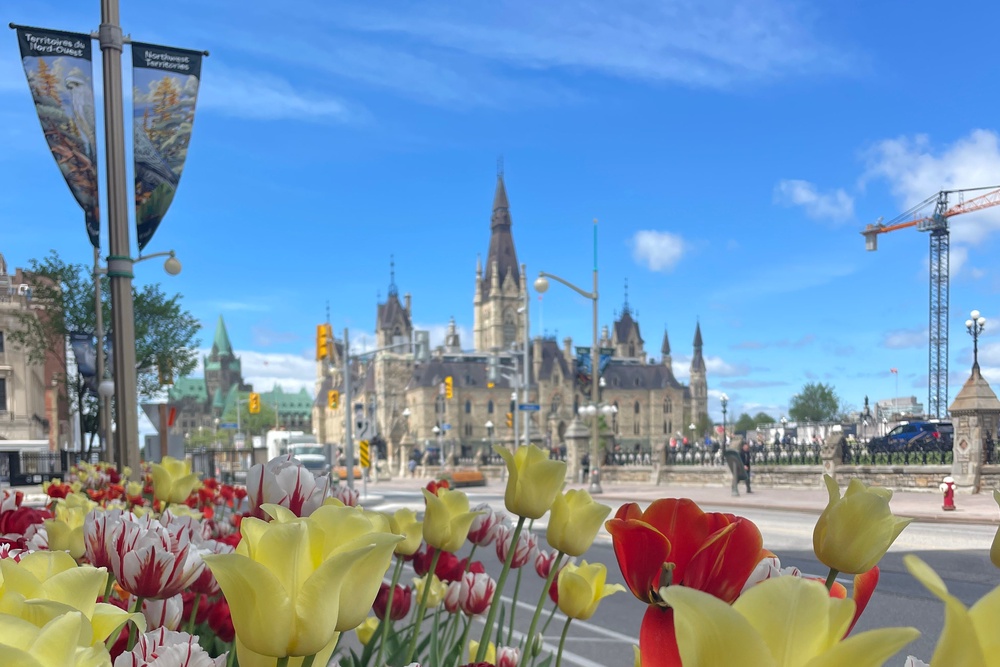
For a tour encompassing Algonquin Park and the urban Group of Seven sites, start in Ottawa’s Canadian Museum of History, designed by Anishinaabe architect Douglas Cardinal in a continual, sinuous curve in the shape of Turtle Island. For your next dose of Group of Seven, check out the National Gallery of Canada across the river. Visit in mid-May to catch Ottawa’s Tulip Festival in full bloom, and to enjoy Algonquin Park (a 2.5-hour drive away) ahead of the summer crowds.
Drive two hours from the park to the McMichael, before heading to Toronto’s Art Gallery of Ontario, and the Arts and Letters Club, the urban hangout of the Group.
Where to stay
Killarney Lodge offers lakeside views from your own private cabin in Algonquin Park, from £335.
Keep chasing water views in Ottawa at Fairmont Château Laurier, which is the city’s oldest hotel on the Rideau canal, with rooms from £155.
Read More10 European countries that do not have EES for 2026 holidays
I have found the seven best LGBTQ+ friendly hotels in Toronto
Hiking in Kyrgyzstan’s Tien Shan mountains is a TikTok trend without any wifi
Is this the end of the Mediterranean summer holiday? Why Brits are turning to ‘cool’ destinations