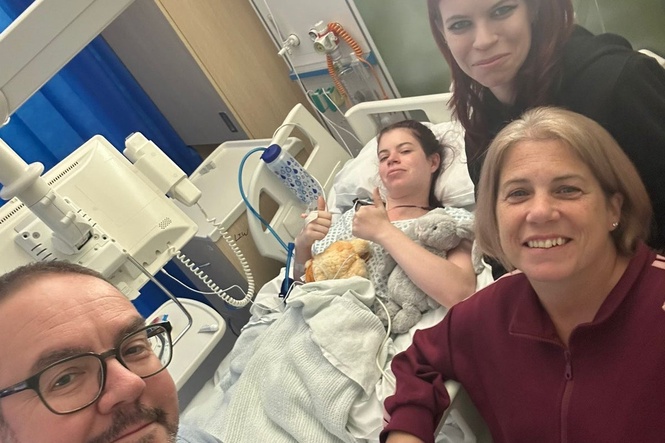
A 23-year-old who was “always falling over” as a child and thought she was just “clumsy” was then diagnosed with a hypermobility disorder.
Jessica Ward, from Wickford, Essex, said she had experienced pain and joint problems throughout her life, which she initially put down to growing pains.
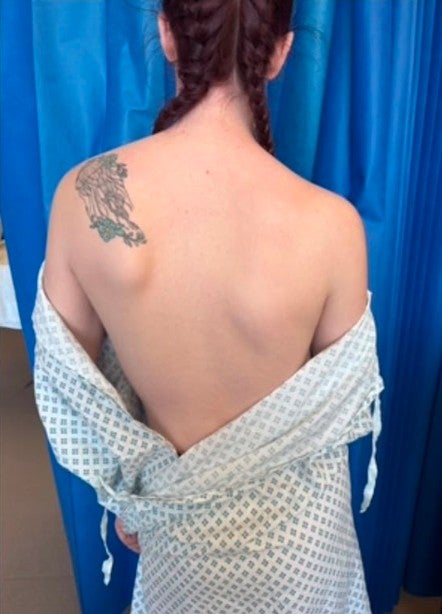
At the age of 14, she said she noticed her shoulders were uneven and that one hip protruded more than the other, and later spotted that her legs “rotate in the wrong direction”.
In 2022, she was diagnosed with scoliosis, where the spine twists and curves to the side, and hypermobile Ehlers-Danlos syndrome (hEDS) – a rare inherited condition that affects connective tissue.
Three years later, she began using a wheelchair and underwent spinal fusion surgery to help reduce and straighten her spinal curve.
She said the surgery took about seven hours and involved inserting metal screws and rods into the vertebrae of her spine.
Just months after relearning to walk, she signed up for a half marathon taking place on October 11, which she plans to complete in a wheelchair.
She has been sharing her progress on social media, hoping to help others living with chronic conditions.
Jessica said: “It’s not always safe for me to walk because I do end up tripping over myself or feeling really wobbly.
“I frequently experience dislocations in my joints and have very sensitive skin that takes forever to heal.
“Because of my age, a lot of people think I am young and faking it.
“I want people to know that having a chronic illness isn’t the worst thing in the world.”
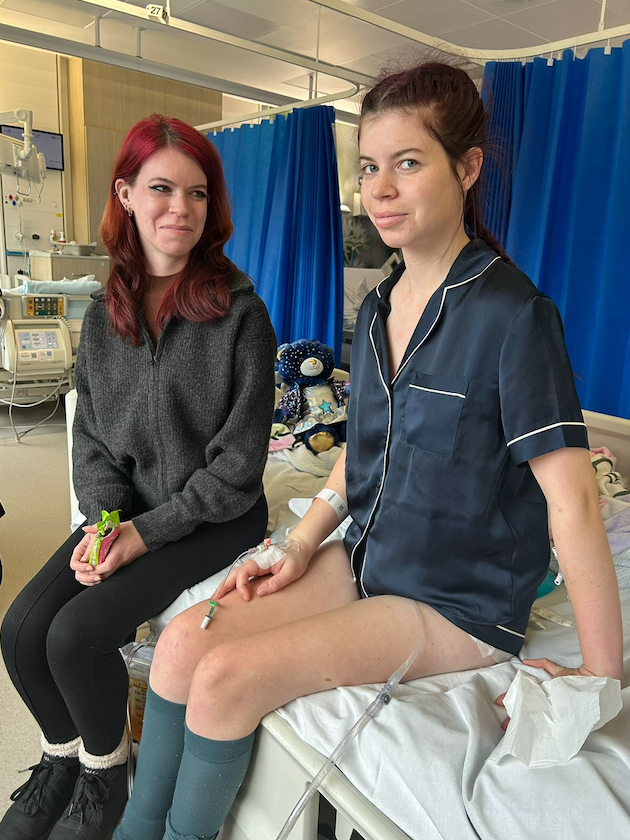
Jessica said she has struggled with pain, joint and mobility issues all her life.
“Growing up, I was a very clumsy child,” she said.
“I was always falling over, getting pains and experiencing joint problems.
“I originally just thought it was growing pains.”
However, her symptoms worsened in her teenage years, as she began to “struggle” walking for more than 10 minutes at a time, and would be in “agony” afterwards.
She added: “I also had pain and problems with my hips, knees and my ankles, and problems with stability.”
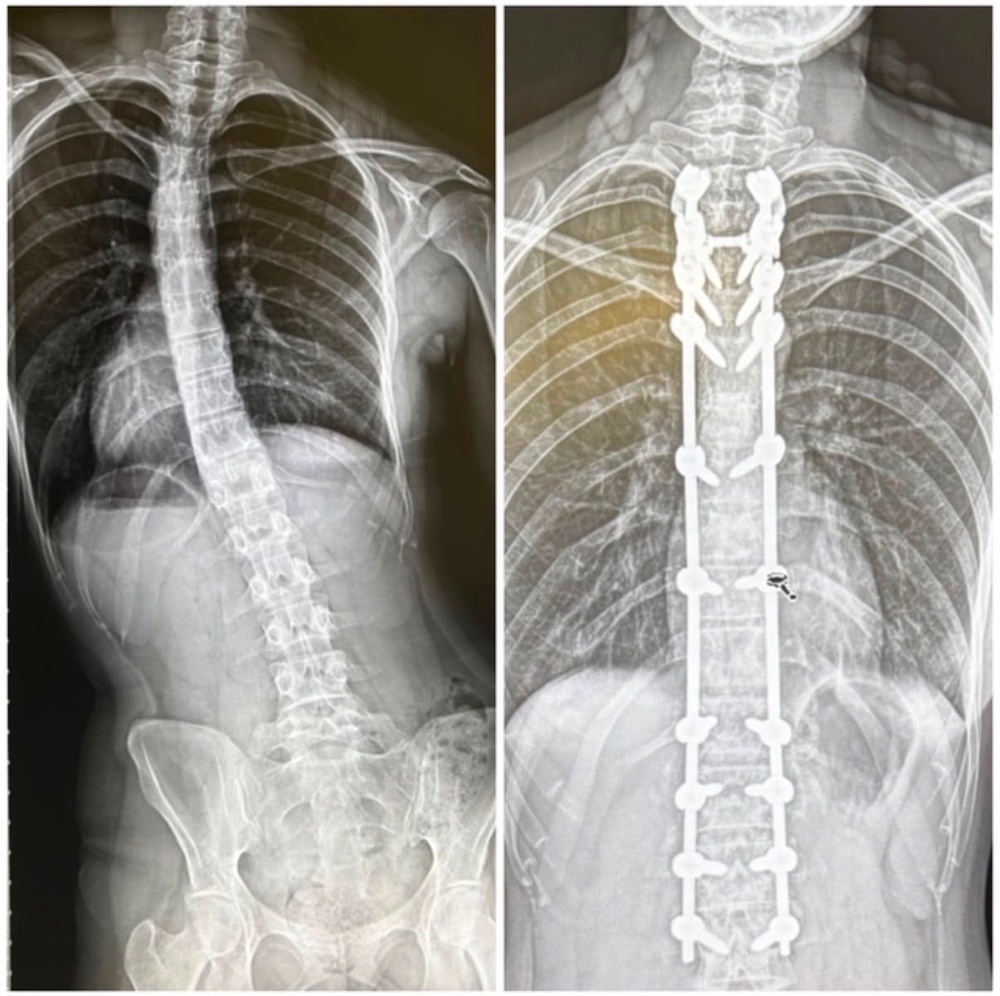
She first began using mobility aids in 2019 after dislocating her knee and, in 2022, she said she was diagnosed with scoliosis and hypermobile Ehlers-Danlos syndrome (hEDS).
Symptoms of hEDS include joint hypermobility, loose, unstable joints that dislocate easily, joint pain, extreme tiredness and skin that bruises easily, according to the NHS.
She said: “My rib used to sit on my hip bone, so that was uncomfortable. I always felt tight.
“It was a very long journey to diagnosis because originally my curve wasn’t bad enough for surgery, so I felt like I had to fight to be heard.
“Mentally, it was really hard. There’s not a lot of support out there. A lot of doctors don’t know much about Ehlers-Danlos, so a lot of the time I have to tell them what it is and how it affects me.”
Jessica said she found her diagnosis especially hard as she had “always” planned on running the London Marathon, and thought hEDS would make it impossible.
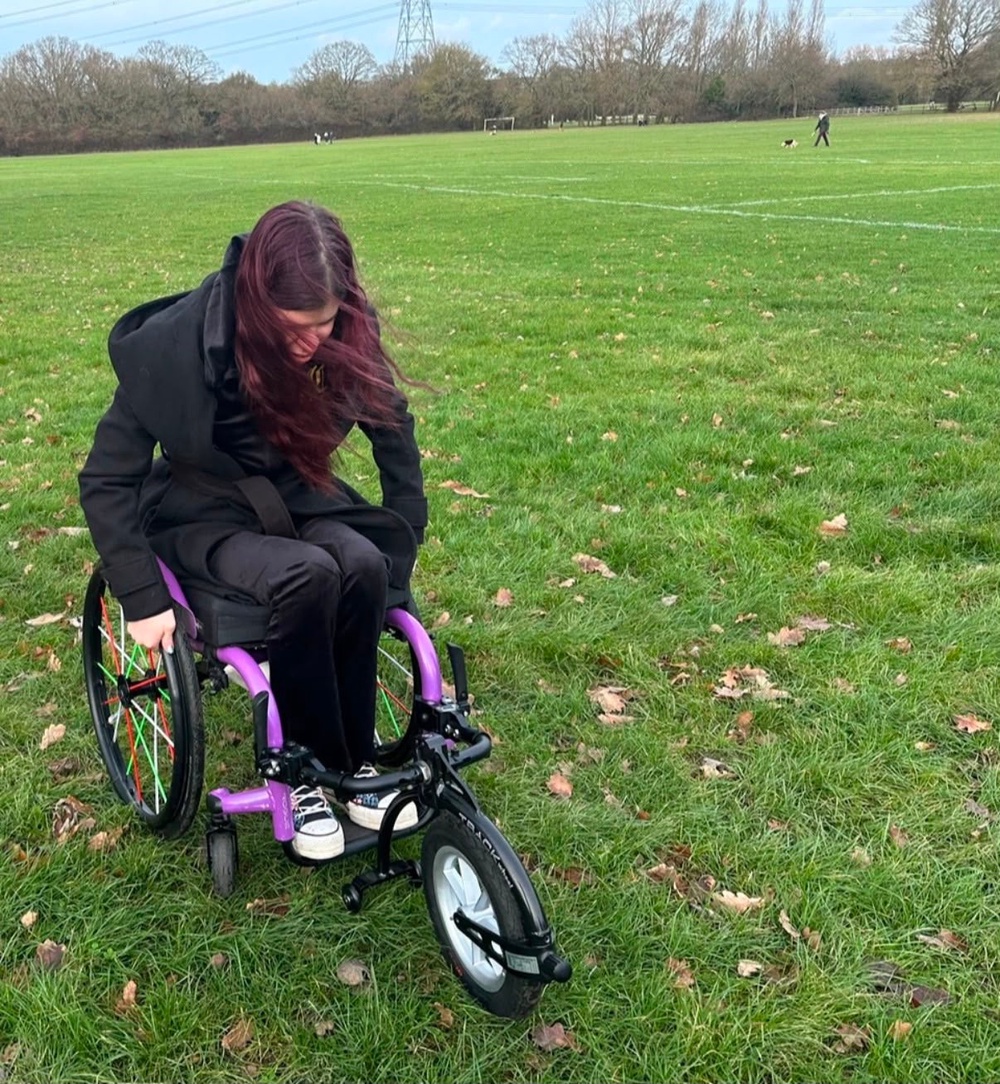
But, at the beginning of 2025, she started using a wheelchair, which she said gave her her “life back”.
Since then, she has been “back out on the shop floor” at work and she goes out in the evenings, rather than “laying down and curling up into a ball”.
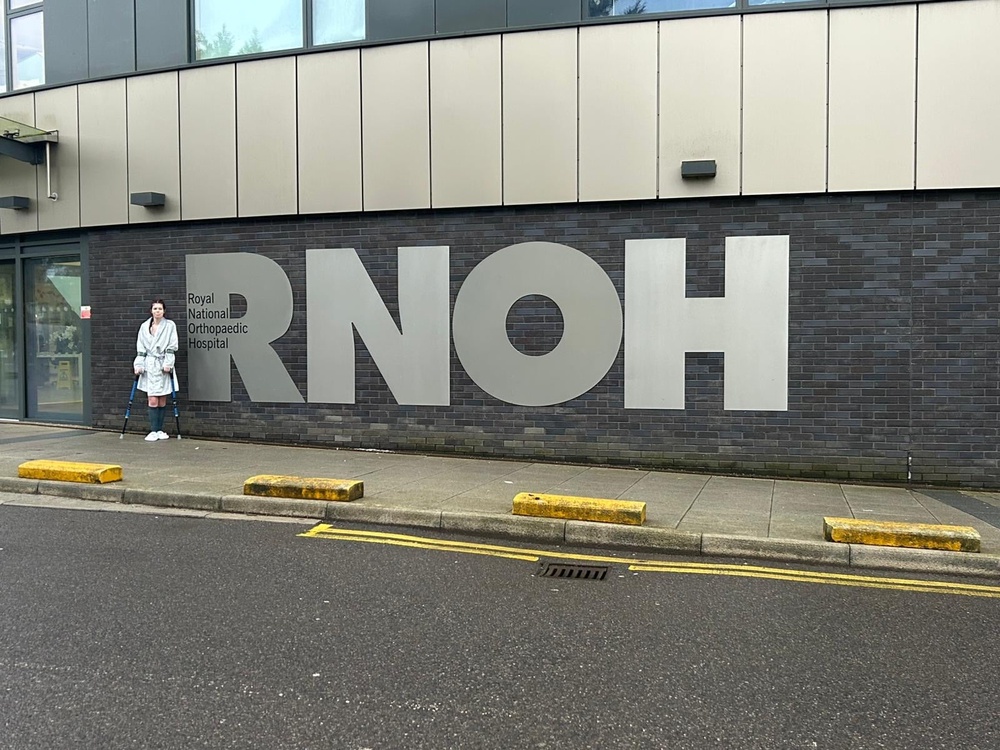
In November 2025, she also had spinal fusion surgery at the Royal National Orthopaedic Hospital in Stanmore, Middlesex, but had to “learn everything again”, including how to get out of bed, bend down to put on her socks, get on and off the toilet and walk upstairs.
She added: “I wasn’t allowed to bend, lift, or twist for six months.
“It probably took about three months before I started feeling like myself again, and around six months for it to feel normal.”
Jessica said she has a newfound confidence because the surgery improved the alignment of her spine.
She said: “When I try on all my old T-shirts, the ones I used to cover up, I hate them. It makes me cry.
“I ended up throwing half of them away and getting new ones that I felt nice in.
“The brand-new wardrobe signified a fresh new start.
“When I had a back brace on just after the surgery and saw my waist for the first time, it was just incredible.
“I’m now so proud to show off my scar.”
But she said she will have to continue using her wheelchair for the rest of her life due to symptoms associated with hEDS.
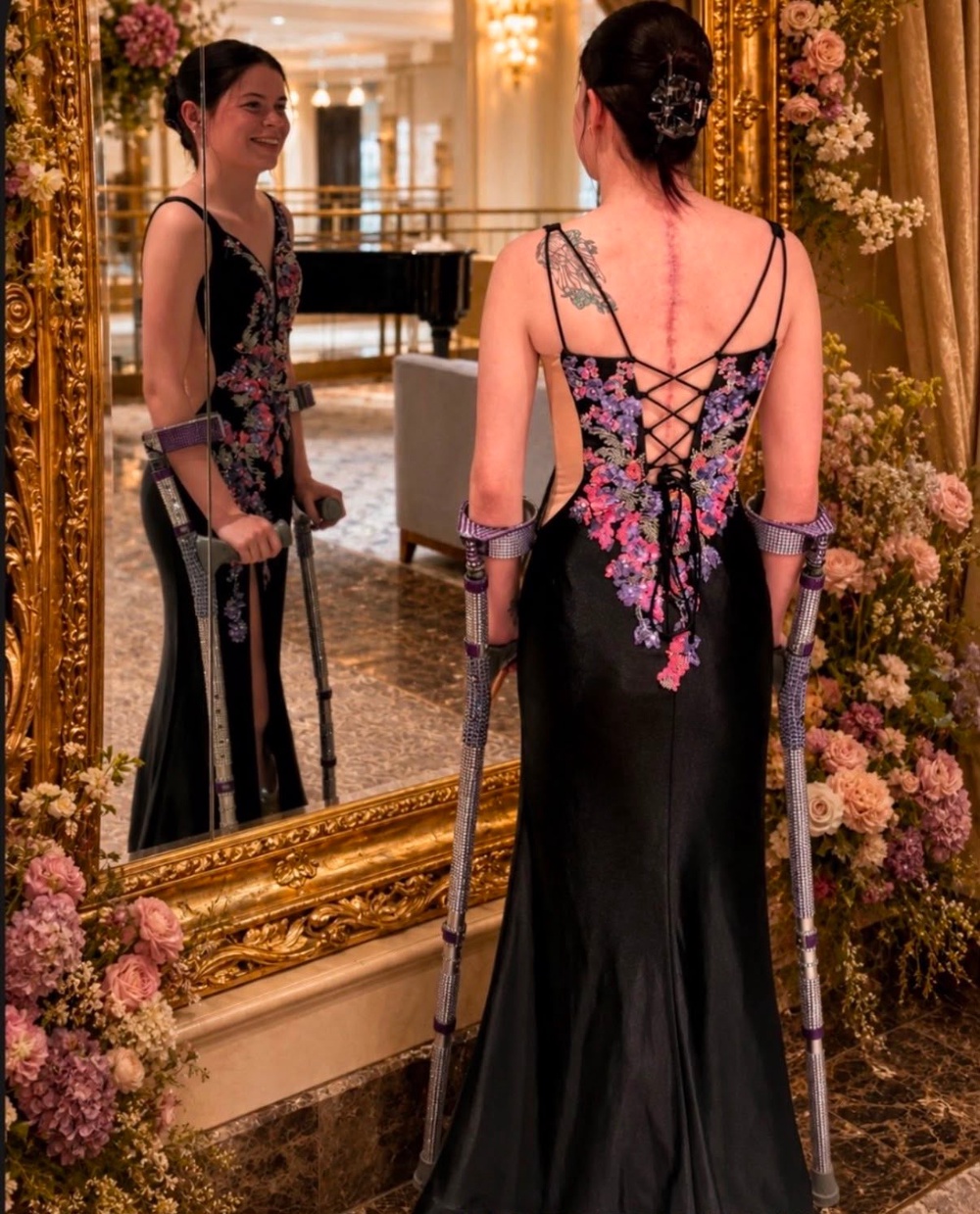
“My spine and my hEDS are completely unrelated,” she explained.
“Although my back is now fixed, it’s not helped any of the problems with my legs, such as the fact that they rotate in the wrong direction.
“So, my wheelchair is for life, and I’m not ashamed of it.”
Symptoms of Ehlers-Danlos syndromes (EDS)
NHS
There are several types of EDS that may share some symptoms.
These include:
- an increased range of joint movement (joint hypermobility)
- stretchy skin
- fragile skin that breaks or bruises easily
People with hEDS may have:
- joint hypermobility
- loose, unstable joints that dislocate easily
- joint pain and clicking joints
- extreme tiredness (fatigue)
- skin that bruises easily
- digestive problems, such as heartburn and constipation
- dizziness and an increased heart rate after standing up
- problems with internal organs, such as mitral valve problems or organ prolapse
- problems with bladder control (urinary incontinence)
However, she believes there are still misconceptions about wheelchair users, with many assuming wheelchairs are only for people who cannot walk at all.
She said: “When I’m in my wheelchair and stand up for a second, I get so many looks because people think that being able to stand means that there is nothing wrong with me.”
Jessica added that people also often think she needs to be pushed when she is going uphill in her wheelchair.
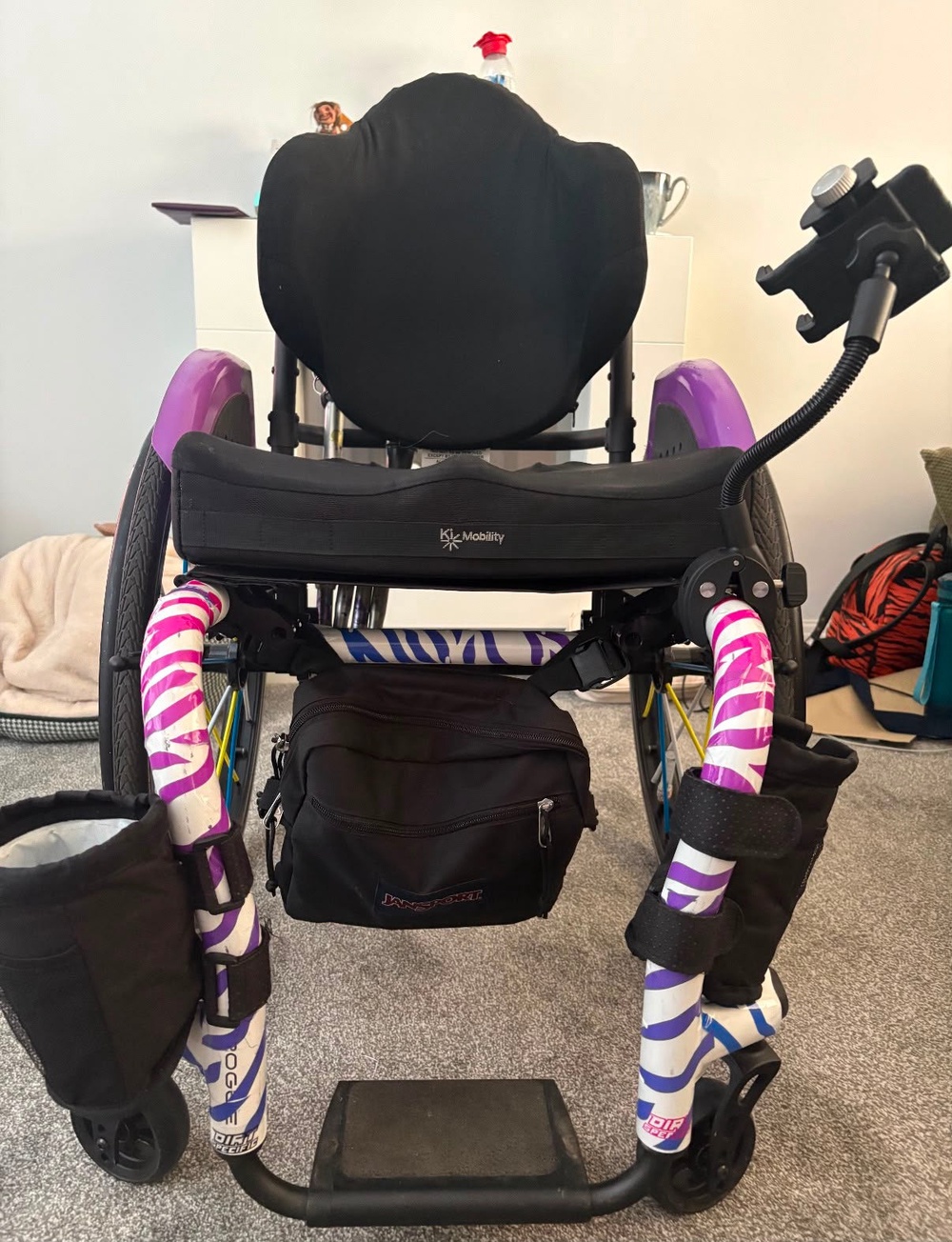
She said: “If I want help, I will ask for it, so people shouldn’t just assume that I’m not able to do something because I’m in a wheelchair.”
In the weeks leading up to her spinal surgery, Jessica started sharing her day-to-day life on TikTok, under the handle @roll_with_jess, hoping to help others facing similar challenges.
“The first videos I posted were pre-op ones, and it’s evolved a little bit since then,” said Jessica.
Jessica is now training for the Oysho Royal Parks Half Marathon, which will take place in central London on October 11, in her wheelchair, and is sharing her progress online.
She added: “I have been posting about my half marathon training and lots of people said I would never be able to do it.
“But part of my motivation is giving the middle finger to people who said: ‘No, you can’t’.”
However, she said she has received some negative comments online.
“Someone direct messaged me and said I was cheating by doing a half marathon in a wheelchair, so I made a video to address this misconception,” Jessica said.
“When you are in a wheelchair, you have to roll with the extra weight, navigate uneven floors, build up muscle strength in your arm and deal with the shock absorption. It’s really difficult.”
Jessica decided to undertake the challenge to raise money for Royal National Orthopaedic Hospitals (RNOH), where she had her surgery, and has nearly hit her £400 target.
Looking ahead, she is hoping to take part in the London Marathon next year.
She said: “The only limitations are the one that you put on yourself.”
To support Jessica’s fundraising for RNOH Charity, visit: justgiving.com/page/jess-ward02.
Read MoreThe common spice found to lower cholesterol and support heart health
Jerry Hall’s kids are treating her like a child, parenting a parent comes to us all
Liver, kidney and sweetbreads are back on the menu: How offal became a cool superfood
I’m a GP. Here’s how you can boost your energy this autumn
Boy, 7, diagnosed with brain tumour after mum noticed three subtle symptoms
The ancient superfood that is packed with antioxidants and creeping back into diets