A Spanish railway expert says he would use alternative transport rather than taking a high-speed train in Spain following the deadly train crash that killed 69 people.
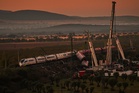
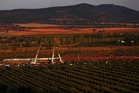
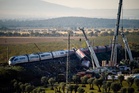
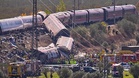
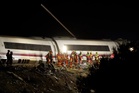
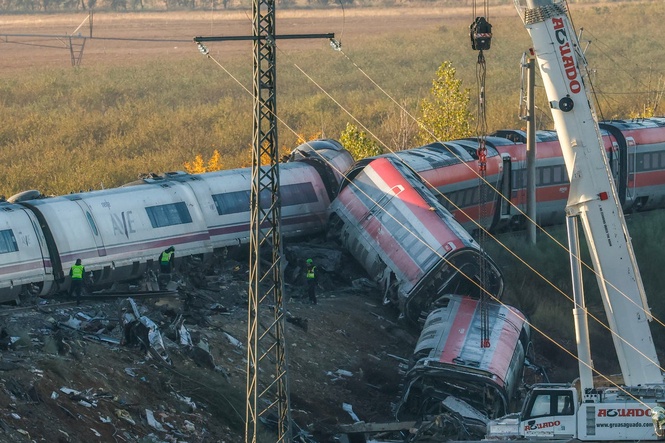
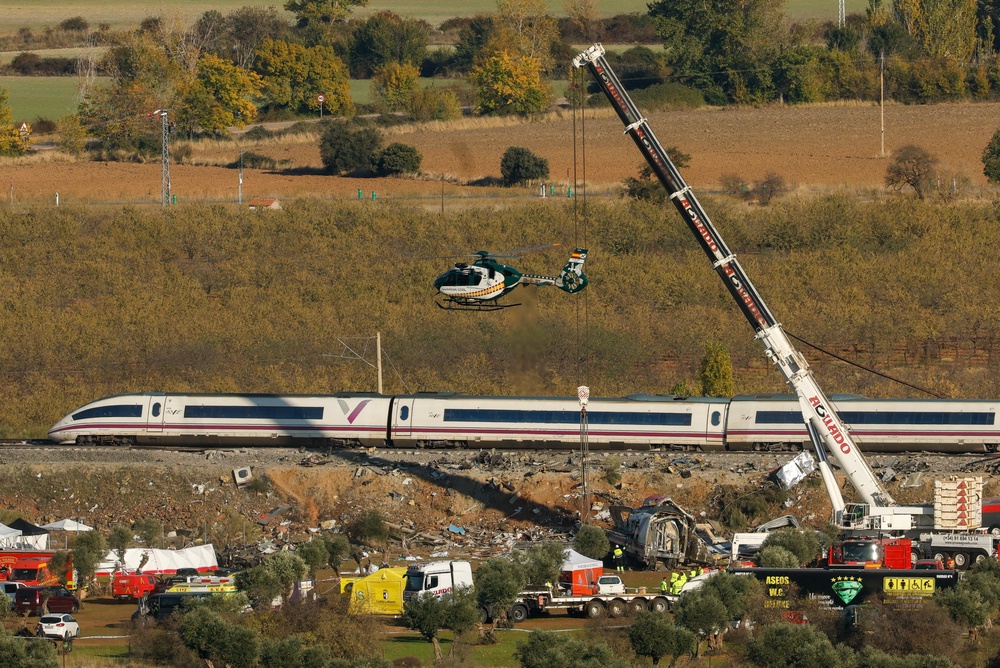
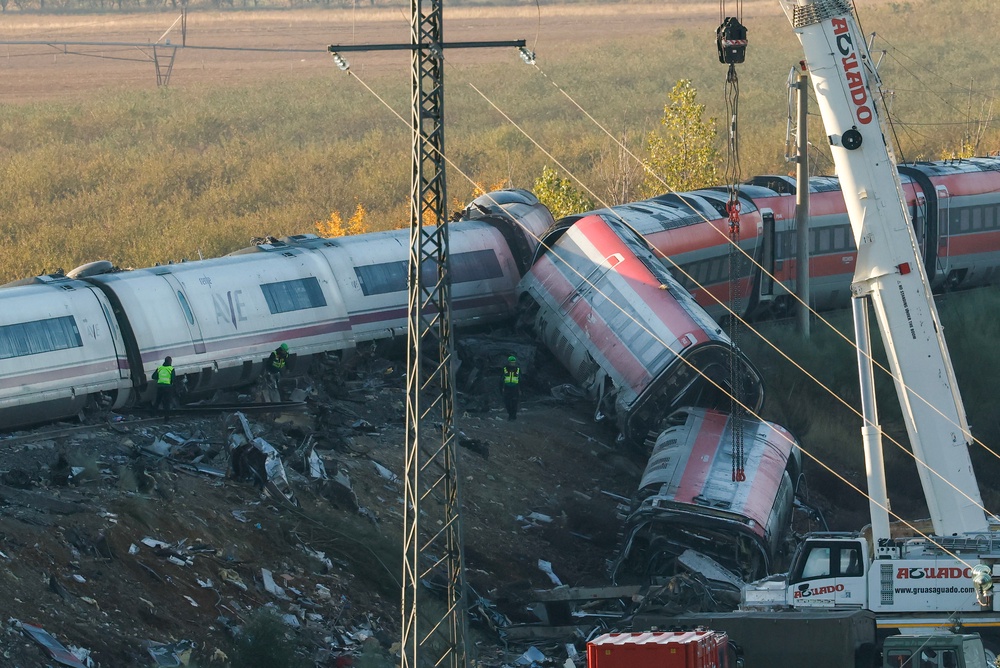
Spain experienced its fourth deadly train crash this year on Wednesday, 28 October, after two high-speed trains collided on a track in a rural area of the Toledo province.
The incident has raised questions over how safe it is to travel by train in Spain.
Francisco Badea Romero, a professor of mechanical engineering at Nebrija University in Madrid and railway certification expert, told The Independent that he would reconsider travelling on high-speed rail in the country at this moment.
“Personally, I would look at alternatives rather than taking a high-speed train until I see some evidence that things have changed and improved in some way,” he said.
The professor explained that accidents like these are “extremely rare” in the history of European railway, so when they happen more than once within a year, “clearly nothing has been improved”.
Mr Badea Romero is referring to another incident involving a high-speed train that derailed and collided with an oncoming one on 18 January near Adamuz, in the province of Cordoba.
This crash left 46 people dead and more than 120 injured. Two other deadly train crashes occurred in 2026, including a commuter train crash in Barcelona that killed one person, and another in the Toledo province where a car was struck at a railroad crossing, killing the driver.
“If I were a passenger, when I see changes, I will start trusting again in the railway system,” Mr Badea Romero said. He added that it is probably one of the safest transportation systems “if things are done the way they are supposed to be.
“If you had a discussion with me three days ago and you asked me [if something like this could have happened], I would have bet money and told you, I am an engineer, I know these things. There is no way this could happen. And then two days later, you would have won all my money.”
Passengers were travelling between Madrid and the southern Andalusia region when an express train operated by Iryo was struck by a train operated by Renfe in Toledo. The Iryo train had been stationary due to a signal fault, a person briefed on the disaster said.
There were 544 people on board the two services between Madrid and Seville when the trains crashed at 9am Wednesday morning.
Spanish authorities have yet to name any of the victims as they continue to work to identify the bodies. More than 100 people are also thought to be injured.
Spain’s transport minister, Óscar Puente, said the accident may have been caused by human error, as one of the trains had been told to resume its journey.
He explained that an earlier computer failure that morning led to the initial halt of six moving trains, including the two trains that collided.
When the system failed, the control centre took over, which is standard protocol, and at that point the control centre decided to let the trains move again without speed restrictions “under inexplicable circumstances”, he said.
Mr Badea Romero said that while this brings to mind an image of one person at a control desk, the reality is that the system is very complex and has multiple robust layers that should have prevented the incident.
“The possibility of having a person in a control centre giving them a wrong order and leading to this accident, it's basically absurd. It's almost impossible,” he said.
He explained that robust technology called the blockage system automatically tells trains if they are approaching another train and how much distance they have between each other. This system should have also sent out warnings to the driver and the control centre.
So even if a control centre operator had given a wrong instruction, Mr Badea Romero said the automatic blockage system should “never have allowed that to happen”.
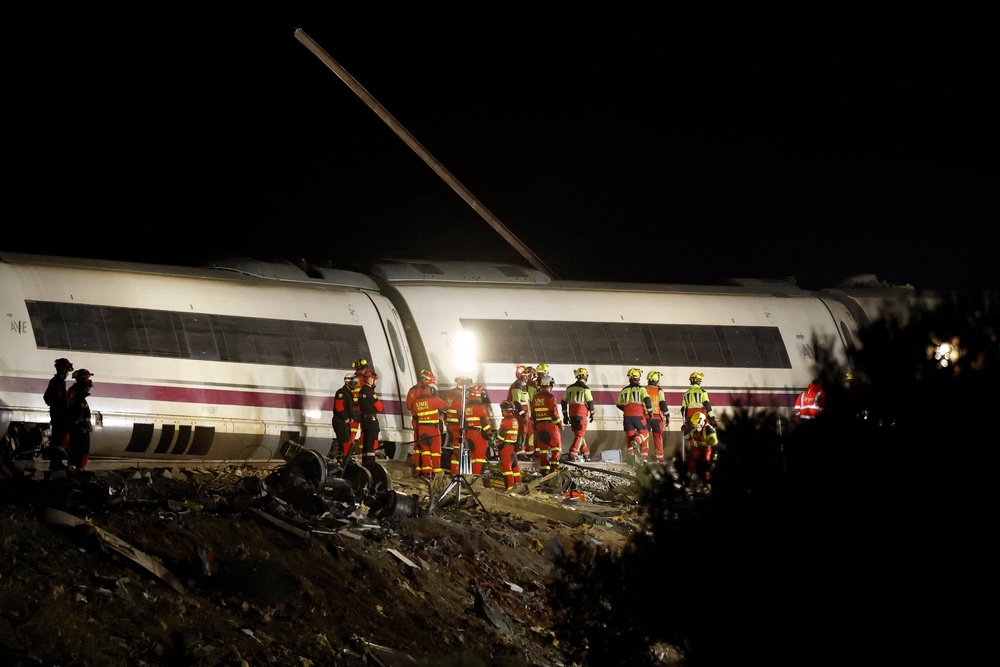
Yet the reality is that something did happen to cause the train crash, which will likely be determined by the investigations launched by Spanish officials.
The professor suggests that “probably multiple systems failed, and multiple systems were not in place when they were supposed to be in place, and that goes straight forward to the administrator of the infrastructure”, referring to Adif, the Spanish state-owned railway infrastructure manager company that sits within the transport ministry.
“One of the main issues is that these companies don’t have any counterbalances. They depend on the government, and nobody can ever ask a question on what's happening.”
Mr Badea Romero said that we “need to look deeply into this administrator, and probably get some inspiration from outside, and make sure that things are properly and correctly done”.
The Independent has contacted Adif for comment.
Read MoreSpain hit by widespread travel disruption after high-speed train collision
Benidorm clamps down on tandem mobility scooters in fresh ban
Two earthquakes strike off the coast of popular tourist destination
Storm Boelo forces Ryanair flight for Bristol to divert almost 1,000 miles to Spain
Odyssey timeline: Trials and tribulations aboard the first-ever residential cruise
Where is Celebrity Traitors filmed and can you stay in the castle?