.jpg)
By Mihar Dias (C) Copyright September 2024
The ongoing spat between Dr. Akmal Saleh, UMNO Youth Chief, and Seputeh MP Teresa Kok over the issue of halal certificates has flared up into a public spectacle, shining a light on Malaysia’s delicate socio-political landscape.
What began as a debate about food certification has morphed into a heated cultural and political battle, raising questions about the country’s approach to identity politics, governance, and the implications for national unity.
At the heart of the issue is Teresa Kok’s remark that the obligation for halal certificates for restaurants without pork and alcohol may burden vendors and turn Malaysia into an international joke.
Dr. Akmal, in turn, launched a stinging response, accusing Kok of causing disharmony and international embarrassment.
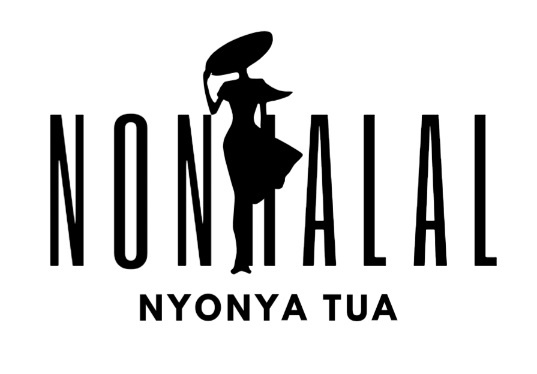
His use of derogatory terms like "old Nyonya" and suggestions to mark her with a "non-halal logo" on her forehead reflect a disturbing undercurrent of racial and cultural tension.
Dr. Akmal's approach appeals to a base that sees the halal certification as a matter of religious and cultural integrity. To them, the halal certificate isn't just about the absence of pork and alcohol, as Akmal argues; it encompasses the broader spectrum of food preparation and ingredient sourcing, which must comply with Islamic dietary laws. This is a critical point for many in Malaysia's Muslim-majority population, where ensuring the sanctity of halal standards is seen as non-negotiable.
However, Kok's concerns shouldn’t be dismissed out of hand. The debate over whether enforcing stringent halal certification on all eateries, including those that do not serve pork or alcohol, could be seen as an unnecessary burden to some vendors.
Her warning about the potential international perception of Malaysia’s regulations as being overly rigid speaks to a broader concern about how Malaysia is seen on the global stage—a country balancing its identity as an Islamic nation with its aspirations as a modern, diverse economy open to all.
This clash between Akmal and Teresa reflects deeper issues in Malaysian politics: identity politics and the weaponisation of race and religion for political gain. Akmal's rhetoric, laden with cultural insults and attempts to silence Teresa, echoes a larger pattern in Malaysian politics where leaders resort to race-baiting and inflammatory language to galvanise support. While it may score points with certain constituencies, it risks further alienating segments of the population and deepening societal divides.
Moreover, Akmal’s call for Teresa to be branded with a “non-halal logo” underscores the dangerous implications of escalating political rhetoric into personal attacks.
When political leaders engage in such behaviour, it sets a precedent for public discourse that tolerates—and even normalises—intolerance and bigotry. This risks turning political disagreements into cultural conflicts that go beyond the specific issues at hand, threatening Malaysia’s social fabric.
For Malaysia’s political future, this kind of inflammatory rhetoric poses a significant risk. As the country continues to navigate its path in a globalised world, leaders must weigh the consequences of their words and actions not just in terms of immediate political gain, but in their long-term impact on national unity and Malaysia’s international standing. Rather than reducing complex issues like halal certification to cultural binaries, the discussion should be centered on finding practical, inclusive solutions that respect religious sensitivities while also considering the needs of all communities.
This incident serves as a reminder that Malaysian society remains in a fragile balance, and the politics of division will only serve to push the country further apart.
If Malaysia is to progress as a pluralistic society, it requires leadership that transcends petty cultural battles and instead promotes a vision of inclusivity, mutual respect, and common purpose. Political discourse must be elevated, not degraded, for the sake of the nation’s future.
Mihar Dias is a content creator under the Newswav Creator programme, where you get to express yourself, be a citizen journalist, and at the same time monetize your content & reach millions of users on Newswav. Log in to creator.newswav.com and become a Newswav Creator now!
The User Content (as defined on Newswav Terms of Use) above including the views expressed and media (pictures, videos, citations etc) were submitted & posted by the author. Newswav is solely an aggregation platform that hosts the User Content. If you have any questions about the content, copyright or other issues of the work, please contact Newswav.

