.png)
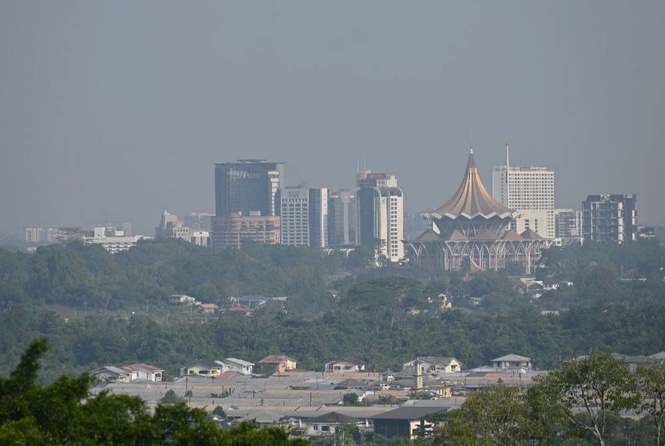
SHAH ALAM - Smoke from forest and peatland fires in Indonesia has blanketed parts of Malaysian Borneo, with haze from fires in the Kalimantan region persisting across Sarawak for much of August and pushing air quality to hazardous levels.
The worsening conditions have led to a sharp increase in respiratory illnesses and forced authorities to cancel outdoor National Day celebrations, yesterday.
The haze has also spread to Peninsular Malaysia, Brunei and Singapore, in what has been described as the region’s worst smoke episode since 2015.
Today, six areas in Sarawak recorded hazardous readings above 300 on Malaysia’s Air Pollutant Index (API), with Kuching recording 407 and Serian, near the Kalimantan border, recording 408. An API reading above 100 is classified as unhealthy.
The health impact has also become increasingly apparent. The Malaysian Health Ministry reported that asthma cases surged to 1,811 between Aug 23 and 29, compared with 219 the previous week. Conjunctivitis cases also increased to 720 from 146 during the same period.
The Association of Southeast Asian Nations (Asean) has activated a Level 3 transboundary haze alert, its highest level, for the southern part of the region, citing rising fire hotspots and prolonged dry weather associated with an intensifying El Nino weather pattern.
In Sarawak, the worsening air quality forced the cancellation of outdoor National Day celebrations on Aug 31, while authorities warned that stricter measures could be introduced if conditions deteriorated further.
Sarawak Deputy Premier Douglas Uggah Embas said areas recording API readings above 500 would be placed under a local emergency, with all public and private offices ordered to close.
“Only essential services will be allowed to operate,” he said.
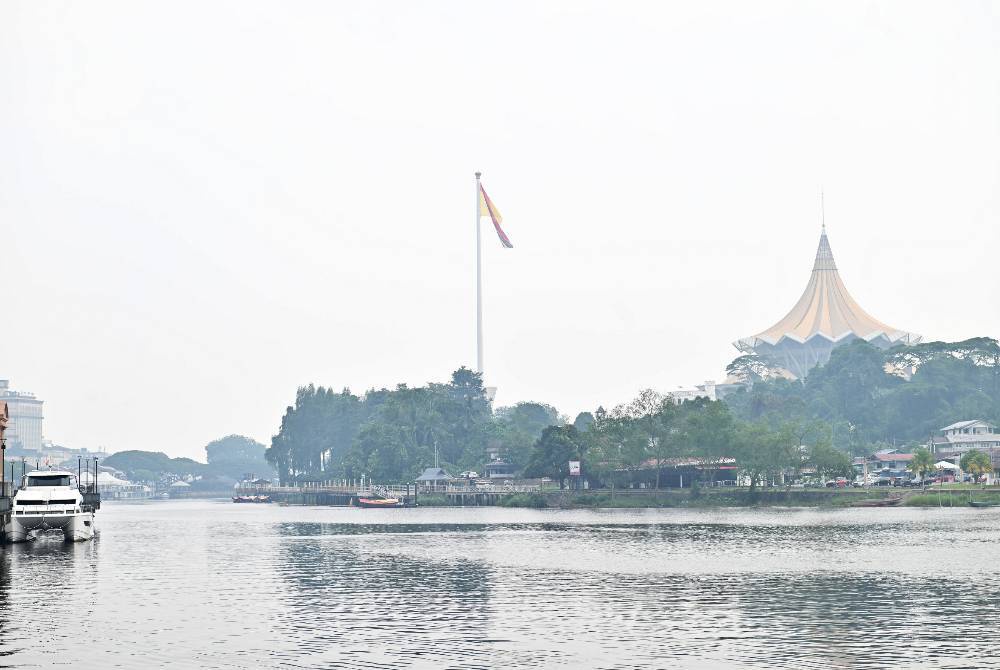
The haze has also disrupted education in the state.
Under the Education Ministry’s rules, outdoor activities are suspended when the API reaches 100, while schools must close when the reading reaches 200.
Nearly 600 schools in and around Kuching were closed on Aug 20 and 21, affecting about 200,000 primary and secondary school pupils. Another 30 schools in Sarawak were closed on Aug 28, keeping more than 4,000 children at home.
Schools are currently closed for the National Day holiday.
Meanwhile, in Kuala Lumpur, grey skies that had persisted for much of August began to clear, with blue skies returning after about a week of haze as the National Day parade began early in the morning.
The situation has been considerably more severe in Indonesia, where fires have affected large areas of Borneo and Sumatra.
Indonesia’s Deputy Health Minister Dante Saksono Harbuwono said on Monday that about 13,500 people had been treated for respiratory infections in July and August, while an estimated 5.5 million people in Borneo and Sumatra had been directly exposed to smoke.
Borneo, the world’s third-largest island, is divided between Indonesia, Malaysia and Brunei, with Indonesia controlling the southern portion as Kalimantan and Malaysia’s Sarawak and Sabah occupying much of the northern region.
According to the Indonesian government, fires between January and July burned more than 200,000 hectares across Borneo and Sumatra, equivalent to about three times the size of Jakarta. Nearly 95,000 hectares were burned in July alone.
The fires have continued to intensify in parts of Indonesian Borneo despite efforts to contain them.
Berton Panjaitan, an official with Indonesia’s National Disaster Mitigation Agency, said hotspots in West Kalimantan nearly doubled on Monday, increasing by 3,553 to 7,377, while active fires rose by 88 to 104. Visibility in the area also fell below one kilometre.
In Central Kalimantan, hotspots fell by 147 to 5,244, although the number of fire spots increased by 16 to 72, he said.
Several cities in Kalimantan have also recorded hazardous air quality. Palangkaraya in Central Kalimantan recorded an air quality index reading of 780 on Monday, according to IQAir, while Pontianak in West Kalimantan recorded 593.
Analysts have said many of the fires are deliberately started to clear rainforest and carbon-rich peatland for palm oil plantations, agriculture and pulp and paper production.
Although such burning is illegal in Indonesia, plantation companies and smallholders have continued to use the practice. Indonesian police said last week that 72 people had been arrested over allegations of setting recent fires.
The current episode has revived memories of the 2015 haze crisis, when fires in Indonesia exposed tens of millions of people across Southeast Asia to toxic smoke and caused more than 500,000 reported cases of respiratory illness.
With fires continuing to burn across Kalimantan and dry conditions persisting, authorities across the region remain on alert as smoke continues to cross national borders.