MANILA, Philippines — Filipino seafarers should remain at the center of every direction the maritime industry takes.
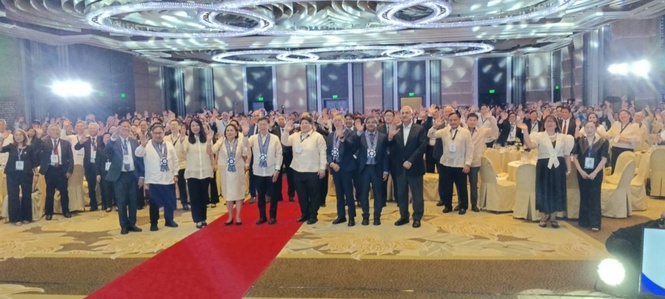
This was the shared objective of the maritime tripartite system, which organized the Philippine Maritime Convention (Philmarcon) 2026 — one of the nation's largest maritime conventions, which gathered key government leaders, maritime employers and maritime labor unions.
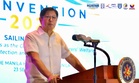
During its opening ceremony Tuesday, Sept. 22, at The Manila Hotel, Migrant Workers Secretary Hans Leo Cacdac emphasized that the “honest dialogues, practical ideas and meaningful commitments” made over the two-day convention must translate into a common direction through the Seafarers Voyage Plan 2030 and the Philippine Maritime Convention 2026 Declaration.
“This will reflect what we are prepared to do for Philippine seafaring — to strengthen a Philippine maritime system where the seafarer is protected, competent, respected and prepared for the future; where government institutions work together rather than in isolation; where labor and industry remain genuine partners; where our education and training systems keep pace with technological change; where welfare and protection are integral to maritime excellence; and where the Philippines contributes not only seafarers to the global maritime industry, but also leadership in shaping its future,” Cacdac said.
Echoing this vision, Dr. Conrado F. Oca, president of the Associated Marine Officers' and Seamen's Union of the Philippines (AMOSUP), highlighted the enduring spirit of tripartism that has always defined the union's mission. He firmly stressed that AMOSUP's core commitment extends beyond standard labor protections, advocating for the comprehensive welfare, security and well-being of Filipino maritime workers and their families.
Meanwhile, Cacdac also underscored the need to future-proof Filipino seafarers in preparation for an increasingly complex maritime environment.
This includes security risks brought about by geopolitical tensions in Europe and the Middle East, evolving international shipping standards, technology, digitalization, artificial intelligence and the transition toward greener shipping.
“The maritime workforce of 2030 will operate in an environment that will be more digital, more technologically advanced and increasingly shaped by the transition toward cleaner and more sustainable shipping,” Cacdac stated.
“All these will require seafarers to develop new skills and competencies,” he added. “We therefore must continue strengthening the institutional systems around the Filipino seafarer. We must ensure that our policies and institutions remain responsive as the industry continues to evolve; this is also where our international partnerships become essential because, again, the Philippines does not operate its maritime industry in isolation.” Philmarcon was organized by the maritime tripartite group composed of the government, employers and labor unions. It was led by the Department of Migrant Workers (DMW) as the lead convenor, together with the Maritime Industry Authority (MARINA), AMOSUP and the Joint Manning Group (JMG) as co-convenors.
Themed "Sailing Forward: The Philippines as the Global Leader in Seafarer Welfare, Protection and Maritime Excellence," Philmarcon served as a platform for leadership dialogue, policy convergence and strategic action-setting. It brought together international shipowners and principal associations, licensed manning agencies, seafarers, labor unions, maritime education and training institutions, government agencies, and national and international maritime and labor organizations.
The opening day featured messages of support from the International Labour Organization (ILO), International Maritime Organization (IMO), International Transport Workers’ Federation (ITF), International Maritime Employers’ Council (IMEC), International Mariners Management Association of Japan (IMMAJ), the Department of Foreign Affairs (DFA), MARINA and the Overseas Workers Welfare Administration (OWWA).