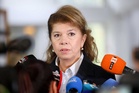
Acting President Iliana Yotova is the apparent winner of Bulgaria ’s presidential runoff, initial results of the vote count on Sunday showed.
The race for the largely ceremonial post had pitted Yotova, an ally of Prime Minister Rumen Radev, against Andrey Gyurov, a banker and former caretaker prime minister backed by the pro-Western opposition.
Yotova gained between 57.4% and 58.2% of the vote, according to estimates from several polling institutes, well ahead of Gyurov, who garnered between 38.6% and 39.6%.
If confirmed by official results, Yotova would become Bulgaria’s first elected female head of state.
Gyurov conceded defeat saying that “this is how the Bulgarian citizens have voted,” and added that the results had to be accepted as they stood.

The war in Ukraine, close to Bulgaria’s borders, played a significant role in the election in this country on NATO’s eastern flank.
Throughout the campaign, Yotova repeatedly advocated a peaceful solution for Ukraine through negotiations with Russia. She said she wanted to be a “President of Peace” for Bulgaria.
Gyurov, in contrast, signalled closer alignment with Western partners and stronger support for Ukraine in the face of Russia’s war of aggression.
The vote was the first major test for the Moscow-friendly Progressive Bulgaria party of Prime Minister Rumen Radev, which endorsed Yotova. The 62-year-old took over the presidency in January, when Radev stepped down to run for parliament.

Observers expect her to continue Radev’s policy of keeping Bulgaria on its European path, while also supporting better relations with Russia and the lifting of sanctions.
The election in this south-eastern EU country was overshadowed by the conflict in Ukraine. In recent weeks, drone attacks on merchant ships have become increasingly frequent in Bulgaria’s economic zone in the Black Sea, as well as in that of neighbouring Romania.
Bulgaria’s presidency is primarily ceremonial. The head of state has no executive powers, and all major policies must be approved by parliament. However, direct election gives the president greater political authority. The president leads the armed forces, can veto legislation, signs international treaties and appoints ambassadors.
Presidents in Bulgaria are directly elected for a five-year term and can serve no more than two terms.