AS Malaysia intensifies its national push to attract youths to agriculture through technology and innovation – a core focus highlighted at Maha 2026 (Malaysia Agriculture, Horticulture and Agrotourism Exhibition) – the question of how to bridge the generational divide in farming has never been more urgent.
Yet, the answer to this modern economic challenge may lie in an unexpected place: the sacred grounds of Kauai’s Hindu Monastery in Hawaii.
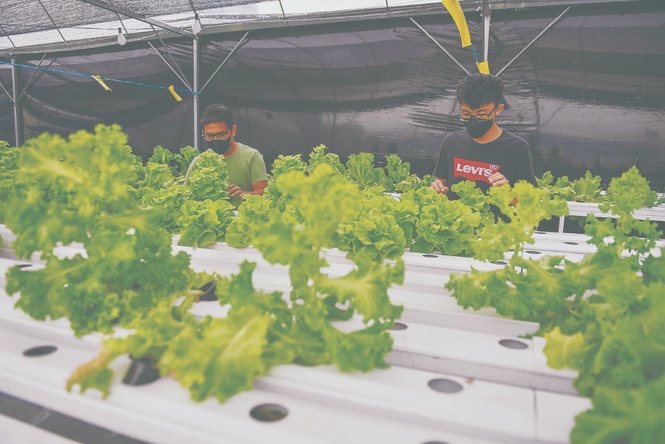
Home to fewer than 20 monks bound by vows of simplicity, the monastery grows roughly 70% of everything the monks eat using hydroponic systems, monitored nutrient cycles and modern technology.
As one monk overseeing food production shared, it has been “a real journey of discovery, using modern technology to grow quality produce”.
These are not market-driven entrepreneurs but spiritual men using laptops and sensors to ensure self-sufficiency – solving a problem entire national economies still struggle to address.
Fields we are leaving behind
Across Southeast Asia, agricultural populations are ageing, with few young replacements. In Malaysia, over 45% of farmers are aged 60 or above while youth interest in the sector continues to plummet.
A study in the Philippines revealed that 65% of farmers did not want their children to farm. Similarly, a survey of over 14,300 students by the Institute for Democracy and Economic Affairs (Ideas) found that most students, even those from farming households, aspire to work in entirely different sectors. This is not a nostalgia problem; it is a food security crisis.
If the generational chain feeding our region breaks, it will show up directly in food availability and rising costs. For years, the instinct has been to ask how to get young people to farm the way previous generations did. That is the wrong question.
Meeting young people where they are
Today’s youths are not averse to agriculture but to what farming currently represents: physically punishing labour, thin margins and limited growth pathways.
Regional research shows that young people embrace agriculture when it is linked to technology, entrepreneurship and climate innovation.
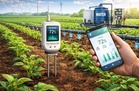
Precision irrigation, soil sensors, weather modelling and direct-to-market apps are not abstractions to a 22-year-old, they are standard digital tools.
This is the core lesson of the monastery: technology and tradition are complementary forces where one protects the other. Agriculture needs a redesign of how farming is done and who feels invited to do it.
Proof, not just promise
This is not mere theory. Through initiatives led by social impact institutions such as Rythm Foundation, this shift is already unfolding in practice.
In Manggarai, East Nusa Tenggara, Rythm partnered with Plan International Indonesia to launch the Green Skills Project, training youths in Climate-Smart Agriculture alongside gender equality principles.
The project set out to reach 200 young people but within the first year, 209 joined – 53% of whom were women, in a region where farming had long been treated strictly as men’s work.
The human impact goes deeper than statistics. Emilia Konsulata Alupan, raised to believe a woman’s place was in the background, mastered organic composting, sustainable cultivation and financial literacy to farm her own land and mentor neighbouring women.
Similarly, Yosifina Jaiman, a teacher-training graduate, learned horticulture from scratch – completing four harvest cycles of vegetables and earning nearly US$900 (RM3,676) from land she now manages.
Crucially, produce from these villages now supplies local markets in Ruteng, hotels in Labuan Bajo and Indonesia’s national school meal programme. Young farmers are building supply chains alongside growing crops.
View from the city
Food security is not only a rural story. As Southeast Asia urbanises, where food is grown is changing. Cities across the region are embracing rooftop farming as a genuine solution.
Hong Kong possesses an estimated six million square metres of agricultural-ready rooftop space, of which less than 1% is currently utilised.
In Singapore, food security modelling indicates that expanding rooftop and vertical farming is vital to achieving its “30 by 30” target – producing 30% of its food locally by 2030.
Beyond yield, urban farming changes how city dwellers relate to food. Bringing agriculture onto office towers transforms food production from a distant industry into something visible, local and relevant.
Invitation to the next generation
Consider again that monastery in Hawaii – where monks built systems to guarantee a harvest rather than praying for one.
Without press releases or policy mandates, a small community decided its food security was worth learning something new. That is the mindset required for young people observing agriculture from a distance.
The tools exist to make farming a career of skill, technology and genuine economic opportunity. What is missing in most places is not capability; it is invitation.
If a handful of monks on a hillside can secure their food supply through curiosity and modern tools, the next generation across Southeast Asia can do the same – building sustainable livelihoods, not just harvests, in the process.
Datin Sri Umayal Eswaran is the chairperson of Rythm Foundation, the social impact initiative of the QI Group. She is also the founder of the Taarana School for children with special education needs in Malaysia. Comments: letters@thesundaily.com