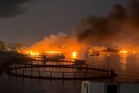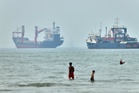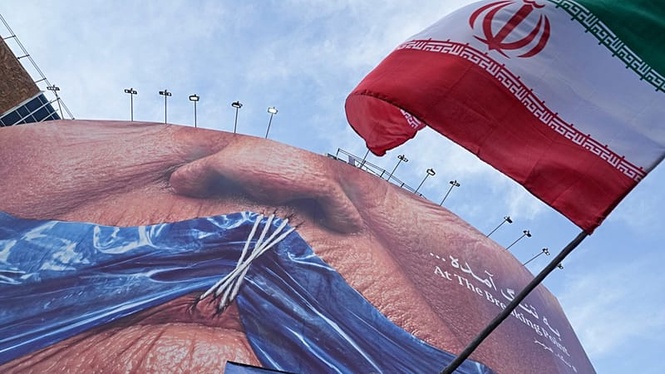
Iranian authorities say at least 14 people have been killed and dozens more have been injured following fresh US strikes on Iran, with several transport and maritime facilities reportedly damaged.
US Central command said the strikes were carried out to degrade the ability of Iranian forces "to threaten freedom of navigation" in the Strait of Hormuz, through which a fifth of the world's oil and liquefied natural gas normally flows.
"The United States is holding Iran accountable for recent unjustified aggression against commercial shipping," CENTCOM said in a statement.
In response, Iran's Revolutionary Guards (IRGC) said on Thursday that they had hit US military bases in Bahrain and Kuwait.
The Guards said they struck "key infrastructure and facilities" at US bases in Arifjan and Ali Al Salem in Kuwait and Juffair and Sheikh Isa in Bahrain with missiles and drones.
They also warned of further action against other bases across the region if US attacks continued.
Iran’s Foreign Ministry said on Thursday that the latest wave of US strikes constituted “a blatant war crime," condemning what it called “aggressive actions” by the US military.
It comes amid heightened tensions over security in the Gulf and the future of the fragile Iran-US memorandum of understanding.
Iran reports casualties and damage to infrastructure
Iran’s Health Ministry said on Thursday that US strikes carried out over recent days had targeted five provinces, leaving 14 dead and 78 injured. The ministry added that 47 of those wounded remained in hospital.
Iranian authorities also reported damage to several key infrastructure sites.
The head of the Shahid Bahonar Port and Maritime Administration said one of the floating piers at Sirik port sustained serious damage during overnight strikes.
Iran’s railway authority announced that passenger services on the Tehran-Mashhad route were suspended after a section of the railway was hit. Repair teams were deployed to the site, while authorities said arrangements were being made to transfer stranded passengers to Mashhad by road.
In Golestan province, the IRGC-affiliated Ninoa Corps said a cruise missile struck the Agh Tappeh Khan bridge in Aqqala early Thursday. The group said there were no casualties and urged residents to remain calm.
Axios also, reported, citing a US official, that American aircraft had targeted two railway bridges in Iran on Wednesday.
Chabahar port raises regional concerns
The head of the Chabahar Free Zone Organisation, Mohammad Saeed Arbabi, said that following a US strike on parts of Chabahar, authorities began evacuating vehicles stored in warehouses in the area. He said around 300 vehicles had been removed by midnight, with the operation expected to continue overnight to relocate an additional 100 vehicles.
Arbabi also said the maritime traffic control tower at the Chabahar Free Zone was targeted and damaged during the strike.
Iran’s state-run IRNA news agency had earlier reported several hours of power outages in parts of Chabahar following the attacks.
Attention has also focused on possible developments around Chabahar port in southeastern Iran.
Located outside the Strait of Hormuz, Chabahar is Iran’s only deep-water ocean port with direct access to the Indian Ocean. The port has strategic importance for regional trade, particularly because it provides an alternative route to the Strait of Hormuz.
India has invested significantly in the development of Chabahar as part of a wider connectivity project linking India with Afghanistan and Central Asia.
Analysts say any disruption to operations at the port could have consequences beyond Iran, affecting regional trade routes and one of India’s key infrastructure projects.
Strait of Hormuz traffic slows sharply
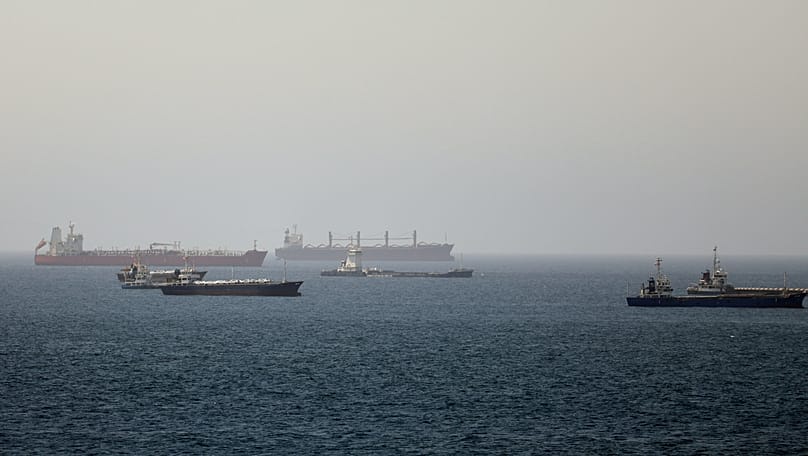
The strikes have also affected maritime activity in the Gulf.
According to Bloomberg, citing ship-tracking data, traffic through the Strait of Hormuz has dropped sharply following consecutive days of US strikes.
Around 14 cargo vessels crossed the strategic waterway in both directions on Wednesday, the lowest level since the Iran-US interim memorandum was reached on 16 June.
The figure compares with an average of around 34 ships per day in the weeks following the agreement. Larger vessels have largely avoided the passage, with only limited exceptions, according to the report.
The Strait of Hormuz is one of the world’s most important energy routes, with a significant share of global oil and gas exports passing through it.
Khamenei’s funeral procession reaches Mashhad
The renewed military action has coincided with funeral ceremonies for Iran’s former Supreme Leader Ayatollah Ali Khamenei.
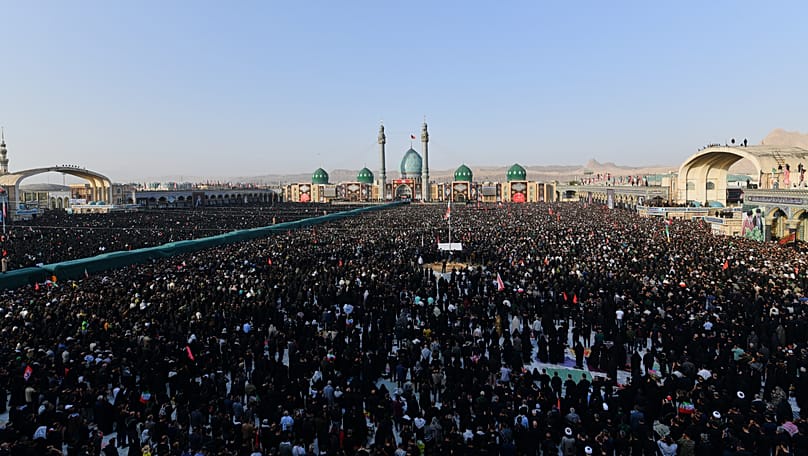
A plane carrying his body arrived at Shahid Hasheminejad Airport in Mashhad on Thursday. According to Iranian authorities, the burial ceremony is scheduled for later in the day, near the Imam Reza shrine.
The funeral processions have taken place over several days in Iran and Iraq, including in the holy cities of Najaf and Karbala.
Tehran calls for end to talks, though diplomatic efforts continue
The strikes triggered strong political reactions in Tehran.
Iranian state-linked newspaper Kayhan called on authorities to officially end negotiations and the memorandum with Washington, arguing that “missiles are now shaping the future”.
The newspaper warned that further pressure on the Strait of Hormuz could affect global energy markets and said the United States would eventually seek a ceasefire.
Iran’s ambassador to the United Nations, Amir Saeid Iravani, accused Washington of violating the UN Charter and the commitments outlined in the Islamabad memorandum.
He said the strikes represented a violation of Article 2(4) of the UN Charter and a breach of the first clause of the agreement.
Meanwhile, regional diplomatic efforts continued. Qatar’s Prime Minister held a phone call with Iranian Foreign Minister Abbas Araghchi to discuss the latest escalation.
Qatar’s Foreign Ministry said the prime minister condemned attacks on commercial vessels in the Strait of Hormuz and called on all parties to remain committed to dialogue and the implementation of agreed provisions under the memorandum.
Trump warns things ‘will get much worse’ if attacks on shipping continue
Trump previously warned that if Iran kept targeting ships in the Strait of Hormuz, things would "get much worse," after he ordered new strikes on the country following attacks on three ships in the vital shipping channel a day earlier.
Before ordering the latest strikes, Trump said the ceasefire with Iran was over, prompting mediators Pakistan and Qatar and the United Nations to call for de-escalation.
Trump had said earlier in the day that the latest back-and-forth fighting would not result in “long-term” military action and left the door open to more talks.