
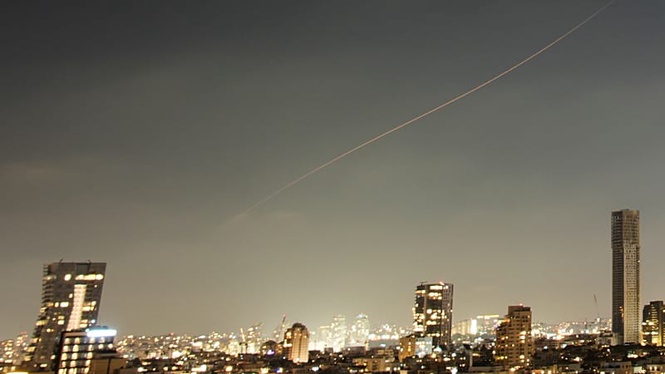
Benjamin Netanyahu declared on Monday that Israel’s recent strikes on Iran had succeeded in deterring Tehran from continuing its attacks, and that hostilities between the two sides had effectively paused.
“At this moment, the fire on that front is contained - after we struck the terror regime in Tehran, it stopped attacking us,” Netanyahu said in a televised statement.
He added that Israel would respond forcefully if the situation changed, warning that should Iran “make the mistake of resuming attacks against us, we will respond with full force”.
Earlier, in his first comments since Iran and Israel traded strikes, US President Donald Trump wrote online: “Israel and Iran must immediately stop 'shooting.'"
Trump's post on Truth Social comes after Iran held the US responsible for the resumption of fighting with Israel, reasoning that Israel's actions "cannot be separated" from US policy.
"Without a doubt, as I said, the actions of the Zionist regime in the region cannot be separated from US policies," foreign ministry spokesman Esmaeil Baqaei said at a press conference in Tehran.
"No one believes that the Zionist regime would carry out any action without prior coordination and cooperation with the United States," he added as Israel warned a third barrage of missiles was incoming from Iran on Monday.
The Israel Defence Forces (IDF) posted on Telegram it was preparing to "intercept the threat" after waves of Iranian missiles targeted the country.
Earlier, AFP journalists reported hearing at least eight explosions over Jerusalem as Israeli forces sought to intercept the second wave of incoming missiles.
Israel launched airstrikes into central and western Iran early on Monday in response to missiles fired from Tehran, the first such barrage since an April ceasefire took hold in the Middle East war.
"A short while ago, dozens of Israeli Air Force fighter jets, directed by the IDF Intelligence Directorate, completed a large-scale strike on strategic defence systems belonging to the Iranian terror regime," the IDF posted on social media at 9:54 am CET.
"These strikes further enhance the Israeli Air Force’s freedom of action in Iranian airspace," the post continued.
Iranian state television reported the sound of explosions being heard in Isfahan, Karaj, Tabriz and Tehran, without immediately elaborating.
Iran closed the airspace around Tehran’s Imam Khomeini International Airport, the country’s main airfield, after the Israeli attack.
The Israeli military issued a statement as the strikes started: “A short while ago, the Israeli Air Force struck military targets belonging to the Iranian terror regime in western and central Iran.”
Earlier, Israel said its air defences were intercepting Iranian missiles after Tehran warned it would attack Israel as a response to Israeli strikes on Beirut.
Iran's Revolutionary Guards called the attack a "warning" after Israel struck Beirut's southern suburbs earlier in the day, threatening wider strikes in the event of repeated aggression.
"Sirens were sounded in several areas across the country, following the identification of missiles launched from Iran toward the State of Israel," the military said in a statement.
Israel accused Tehran of committing a "grave mistake" with its assault, which Israel's military said amounted to 11 missiles, all of which were intercepted, with no casualties.
Israeli military chief Lieutenant General Eyal Zamir vowed the military would "strike the enemy with force as soon as the green light is given".
The Iranian Revolutionary Guard announced in a statement to the Iranian media that it fired ballistic missiles at “the Ramat David Airbase, the source of the acts of aggression” against “oppressed civilians” in Lebanon.
Tehran has insisted that any deal to permanently end the war must also halt the parallel conflict in Lebanon, where Israel is pursuing a campaign against the Iran-backed movement Hezbollah, and had warned that any new attacks on Beirut would trigger a "full-scale resumption" of hostilities.
Iran’s Revolutionary Guard announced earlier that it was ready to launch an attack on Israel, after Iranian Supreme Leader Mojtaba Khamenei reportedly authorised the attack in response to Israeli strikes on Beirut, in a statement reported by Iranian state TV.
Iran says Israel crossed 'all red lines'
Iran's attack flurry reportedly prompted US President Donald Trump to call Israeli Prime Minister Benjamin Netanyahu to advise against retaliation, even as Israeli military leaders vowed to strike as soon as they are given the go-ahead.
"I am going to call Bibi right now and tell him not to retaliate," Trump was quoted as saying by Axios journalist Barak Ravid in a phone interview, using the Israeli leader's nickname.
"Israel had its strike and Iran had its strike. We don't need another one," Trump reportedly said.
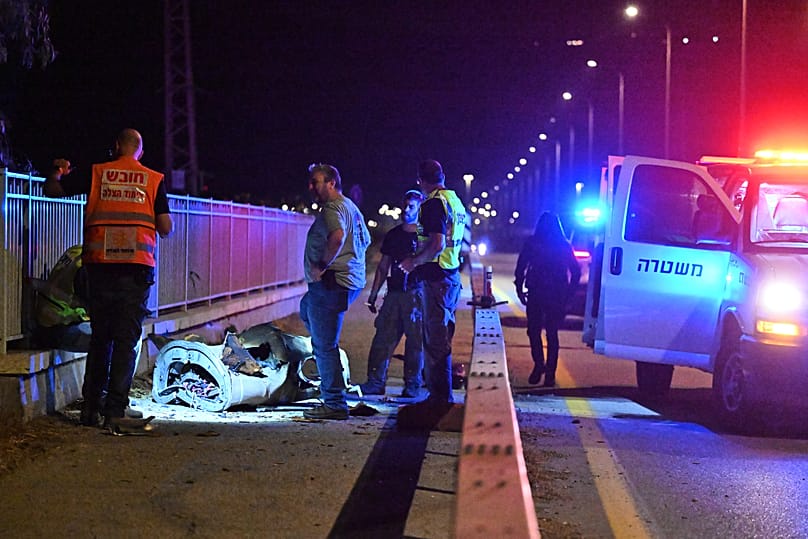
A commander of the Iranian military’s Khatam al-Anbiya, a conglomerate focused on ballistic missiles, said that Israel crossed “all red lines” by attacking Beirut and widening its offensive in southern Lebanon, according to the Iranian Tasnim agency.
“We had previously warned that if the crime in the suburbs of Beirut spreads, we will attack targets in the occupied territories,” the Iranian military statement said, adding that Israel “must stop its attacks on southern Lebanon and the suburbs, and if it expands its attacks on that region or responds to Iran’s actions, it will face more crushing and regrettable blows and destructive attacks will begin against the regime and its supporters”.
For days, negotiations between Iran and the United States over the fragile ceasefire in the war had been stalled by the fighting between Israel and the Lebanese Shiite militia Hezbollah. Israel now occupies southern Lebanon and had moved into areas of the country it hadn't held in a quarter century — leading to fears about them further widening their campaign.