
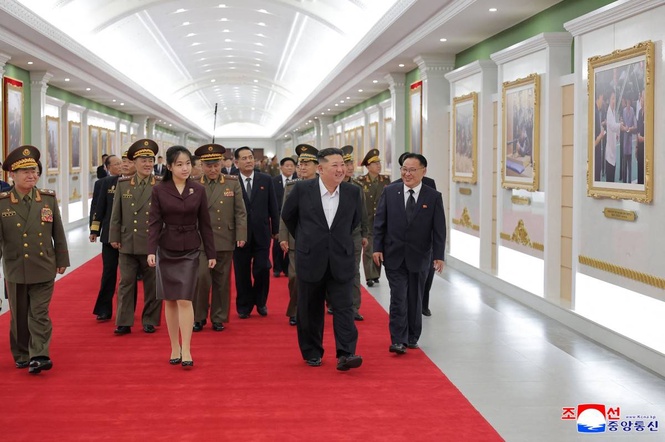
SHAH ALAM - Online rumours alleging that North Korean leader Kim Jong-un has died after falling into a coma have fuelled speculation about a possible succession crisis, alongside claims that China has deployed troops to Pyongyang.
The allegations were made by Wanjun Xie, chairman of the China Democracy Party (CDP), who claimed on social media that Kim suffered a severe cerebral haemorrhage, received emergency medical treatment in Beijing and subsequently died.
However, there is no verified evidence establishing that Kim is dead, that a change of leadership has taken place or that Chinese troops have been deployed to North Korea. The claims remain unverified.
According to Xie's post on X, a team of medical experts from Peking Union Medical College Hospital was initially dispatched to North Korea to assist in treating Kim.
He alleged that the North Korean leader was subsequently transferred to Beijing because of inadequate medical facilities in his home country.
Xie further claimed that Kim's condition was too severe for doctors to save him, alleging that his body was secretly returned to North Korea and news of his death withheld.
The allegations have not been independently substantiated.
Claims of 9,000 Chinese troops sent to Pyongyang
Xie also alleged that China had dispatched 9,000 troops to Pyongyang to help Kim's daughter, Kim Ju-ae, stabilise the regime amid a potential succession crisis.
In a separate claim, he said the People's Liberation Army's Northern Theater Command had been placed on high alert, with military leave and personnel movements allegedly restricted.
However, no independently verified evidence has established that the reported deployment or military alert took place.
Xie's claims have also linked the alleged death to a possible power struggle within North Korea's leadership, although no verified evidence has established that such a crisis is underway.
Kim Yo-jong or Kim Ju-ae: Who could succeed Kim?
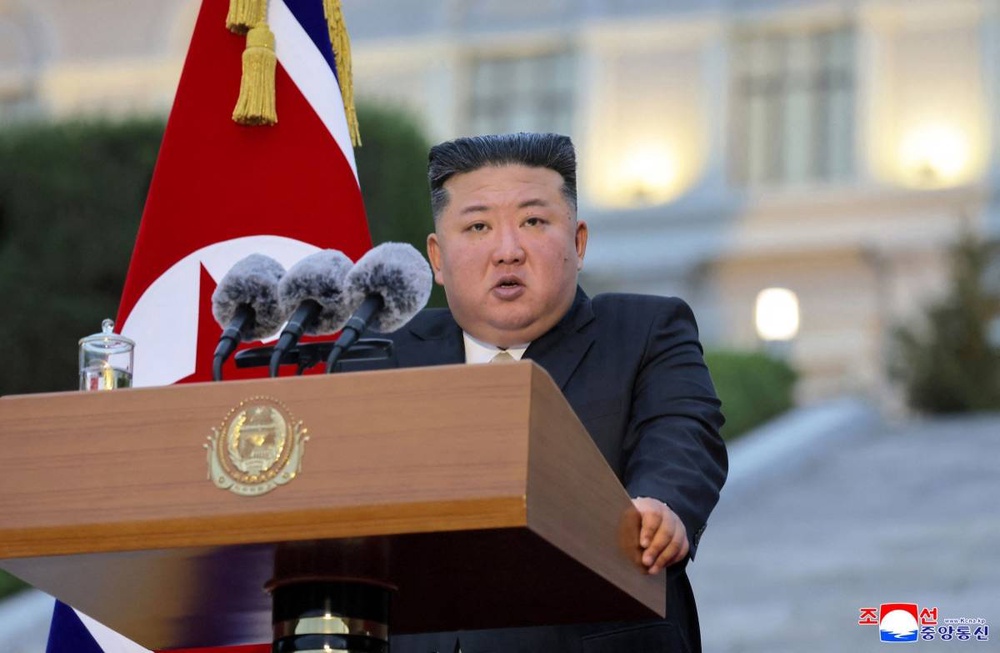
The rumours have revived questions about North Korea's succession, particularly the potential roles of Kim's sister, Kim Yo-jong, and his daughter, Kim Ju-ae.
Kim Yo-jong is a senior political figure who has held prominent positions within North Korea's ruling establishment. Her influence has made her a subject of speculation about the country's future leadership.
Kim Ju-ae, meanwhile, has accompanied her father at several high-profile public events, prompting speculation over whether she could eventually succeed him.
Xie alleged that Kim Yo-jong had taken control of the regime instead of Kim Ju-ae. He also claimed that tensions with South Korea had been heightened as part of efforts to consolidate authority.
These assertions by Xie have not been independently verified. North Korea has not publicly announced a definitive succession plan, and there is no confirmed evidence that either Kim Yo-jong or Kim Ju-ae has assumed power.
Who is Wanjun Xie?
Xie is a Chinese political activist who serves as chairman of the China Democracy Party, an opposition movement advocating democratic political reform in China.
According to the party's biographical account, Xie was involved in the 1989 pro-democracy movement in Beijing, including student activism associated with the Tiananmen Square protests.
He later became involved in efforts to organise the China Democracy Party in 1998, including establishing its preparatory committee in Shandong province.
The party emerged during a period of political activism calling for greater democratic participation in China. Chinese authorities banned the organisation, and several of its members were detained or imprisoned. Human Rights Watch documented the suppression of the movement in its 2000 report, China: Nipped in the Bud — The Suppression of the China Democracy Party.
Xie left China in 1999 and subsequently continued his political activities in the United States, according to his published biography.
His recent allegations about Kim's health and China's purported military deployment must therefore be assessed on the available evidence rather than his political affiliation.
Xie's previous claims about Xi Jinping's health
The allegations about Kim follow separate claims Xie made about Chinese President Xi Jinping's health.
In September, Xie alleged that Xi had suffered a stroke while attending the BRICS summit in India and subsequently received emergency treatment in Beijing.
However, India Today reported that the claims had not been independently verified and that there was no official confirmation from Beijing or New Delhi that Xi had suffered a stroke, undergone surgery or been hospitalised. A community note was also added to Xie's post on X, according to the report.
Kim's last reported public appearance
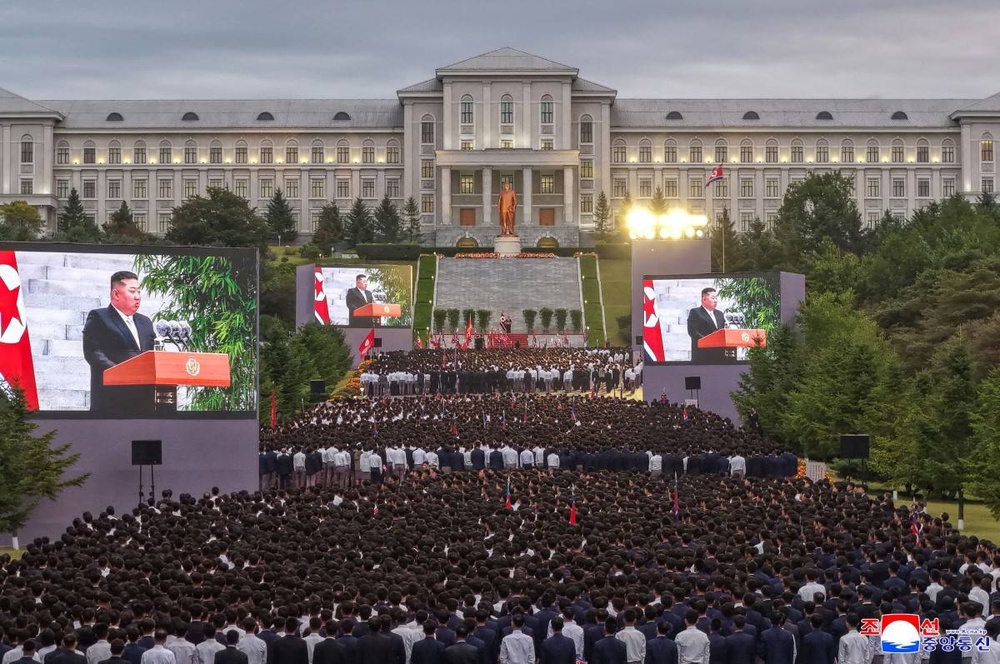
The latest reports cited in coverage of the rumours said Kim attended the opening of North Korea's National Defence Revolution Museum on Oct 11, accompanied by his wife and daughter.
Yonhap, citing North Korean state media, reported on Oct 13 that Kim had attended the event. This provides a reported account of his appearance on that date but does not independently establish his current health status.
North Korea's limited transparency surrounding its leadership has historically contributed to speculation about Kim's health. Similar rumours circulated in 2020 after he was absent from public view for a period, before state media subsequently published images of him at a public event.
