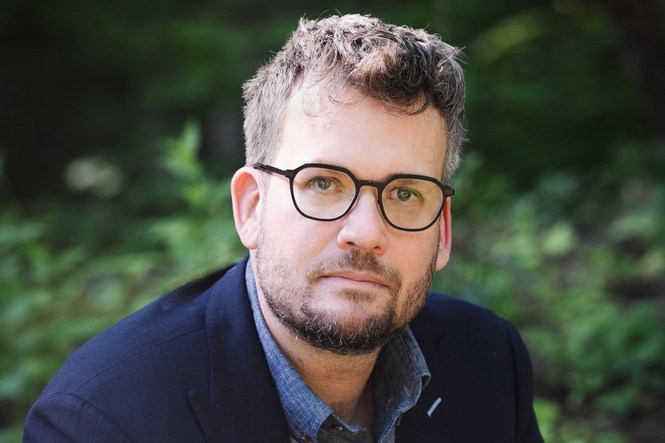
For years, John Green has kept a note in his wallet that reads: “In 1990, 12 million children died under the age of five. Last year, fewer than five million did.” It’s a pocket-sized symbol of hard-boiled optimism. A reminder, he tells me, jetlagged and nursing a beer in a hotel lobby, “that hope is the correct response to this mess, as opposed to despair”.
Granted, carrying around a note like this is exactly the sort of thing a character in a John Green novel would do. The bestselling author fills his books with such irresistible quirks: the boy with cancer who smokes unlit cigarettes; the boy who collects the last words of famous people; the boy obsessed with anagrams. That Green, 49 years old and born and bred in Indiana, should support, of all the football teams in the world, AFC Wimbledon is another eccentricity worthy of his novels. He’s here in London for a match.
Green has been a staple of YA fiction ever since his 2005 debut Looking for Alaska made every girl who read it resent her parents for their unimaginative choice in baby names. But it was his 2012 novel The Fault in Our Stars, about two teenagers with cancer who fall in love, that propelled him, somewhat uncomfortably, into a tier of celebrity rare for novelists, with his work tweeted about by Kim Kardashian and parodied on Saturday Night Live. In 2014, Green was named one of Time Magazine’s most influential people, the same year a blockbuster adaptation of his novel hit cinemas.
Over the years, he and his brother Hank also amassed a tremendous following with their vlogs about mental health, bowel movements, medical injustice and everything in between; today that number stands at 4 million. His book signings were attended by thousands of fans – some of whom would show up at his house uninvited. It got to be too much for an introvert with anxiety and OCD. “The solution in the end was to get less famous,” Green laughs, “to write about Dr Pepper and tuberculosis for 10 years.” His non-fiction endeavours were no less successful – Green’s last two books, a collection of essays published in 2021 and a meticulously researched history of tuberculosis in 2025, both debuted at No 1 on The New York Times nonfiction bestseller list – but they put a safe distance between the author and his readers.
Green’s new novel, Hollywood Ending, is his first in nine years. It follows two young actors who are shooting a buzzy arthouse film based on the life of Andy Warhol; Juniper is a former child star seeking legitimacy and Kai is a promising unknown on the cusp of superstardom. Thrown together by this film, they navigate the choppy waters of their early twenties, their inherent complexities magnified times a billion by their celebrity.
Like a lot of his readers, I have, over the years, wondered what Green – teen whisperer – makes of the social media landscape facing today’s youth. For someone nearing 50, he is better placed than you’d think to answer. “I’ve been on the social internet for 20 years so I’ve seen both sides of it, good and bad… mostly bad these days,” says Green, who had 5 million followers on Twitter before he logged off for good in 2022. “And for a young actor, or just a young person, you can’t divorce your public self from your private self with any clarity. Everybody is exchanging their private selves for public attention in a way that’s mediated by these five or six super-rich guys.”
Green is still on YouTube, though, where together with his brother he makes videos about Chernobyl, infectious diseases, and Big Tech lies. “Hank and I talk about this all the time,” he says. “You know, are we part of the solution because we’re trying to make a certain kind of content and make educational videos – or are we part of the problem just because we’re participating in this toxic soup?” They haven’t quite landed on an answer yet.
In the book, social media is painted as both exhilarating and deadening. As the premiere approaches, Kai and Juniper see their follower counts tick up almost like a doomsday clock ticking down to some spiritual catastrophe. Green knows firsthand that those numbers mean nothing. “It changes my life not at all, except that it gets me in rooms that I otherwise couldn’t get into,” he says, recalling how exciting it had felt when he and his brother reached 2 million subscribers on YouTube. Hitting the third million and then the fourth, he says, “I remember thinking, well, this is starting to feel a little empty.”
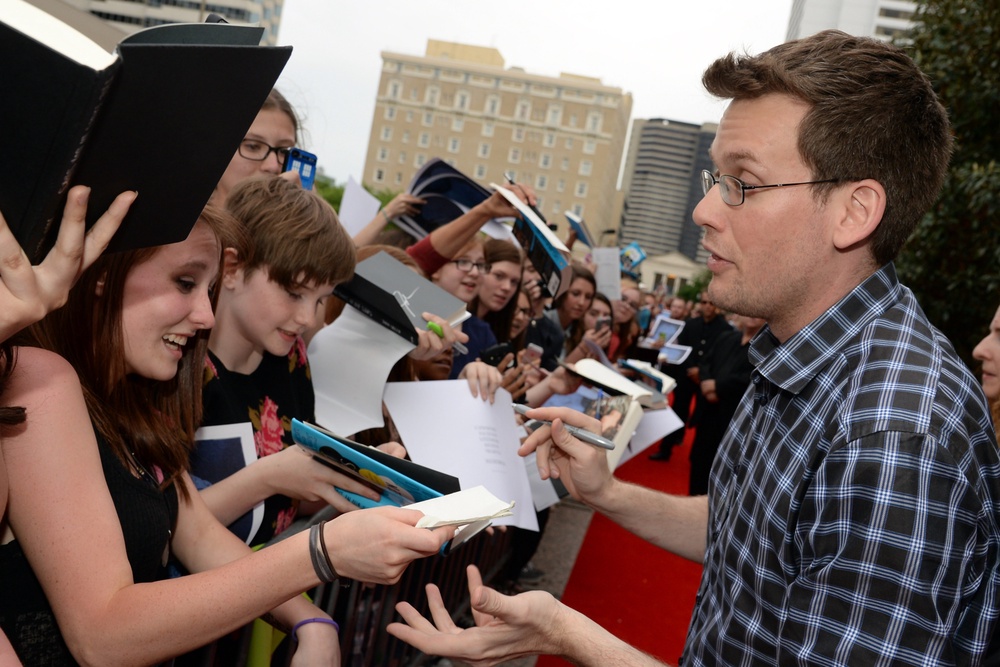
Hollywood Ending is Green’s first adult novel – which is not to say it is wildly different in tone. His protagonists may not be in their teens, but Hollywood Ending marks a return to that same intoxicating sphere of young adulthood so richly realised in his earlier books. For Green personally, that period was the most important of his own life. “It’s when a lot of doors close off to you,” says Green. “You have to start making choices. You can’t leave infinite doors open anymore. It’s a fascinating time. Very hard. I wouldn’t want to do it again. I found being 23 harder than being any other age.” Fourteen comes close.
It was also in his early twenties that he worked as a chaplain at a children’s hospital, six months that led directly to his interest in public health. Today, Green is a vocal spokesperson for global health equity, lobbying US congress and pharmaceutical companies and raising millions for health charities. It’s the reason he carries around that note in his pocket.
“I remember leaving the hospital for the last time and thinking I’ll never have a job that important, and I haven’t,” he says. “I saw a lot of kids die when I was a chaplain and it was really, really hard. I still feel angry about the tragedy of maternal and child death; nobody should die as a child for reasons that we know how to treat and prevent.”
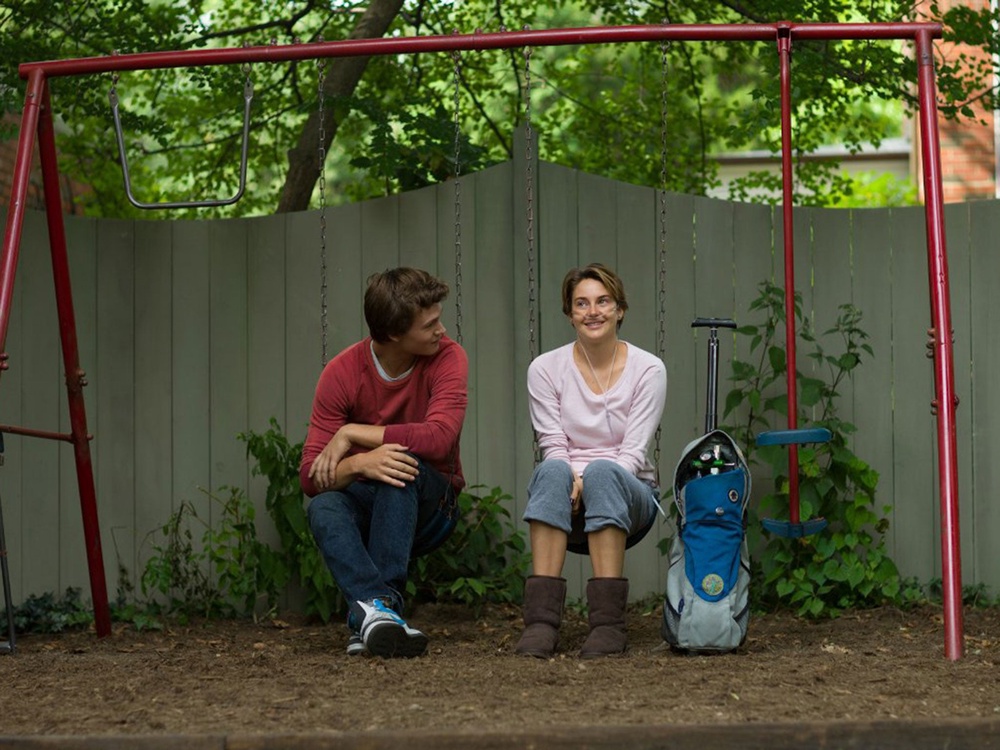
Reading a John Green book as an adult is a different experience to when you are a teenager. The first chapter ends with a handsome boy gifting a beautiful girl a drawing of herself, and features dialogue such as: “I act because I get a break from being my goddamn self.” It’s writing that invites you to lower your defences; it calls for you to roll on your back and expose your soft pink belly. It asks that you not be a cynic. A big ask, Green knows. “Irony is a form of armour and I’m always trying to disarm the reader,” he says. “It’s hard work because I know people bring a lot of cynicism and irony to the process of reading, and I totally get that. I do it too.”
I’d wager that Green does it less than your average adult. Nearly in his fifties, he has managed to hold on to the sort of endearing sincerity you shed after adolescence. “I am a very earnest person, achingly annoyingly earnest,” he says. “If it’s between erring on the side of coolness or the side of earnestness, I always am going to choose being earnest because I don’t want to be cold to the world or what the world has to show me.”
Some might call it cringe, I say with a smile, a word that has been applied to Green’s writing at various points, but a descriptor he doesn’t shy away from. “I find that actually, if you listen to conversations, people say cringy stuff pretty often,” he laughs. “It’s a very fine line between earnest and cringe and I’ve spent my whole career, even in my non-fiction writing, trying to find that line.”
If teenagers are reading Hamlet, they can read a John Green novel
He is less concerned about the line between adult and young adult fiction. “I think teens are infinitely intellectually capable,” he says. “There are ways that they think about death or loss or suffering that are different from the ways adults do, but they’re still thinking about it. I mean, most of the people who are going to read Hamlet this year are teens. If they’re reading Hamlet, they can read a John Green novel.”
Not everyone feels the same. Green is, if you can believe it, the author of the most banned book in the United States. Thanks to a fleeting moment of awkward oral sex, Looking for Alaska – an award-winning novel that had been studied at schools for its honest exploration of grief and love – is now barred from many of those same classrooms across Florida and Iowa. It’s also banned at Green’s former high school in Indiana, where he still lives. “It’s uncomfortable to be in the grocery store and know that two out of every 10 people in Indianapolis who recognise me recognise me as somebody they think is harming kids,” says Green. “My books were banned in the town north of me. My doctor’s there; I go there all the time, and it’s so weird to think that kids aren’t allowed to access my books in this school’s library.”
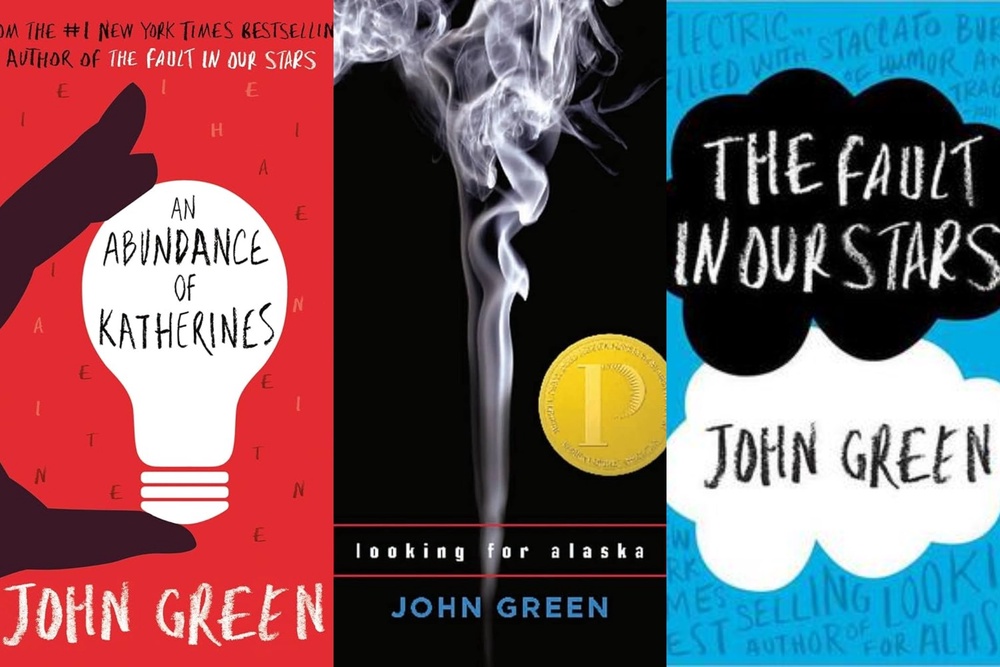
What’s ironic is that most people banning the book have never read it. “I would say this about the social internet in general in 2026: the decontextualisation of story is everywhere and it’s infuriating,” he says. “We should have fewer opinions about books we haven’t read. Most people who have a [snarky] opinion on Twilight have never read Twilight.” For what it is worth, you will never catch Green saying a bad word about Twilight.
Green wishes to make clear that he is not the main character in the censorship story. “I often feel like they put me on these lists so they can say, ‘Look, we also ban books by white guys.’ Almost all the other books are by queer authors or authors of colour,” he says. “It bums me out mostly because it makes it so hard for librarians and teachers in the United States to do their jobs. The cost of teaching a book that’s controversial is potentially your career now.”
As for the near-decade break from fiction, Green chalks it up to his inability to answer a simple question: what would the point be of another John Green novel? “I knew what other people’s fiction was for, but I didn’t know why there should be another book by me. What did I have to offer or contribute?” he says.
Eventually, he landed on an answer. “I wanted to write a book about how we survive what we have to survive and how essential it is to be un-alone,” says Greene, citing a moment in Hollywood Ending when a journalist asks Juniper what she wants viewers to take away from her movie. “Juniper says, ‘I want them to feel the power of art and the power of love,’ and her publicist tells her, ‘You have to say that without sounding like you’re puking.’ That’s what I want people to feel: the power of art and the power of love – but I have to say it without puking.” John Green, as sincere as ever.
‘Hollywood Ending’ is published by Penguin Random House and is out now
Read MoreBarbara Cartland sold millions. Why is it so hard to find her novels in shops today?
This Booker Prize shortlist is a long way from the glory years of Rushdie and Golding