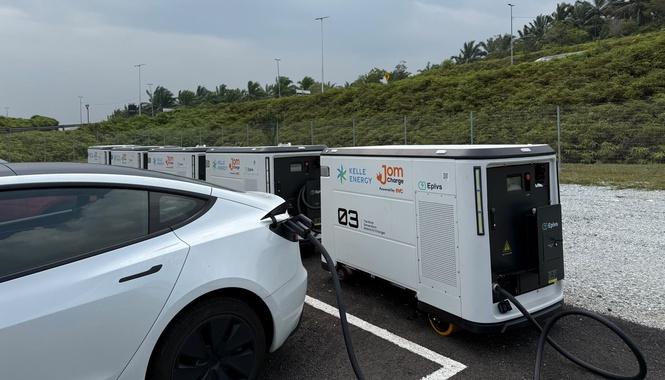
EV Connection (JomCharge) has deployed a total of 1.4MW of EV charging capacity at Sepang International Circuit to support the private EV fleet for this weekend’s Formula 1 Gulf Air Bahrain Grand Prix in Malaysia.
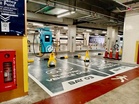
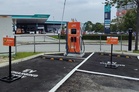
The expanded EV charging setup consists of both fixed JomChargeX DC chargers and Kelle Energy mobile EV chargers. In total, the site at SIC Motorsport Park provides a total of 13 DC charging nozzles for vehicles supporting the Formula 1 event.
Before you get too excited, take note that these chargers are reserved exclusively for the event’s private fleet and are not open for public use during the F1 weekend.
1.4MW of EV charging capacity deployed at Sepang
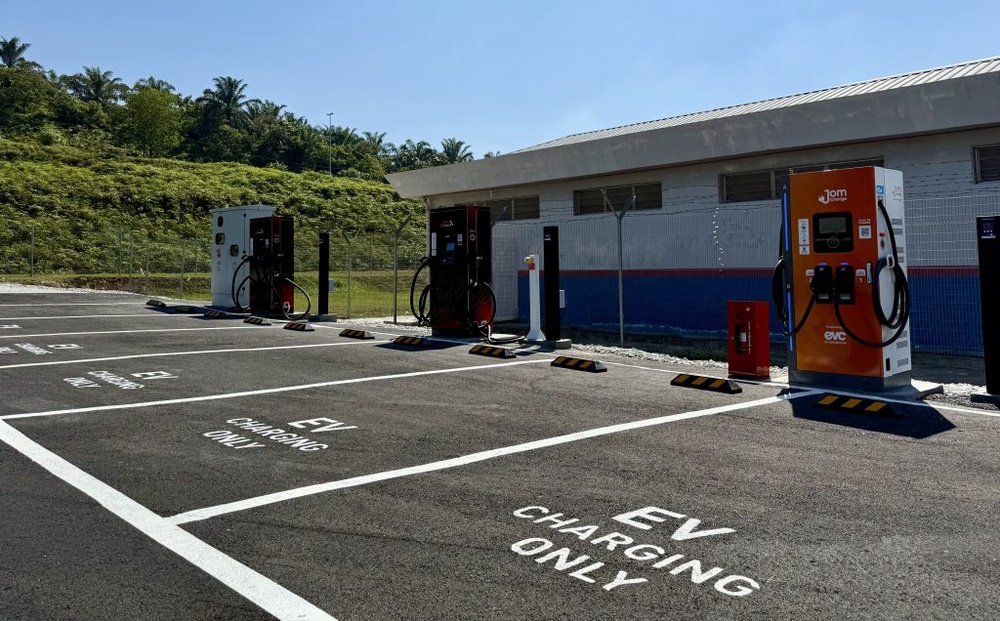
Several months ago, JomCharge had deployed three DC Chargers at Sepang International Circuit that provide a total of 360kW of charging capacity across six nozzles.
Another 1,050kW capacity is provided across seven mobile charging nozzles through its collaboration with Kelle Energy. This brings the combined charging capacity to 1.4MW.
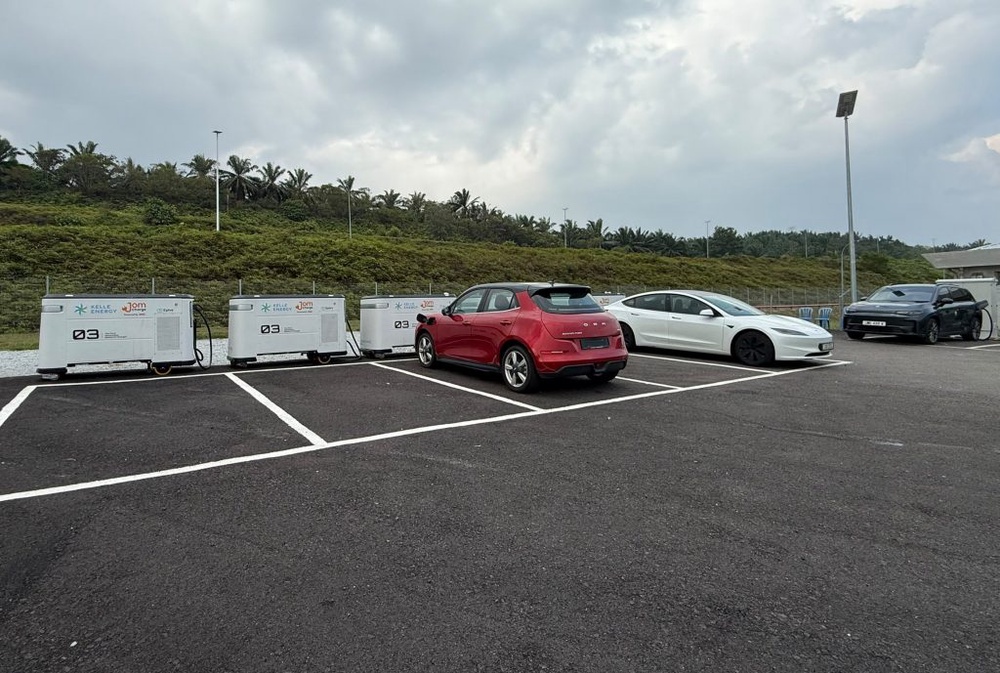
JomCharge said the charging infrastructure is being used to support the event’s private fleet, helping to keep vehicles used by teams, partners and event operations charged throughout the weekend.
The Formula 1 Gulf Air Bahrain Grand Prix in Malaysia is taking place at Sepang International Circuit from 2 to 4 October 2026. This marks Formula 1’s return to Sepang for the first time since the circuit last hosted an F1 race in 2017.
Kelle Energy mobile EV chargers add temporary DC charging capacity
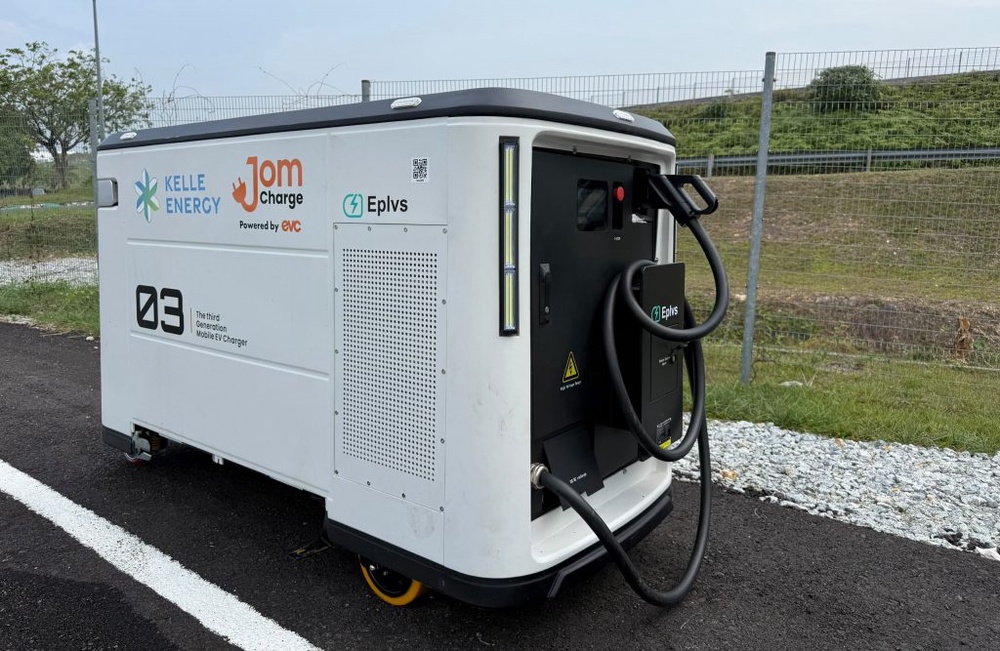
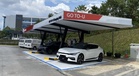
As shown above, JomCharge and Kelle Energy have deployed the newer third-generation mobile EV chargers (EPLVS).
The units deployed at Sepang are capable of delivering up to 150kW of DC charging and feature an integrated battery energy storage system with approximately 200kWh of stored energy capacity.
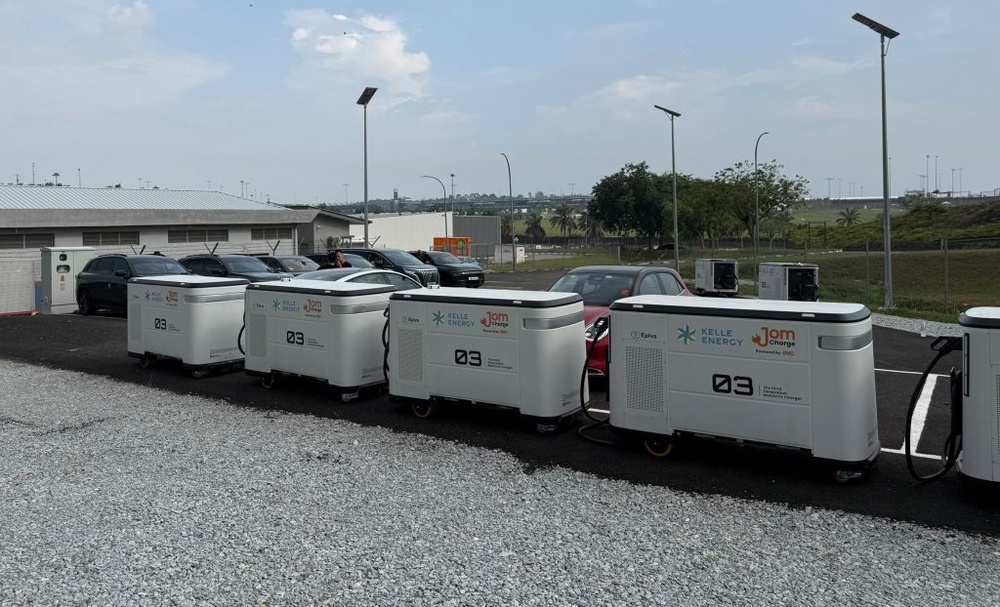
Instead of relying entirely on a fixed charger installation, the mobile chargers can easily provide additional DC charging capacity where it is needed without having to install another permanent charging point.
Similar to Battery Energy Storage System (BESS) assisted EV chargers, these mobile EV chargers would need to be recharged once the battery is depleted.
The mobile units have motorised wheels and can be repositioned using a remote control. So in this setup, these mobile EV “powerbanks” can be recharged at the JomChargeX chargers when needed.
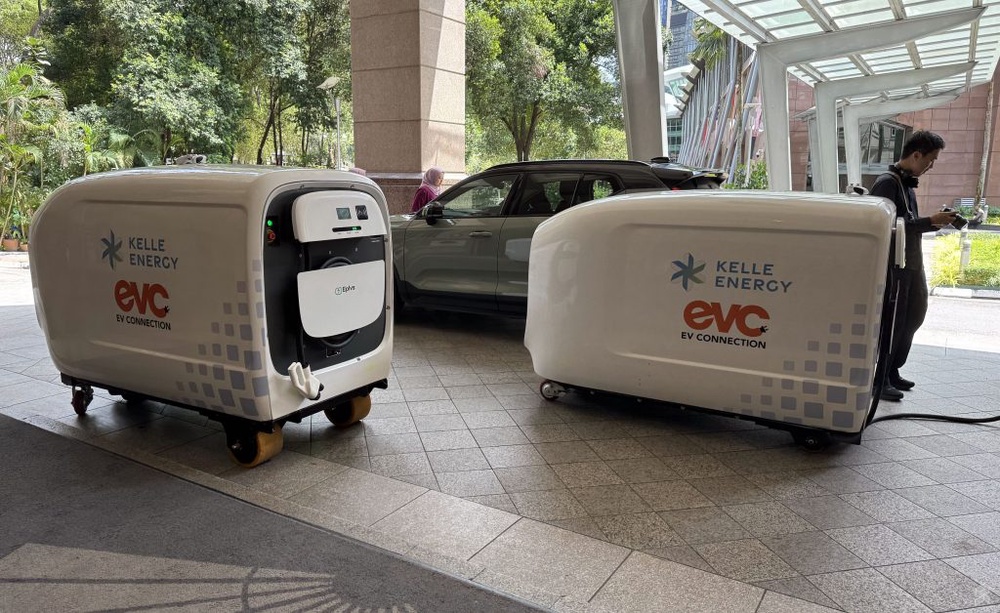
In February this year, Kelle Energy announced a partnership with JomCharge, to deploy 100 mobile EV chargers in Malaysia. The version demonstrated at the time was equipped with a 60kW DC charger and a 184kWh BESS.
The mobile chargers were pitched as a way to add EV charging capacity at locations with grid constraints, as well as for commercial fleets, temporary sites and events where installing permanent charging infrastructure may not be practical.
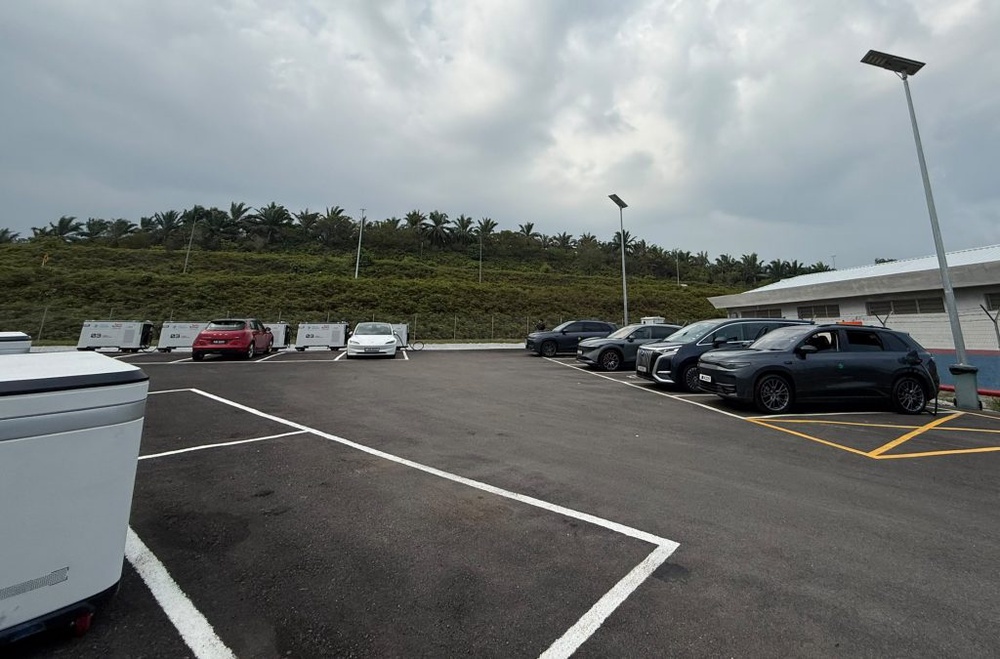
The temporary deployment at Sepang provides a real-world example of how such mobile charging units can supplement existing fixed DC chargers when significantly more charging capacity is required.
Mobile EV chargers like these could also be useful during festive seasons, when demand for quick EV top-ups typically increases at highway R&Rs. However, this would only be practical if there is a sufficiently stable power source nearby to recharge the mobile chargers once their onboard batteries are depleted.