THE future has arrived for the global maritime industry, and stakeholders are scrambling to keep up through new vessel acquisitions, updated regulations, and upskilled seafarers.
This rapid shift towards green technology and automation carries an expensive cost, however, and industry stakeholders are now asking who foots the bill for seafarer training.
Based on studies by international classification society, Det Norske Veritas (DNV), 564 LNG-fueled vessels will add to the 590 that are currently in operation worldwide. This sets a projection of 1,154 LNG-fueled ships by 2028.
These complex and technologically advanced vessels will be manned by about 800,000 seafarers of different nationalities, about 25 percent of whom are Filipinos.
The International Maritime Organization’s (IMO) Greenhouse Gas (GHG) Strategy envisions a “just and equitable transition” — but in practice, the training cost allocation remains opaque and unfair.
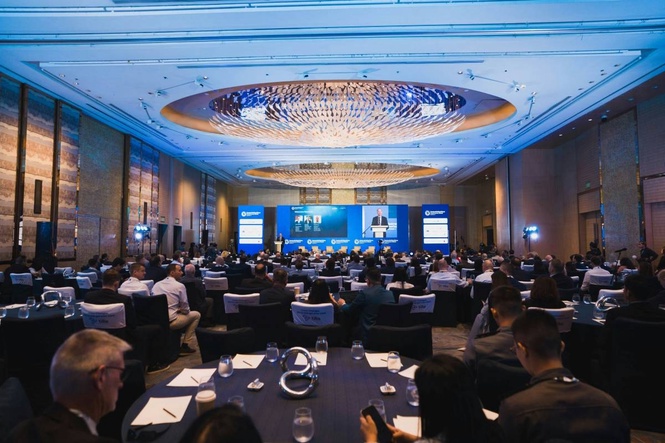
During the Seatrade Maritime Crew Connect Global 2026 in Manila, leaders and experts in maritime training and ship management were one in saying that innovation, indeed, comes with a cost.
Hari Subramaniam, a former ship captain and chief growth officer of Howden, an international marine hull company, said that “everything has become expensive in shipping with crew cost as one of the highest in operational expenses. Invariably, it’s the seafarer who is carrying the brunt of it.”
Gurpreet Singh Ahluwalia, group general manager of Bernard Schulte Shipmanagement, added that while upskilling is a necessity for seafarer safety, it should not be an added burden for seafarers.
This was echoed by Simona Toma, chief of maritime human resources of Columbia Shipmanagement. She concurred that while ship management companies have invested on equipment, it can only be operated by upskilled seafarers.
The group acknowledged that many seafarers face financial stress due to unpredictable income, inadequate shore-based support, and carrying the burden of what Toma called as “the hidden cost of training.”
“Seafarers are not able to work while taking these trainings; are the companies paying for the time lost?” she asked.
Shipowners’ responsibility?
For ship captain and famous Filipino vlogger, John Michael Lechugas, any new and mandatory training requirements for decarbonization and digitalization should be on the employer or shipowner.
“If the training is required by the flag state, international regulations, or the company’s implementation of new technologies and operational standards, then it should be the responsibility of the shipowner to provide and finance it. After all, these requirements are necessary for the vessel to remain compliant and operate safely and efficiently,” he said.
“We must remember that upskilling is not just an investment of the seafarer; it is also an investment for the vessel, the company, and the future of the maritime industry. We cannot expect seafarers to keep up with the industry’s evolving demands while continuously passing the financial burden of mandatory training onto them,” he added.
Sid Quidem, chief mate for general cargo ships, agreed in saying that shipowners and employers should shoulder the cost of new trainings.
“They should provide the necessary training so their crew can safely and effectively operate new technologies on board. In the end, investing in seafarers’ skills is also an investment in the safety, efficiency, and future of their own vessels,” he said.
“The shipowner or employer should carry most of the cost,” Dr. Glenn Mark Blasquez, vice president for operations at the Southern Institute for Maritime Studies (SIMS), concurred with Lechugas and Quidem.
“The principle I would use is that whoever creates the need for the training should pay for it. Why the employer? Because they make the decision. A seafarer doesn’t choose a methanol engine or a new digital system. The owner does, and the owner earns the return on that asset. Crew training is as much a part of the investment as the engine,” Blasquez explained.
“These trainings are driven by industry developments, international regulations, and technological advancements, not simply by individual seafarers’ choices. Since shipowners are responsible for adapting their vessels to new requirements, investing in crew training should be part of their responsibility. A just transition should ensure that no seafarer is left behind simply because they cannot afford additional training,” Jed Mañebog, a chief engineer for cargo vessels, agreed.
Meanwhile, Blasquez added that these trainings for alternative-fueled ships are too expensive to solely be carried by seafarers.
Lechugas added that on top of the training fees, seafarers also take on the “hidden costs” of training.
“We pay for our transportation, accommodation and food, which are normally not shouldered by the company. Multiply that to the number of training days,” he explained, referring to seafarers who live in distant provinces and had to travel to Manila to undergo training and certification.
Balancing the burden
For Giovanni Tuapin, president of Intership Crew Philippines, this challenge can be balanced by a two-way, cost-sharing approach.
“Shipowners bear the legal responsibility for the safety of the vessel, cargo, and crew. Ensuring seafarers are properly trained to handle new green technologies directly mitigates expensive operational risks and liabilities.
Yashika F. Torib
Meanwhile, “seafarers who want to remain competitive must also invest in their own career development by taking online courses, attending seminars, forums, or completing short training modules. However, manufacturer approved training is often expensive, especially for junior engineers just starting their careers,” Tuapin explained.
He furthered that pushing the entire financial burden onto seafarers risk worsening the current global shortage of qualified mariners, while forcing shipowners to cover all costs could strain operating budgets.
“Under this model, seafarers cover standard STCW-related training required for basic certification, while employers shoulder the costs for company specific or manufacturer specific training,” he concluded.