
KUALA LUMPUR: For years, Malaysians have watched the local badminton scene suffer from a peculiar, self-inflicted tunnel vision that obsesses over finding the next big star while leaving half its talent pool to wither on the vine.
So when the Kuala Lumpur Badminton Association (KLBA) announced its ambition to become a factory for developing women’s talent, it may not have realised that it was also correcting a long-standing systemic bias that begins at the very grassroots of Malaysian sport.
To understand why Malaysia’s pipeline of elite women athletes remains thin, one only needs to look at the public school system. Most primary schools are co-educational, with boys and girls learning and playing side by side.
Yet when the whistle blows for the school football tournament, the pitch is populated almost exclusively by boys. The girls are relegated to the sidelines. The same applies to other sports.
Badminton, thankfully, attracts participation from both boys and girls. However, the mentality that greater emphasis should be placed on developing boys rather than girls persists.
This is not a problem unique to Malaysia. Studies and reports from around the world have consistently shown that girls drop out of sport during their teenage years.
In the United Kingdom, research by Women in Sport found that more than one million teenage girls who once considered themselves “sporty” disengage from sport after primary school. Studies from Canada show that by the ages of 16 to 18, one in three girls who played sport had dropped out entirely, compared with just one in 10 boys of the same age.
While some nations have rested on their laurels, Thailand has systematically built a pipeline of female champions. It did not produce a world-beater like Ratchanok Intanon by accident. Instead, it built on her success to develop an entire generation of elite women’s singles players.
Intanon is now ranked seventh in the latest Badminton World Federation women’s singles rankings. Her teammate Pornpawee Chochuwong is eighth, while Busanan Ongbamrungphan is 20th. Thailand has three women players inside the world’s top 20.
Malaysia’s highest-ranked women’s singles player is K. Letshanaa at No 27. Behind her, Wong Ling Ching is the next highest-ranked Malaysian in 37th place.
This is precisely why KLBA’s factory approach is exactly what the doctor ordered.
Malaysia does not need boutique, ad hoc programmes that nurture one or two standout individuals while overlooking everyone else. It needs a high-volume, high-quality production line.
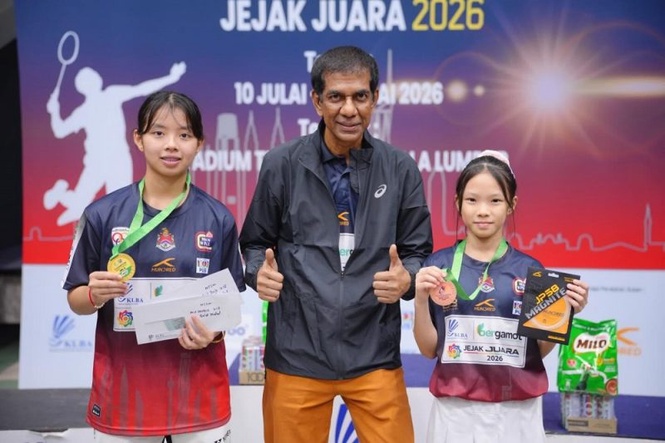
The Juara Baharu (New Champion) programme aims to do what should have been done years ago: identify raw talent in schools and place promising players on a modern, scientifically backed development pathway.
The city association has taken the first step by demonstrating the political will to bridge this gap. It is now up to corporate sponsors, school boards, and parents to rally behind the initiative.
If Malaysia wants to see its women standing on the podium at the World Championships and Olympic Games, it must begin laying the foundations today. There is no better place to start than with KLBA.
Image: KLBA