PASAY CITY — Sen. Panfilo Lacson called on Thursday for a stricter policy toward persistently nonperforming government-owned and controlled corporations (GOCCs).
This comes amid government efforts to improve fiscal efficiency and contain expenditures.
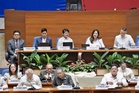
“These are the ones that the national government subsidizes every year but don't give any important revenue or service in return — all expenses and subsidies but no revenues," Lacson said during the Development Budget Coordination Committee briefing at the Senate.
“Why not just abolish them, or not fund them for that matter? Even if they are not abolished by law, they can no longer function without funding," he added.
Finance Secretary Frederick Go told Lacson that the Governance Commission for GOCCs is currently considering 21 GOCCs for possible closure, winding down, or absorption by other government corporations.
Go added that the tedious process might take time due to legal and administrative considerations in shutting down government-owned corporations.
Budget Secretary Kim Robert de Leon said the government is looking at possible separation incentives for employees who would be displaced during the process.
Lacson pressed the economic managers to quantify the cost of keeping nonperforming GOCCs afloat, particularly the amount of subsidies extended by the national government from 2022 to 2026.
He noted that such figures would help determine whether continued funding remains justified at a time when the government is operating within increasingly tight fiscal constraints.
“I understand the complexities because there will be staff who will be displaced,” Lacson said, acknowledging the impact of closures on government employees.
“What are your contingency plans in case the GOCCs are abolished? These are government employees. Maybe that's one reason why you find difficulty in abolishing these GOCCs,” he added.
GOCCs are government-created or government-controlled entities that perform commercial, developmental, or public-service functions. While some are expected to generate income and dividends for the national government, others are maintained primarily to provide essential public services and may require government support.