THE Office of the Ombudsman has issued subpoenas to the Department of Public Works and Highways (DPWH) and other government agencies for records related to illegal reclamation projects in the Taguig portion of Laguna Lake, Sen. Panfilo Lacson said Wednesday.
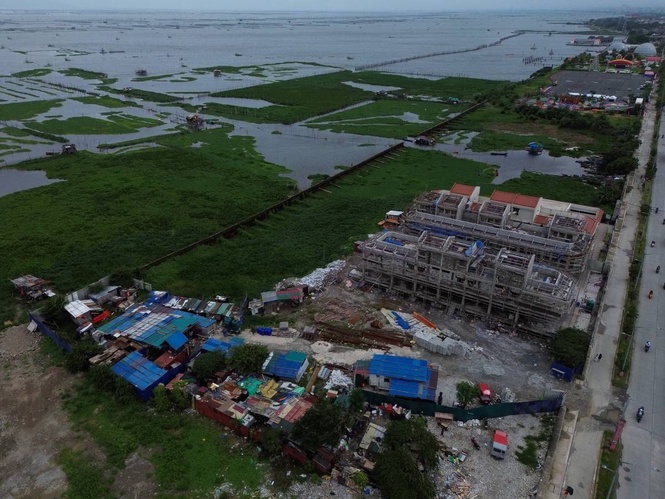
Lacson said the Ombudsman’s fact-finding investigation is continuing, with his office providing additional documents and updates, while the Philippine Reclamation Authority (PRA) has also submitted drone images of the reclamation sites.
“I believe the Office of the Ombudsman has sent subpoena duces tecum to the DPWH for the records in the Taguig reclamation projects. The PRA has also sent its drone shots. There are eight reclamation sites,” Lacson said in a radio interview.
“Subpoenas were also sent to the Land Registration Authority, Taguig Registry of Deeds, DPWH, and PRA. It is asking for all documents because we also sent to it the 10 title numbers linked to the reclamation projects. These are the subpoenas that, to my knowledge, the Ombudsman has sent for its fact-finding that may lead to a preliminary investigation,” he added.
Lacson said he and his staff continue to assist the Ombudsman by providing additional documents, updates and witnesses who have approached them in connection with the investigation.
Lacson said of the eight reclamation sites, only one had been completed.
He said the PRA is working to initiate forfeiture proceedings on 85 hectares of property involved in the illegal reclamation, subject to approval of a resolution by its board.
Lacson warned that the reclamation activities could worsen the already silted condition of Laguna Lake, particularly if the areas were reclaimed without the necessary permits.
“Laguna Lake is already silted, and the illegal reclamation could worsen the silting,” he added.
The senator urged civil engineers’ groups to organize teams capable of conducting forensic inspections of roads, bridges, flood control structures, and other public works to determine whether problems stemmed from structural design or implementation.
“We can call on associations of civil engineers to help in the inspection of infrastructure, including those damaged by recent floods. They can use forensics to determine if the damage stemmed from faulty structural design or implementation,” Lacson said.
“As of now, no one is being held accountable. If we are to go after those responsible, we must start inspecting projects implemented in the last five years or so,” he added.
Lacson said such reviews could help identify where corrective action is needed and establish responsibility among contractors, DPWH officials and project proponents when warranted.
“The infrastructure projects must be inspected, and the contractors, DPWH officials and politicians who are proponents of the projects must be held accountable,” the senator said.
“This accountability drive should cover not only flood control projects but also other infrastructure projects whose failures may have been exposed by recent flooding,” he added.