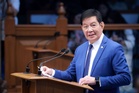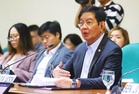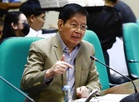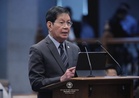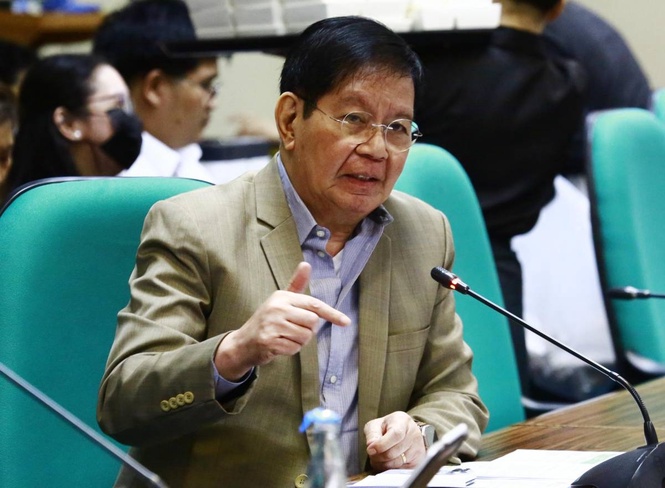
SEN. Panfilo Lacson urged lawmakers and the government’s economic managers to redirect the proposed 2027 national budget away from what he described as misplaced spending priorities, including multipurpose buildings and fragmented cash assistance programs, and shift to investments that can stimulate economic growth.
During his interpellation on the 2027 budget bill on Monday, Lacson said that the government could help reverse the country’s sluggish economic performance by channeling public funds into growth-oriented programs, activities and projects instead of spending items that offer limited economic benefits.
“With regard to our economic shortfall compared to our neighboring Asean counterparts, is it not because government spending priorities are misplaced? Why are we investing in multipurpose buildings and ayuda? Why not in growth-oriented programs, activities and projects? The answer lies in the budget,” he said.
Over the weekend, Lacson scored several patronage items in the budget bill, including “fragmented ayudas (aid)” and 3,950 MPBs that are separate from the Local Government Support Fund (LGSF) Financial Assistance to local government units (LGU) subprogram.
Lacson cited at least one MPB project in Barangay Poblacion, Basista, Pangasinan, that his team visited.
Rehabilitation of the town hall had been funded under the 2025 and 2026 General Appropriations Acts, but there are still funding allocations for the “construction” of the same project this year, and for 2027 as well.
On the other hand, Lacson questioned why programs such as Medical Assistance for Indigent and Financially Incapacitated Patients (Maifip) cannot be subsumed under the Universal Health Care (UHC) program.
“We have the UHC Act and PhilHealth Act. Why do we still have Maifip? We know Maifip is patronage-driven and not needs-based,” he said.
He also lamented that UHC implementation had regressed from the medium level, covering selected villages, to the low level, limited to pilot barangay, due to inadequate funding.
“Why don’t we just fully fund the UHC?” Lacson asked. Senate Finance Committee Chairman JV Ejercito, the principal sponsor of the UHC Act, agreed, saying: “If there’s a person in this hall who would agree with you, it’s this representation.” But when Ejercito explained that the government was working toward fully implementing UHC through a gradual two-year “transition,” Lacson questioned how this can be sustained if Maifip continues to get increasing allocations.
Lacson also challenged the economic managers present during the budget deliberations to work with Congress in redirecting public funds toward investments that would generate economic growth.
“What do we do, our economic managers? What do we need to do together, not just the executive, Senate or House? What can we do to save this country? Remove ayuda and other items that are not growth-oriented investments from the budget,” he said.
Meanwhile, Lacson pushed for a bigger allocation for the Growth Equity Fund (GEF), which is distributed to fourth- and fifth-class municipalities, after he noted it was slashed from the National Expenditure Program (NEP). The NEP and House version of the budget bill allocated P10.3 billion for the GEF, but the Senate version slashed it to P8.7 billion.
The GEF is part of the LGSF, which had P58.532 billion under the NEP. The LGSF was increased to P62.623 billion under the House version and trimmed to P61.023 billion in the Senate version.
But Lacson said that the Financial Assistance to LGUs, another component of the LGSF, was increased from P37.492 billion in the NEP to P41.583 billion in the House and Senate versions.
“If I may suggest at the proper time, we give more funds to the GEF to address the inequitable distribution of wealth,” he said.