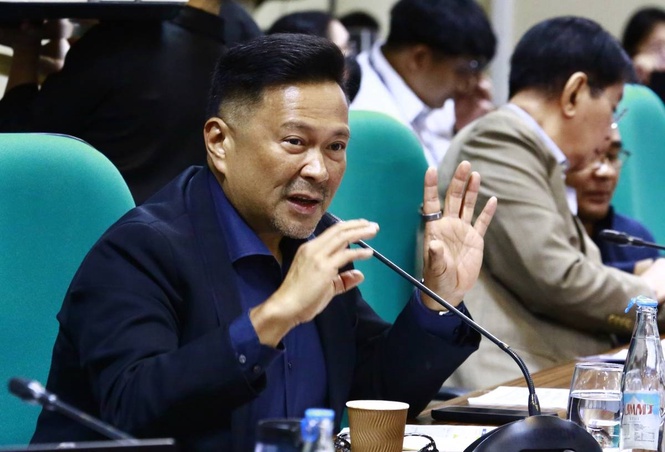
SEN. JV Ejercito on Monday filed two bills seeking to give civil society organizations (CSOs) a formal role in shaping government spending, including participation in congressional budget hearings and consultations to ensure public funds address communities’ needs.
The measures seek to strengthen public oversight by allowing accredited groups to scrutinize budget proposals, question government agencies and help identify spending priorities.
Ejercito, chairman of the Senate Committee on Finance, filed Senate Bill 2576, or the Bantay Budget Act, and Senate Bill 2577, or the Grassroots Participatory Budgeting Act, following a consultation with CSOs and government watchdogs on priorities for the proposed 2027 national budget.
“We want your participation to have a meaningful place in the scrutiny of the proposed budgets of our national government agencies, in the questions officials are asked to answer, and in the priorities we put forward,” Ejercito told the groups.
“Your contributions are important because many of you work directly with communities. Your experience helps us assess whether the proposed allocations respond to the actual needs of our people,” he added.
The Bantay Budget Act seeks to establish mechanisms for accredited CSOs to participate in the preparation and congressional approval of the annual national budget.
Under the measure, national government agencies and government-owned or -controlled corporations whose budgets are included in the General Appropriations Act would be required to establish guidelines for CSO accreditation and participation in budget preparation.
Accredited groups could serve as resource persons during congressional budget hearings, submit position papers and alternative budget proposals, and provide written recommendations on government projects and activities.
The bill would also require the House Committee on Appropriations and the Senate Committee on Finance to set aside at least one hearing day for accredited CSOs to present their positions on the proposed national budget.
It would allow CSOs to observe budget deliberations and bicameral conference committee proceedings. Records, stenographic notes, committee reports and recordings of bicameral meetings would be made accessible to the public.
The Grassroots Participatory Budgeting Act, meanwhile, seeks to institutionalize a bottom-up approach to development planning and budgeting, ensuring that community-identified needs are considered in local and national spending plans.
The measure would require barangay, municipalities, cities and provinces to hold at least two consultation assemblies annually with accredited CSOs. Priorities identified during these meetings would inform local poverty reduction action plans, local development investment programs and annual local budget proposals.
It would also require accredited CSOs to make up at least one-fourth of the membership of local development councils at the provincial, city, municipal and barangay levels.
“Our goal is to let communities identify the projects they need and establish a clear mechanism for incorporating these priorities into planning and funding decisions, all the way to the national level,” Ejercito said.
He said the proposed laws aim to make public participation a lasting part of the budget process rather than a practice dependent on the leadership of a particular Senate finance committee chairman.
“Taken together, these measures seek to give citizens a sustained voice in how priorities are set, how public funds are allocated, and how government programs are carried out,” the senator said. “Our goal is to make citizen participation part of our institutions so it continues regardless of who is in office.”
Ejercito acknowledged that not all proposals from civil society groups could be adopted but he pledged to bring their concerns to budget deliberations, seek answers from government agencies and work with fellow senators on proposals that would benefit the public.
“I cannot promise that every proposal will be adopted. What I can commit to is that we will continue to bring your concerns to the table, seek clear answers from the agencies, and work with our colleagues to advance proposals that will best serve our people,” he said.
“The funds we are discussing belong to the people. They deserve a meaningful voice in deciding how their money is spent,” he added.