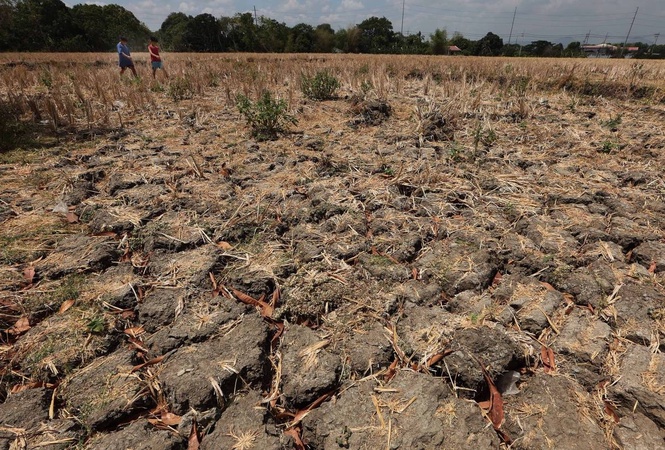
SENATORS urged the government to accelerate preparations for a potentially severe El Niño in 2027, warning of threats to water supplies, food security, public health and livelihoods while calling for concrete measures to protect vulnerable communities from drought and extreme heat.
During budget hearings for the Department of Environment and Natural Resources (DENR) and the Department of Education (DepEd), Senators Risa Hontiveros, Bam Aquino, Loren Legarda and Senate Minority Leader Alan Peter Cayetano outlined proposals ranging from rainwater harvesting and alternative drinking water sources to school safety measures, cooling centers, drought-resistant crops and environmental education.
They stressed that the proposed 2027 national budget must provide for practical interventions before prolonged dry spells, rising temperatures and agricultural losses put more pressure on Filipino households.
Speaking during the DENR's 2027 budget hearing on Monday, Hontiveros urged the agency to intensify preparations for the Super El Niño, warning that widespread drought could worsen existing water shortages and threaten the economy and public health.
Citing expert warnings that the Philippines could experience its worst El Niño in 50 years, she stressed the importance of early government intervention.
“The people should not be the only ones expected to adjust. The DENR must step up to a historic challenge,” Hontiveros said.
She noted that some communities were already experiencing unreliable water supplies, with households reporting dry taps and poor water quality.
Hontiveros called for adequate funding for small water impounding systems that can collect and store rainwater for use during dry periods. She also urged authorities to maximize available technologies, including atmospheric water stations operated by the Local Water Utilities Administration, to develop alternative sources of potable water.
Cayetano urged the DENR to work with education officials to strengthen environmental education in elementary and high schools, saying that instilling conservation values in children is essential to protecting the country's natural resources over the long term.
During the DENR's 2027 budget briefing, he called on Environment Secretary Juan Miguel Cuna to coordinate with Education Secretary Sonny Angara and the Commission on Higher Education (CHED) to integrate environmental protection and ecology more deeply into the education system.
He stressed that while enforcing environmental laws remains essential, educating Filipinos from an early age could have a more lasting impact.
He recalled Puerto Princesa City's environmental initiatives under former mayor Edward Hagedorn, citing how children would remind people not to litter in public places.
He said the experience demonstrated how environmental awareness could become part of a community's culture, encouraging residents to take responsibility for keeping their surroundings clean.
Cayetano also cited the Sierra Madre mountain range and Laguna de Bay as examples of environmental concerns requiring sustained public awareness and collective action.
Aquino called on the DepEd to prepare schools for possible water shortages and dangerous temperatures, warning that inadequate supplies could compromise students' health, sanitation and safety.
During the department's 2027 budget briefing, which he presided over as chairman of Senate Finance Subcommittee B, Aquino asked whether schools had allocated sufficient funds for El Niño preparations.
“Water will become harder to access in a few months. I know there are already a hundred plus municipalities who have declared an emergency because of El Niño. Are our schools prepared?” he said.
Aquino, who also chairs the Senate Committee on Basic Education, warned that water disruptions could affect drinking water, handwashing facilities, restrooms and school canteens.
He urged Angara to issue a memorandum advising school principals and teachers on practical preparations, including collecting rainwater and using buckets, jerrycans and other containers to maintain water supplies for sanitation.
Aquino stressed the need to distinguish between water for sanitation and safe drinking water, noting that purchasing potable water could put additional pressure on schools' maintenance and other operating expenses.
Angara assured Aquino that classes could be suspended when temperatures reach dangerous levels. He explained that while local government units generally determine class suspensions, school officials may also suspend classes when conditions warrant emergency action.
Legarda unveiled a 10-point action plan to mitigate the effects of a potentially strong to very strong El Niño, proposing measures to secure water and food supplies, protect workers from extreme heat and speed up financial assistance for affected communities.
The plan includes installing rainwater catchment systems in public schools, opening cooling centers, subsidizing water bills for low-income families and helping farmers transition to drought-resistant crops.
Legarda said her Senate Resolution 733, filed in September, seeks an inquiry into the country's preparedness for El Niño and the adequacy of government funding for climate adaptation and disaster response.
“What we want is a clear plan and concrete action,” she said.
To ease water shortages, Legarda proposed imposing higher charges on high-volume users who consume water for nonessential commercial activities, with the proceeds used to subsidize water bills for poor urban households.
She also called for shifting strenuous outdoor work to cooler hours when the heat index exceeds 42 degrees Celsius. If rescheduling is not possible, employers should provide what she described as mandatory “climate hazard pay.” Other proposals include compensating indigenous communities for protecting upstream forests, providing heat-related emergency kits and subsidies for municipal fisherfolk, and converting barangay halls and other public facilities into cooling centers.
Legarda also proposed subsidized heat-reflective paint for low-income households, community gardens featuring drought-resistant trees and root crops, and conditional cash transfers and agricultural coaching for farmers adopting drought-resistant crops.
To speed up disaster assistance, she advocated parametric climate insurance, under which payouts would be triggered automatically when predefined weather conditions are recorded, reducing the need for lengthy damage assessments.
She also proposed allowing the People's Survival Fund Board to establish a financing window to help local governments subsidize insurance premiums for low-income and highly vulnerable residents.