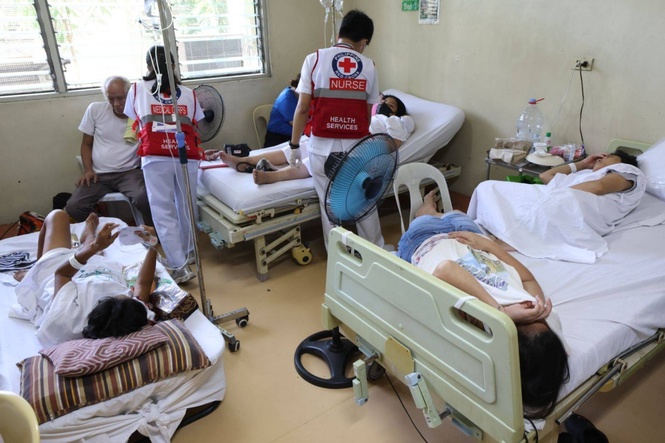
MALACAÑANG said that the Department of Health (DOH) has been actively dealing with the spike in leptospirosis cases, a disease common during the rainy season.
“The DOH Operations Center reached out to San Lazaro to refer the patients to other hospitals in Metro Manila,” Presidential Communications Office Undersecretary Claire Castro said in a Palace briefing on Wednesday.
This comes following reports of lines of leptospirosis patients stretching outside the emergency room of San Lazaro Hospital.
Castro said Health Secretary Edwin Mercado called for a command conference with other DOH-run hospitals to aid in the transit of patients.
The DOH, she added, has activated specialized fast lanes in 33 of its hospitals in Metro Manila, Region 1, Region 2, Region 3, and the Cordillera Administrative Region to accommodate leptospirosis cases.
“All DOH hospitals, health centers, and Yakap clinics are ready to receive patients who need to be checked up and admitted,” Castro said.
She added that the DOH has adequate supplies and treatment capacity for the management of severe cases.
The Palace announced Monday that the Philippine General Hospital is ready to accommodate more leptospirosis patients.
San Lazaro Hospital Medical Center head Dr. David Suplico said the number of leptospirosis cases is expected to peak by Aug. 31.
“We usually see the peak of leptospirosis within two weeks after exposure. That would be two weeks from Aug. 17. What we are seeing now is a continued increase in admissions,” Suplico said in an interview.
Leptospirosis is a bacterial infection caused by exposure to Leptospira bacteria, which are spread through the urine of infected animals in contaminated water or soil. After entering the body through cuts, eyes, or mucous membranes, initial symptoms typically include a sudden high fever, severe headache, muscle aches, chills, vomiting, and red eyes. In severe cases, the infection can progress to kidney failure, liver damage with jaundice, internal bleeding, or meningitis.