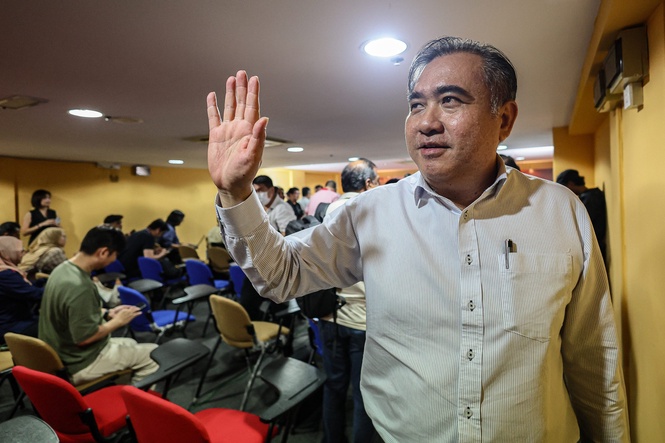
Loke stepped down to take responsibility while preserving DAP stability
PETALING JAYA: Anthony Loke’s decision to step down as Negeri Sembilan DAP chairman reflects an attempt to demonstrate accountability and avoid further instability at the national level ahead of the next general election, said political analysts.
International Islamic University Malaysia political analyst and Iseas–Yusof Ishak Institute fellow Assoc Prof Dr Syaza Shukri said the move appears to be specifically linked to DAP’s performance in the Negeri Sembilan state election rather than a wider leadership crisis involving the party at the federal level.
READ MORE: Penang PH to discuss BN’s future in state government after BN-PN alliance
READ MORE: Loke proved he is ‘a man of his word’ by stepping down: DAP CEC member
“I think Loke’s idea is to show accountability but he would not want to create a further crisis by stepping down as secretarygeneral closer to a general election.”
She said Loke’s decision places him among a small group of political leaders willing to acknowledge shortcomings and accept responsibility for electoral setbacks.
“DAP has always been known to practise accountability more than other parties.”
She added that while the move could enhance public respect and trust towards Loke, the impact of such gestures on Malaysian politics remains uncertain.
Syaza described the resignation as unusual, saying that senior political leaders rarely step down even after facing major controversies or national-level scandals.
She said Loke’s defeat in Chennah, however, made the decision understandable as it directly affects his position as a state party leader.
On the broader implications for Pakatan Harapan (PH), Syaza said the coalition must use the election setback as an opportunity to reflect and implement changes, although it is uncertain whether all component parties would respond similarly.
Syaza said political parties must show accountability for electoral setbacks, although this does not necessarily require leaders to resign, as voters primarily want humility in acknowledging mistakes rather than shifting blame to opponents.
“As long as there is acknowledgment that PH made mistakes and it is willing to change, make that clear and public. I think people are willing to give another chance, provided there are clear changes and improvements.”
Universiti Kebangsaan Malaysia political sociology expert Prof Dr Novel Lyndon said Loke’s resignation should be viewed as more than a personal acceptance of responsibility as it also represents an attempt to preserve DAP’s institutional legitimacy following the state election setback.
“From a political sociological perspective, this move represents a distinction between organisational accountability and institutional continuity.
“By localising accountability at the state level, Loke is able to address the electoral setback while safeguarding the stability of the party’s national leadership.”
Novel said the resignation’s significance would depend on whether it leads to genuine organisational reform or remains a symbolic gesture.
He also said voluntary resignation by senior political leaders following electoral defeats remains uncommon in Malaysian politics, where leaders often attribute losses to wider factors such as coalition dynamics, national trends or socio-economic conditions.
“Loke’s decision is politically significant because it introduces a stronger norm of accountability. The question is whether this becomes a new political culture or remains an exception.”
Novel said Loke’s resignation could strengthen his national standing if DAP follows it with meaningful organisational reforms and regains electoral momentum before GE16.
He added that failure to do so could lead critics to view the move as a sign of deeper organisational weaknesses.
“Elections are not only contests for power but also indicators of public confidence. PH needs to examine whether its political messaging, policy priorities, grassroots engagement and internal coordination remain aligned with changing public expectations.”
Novel said democratic leadership should not be judged solely by electoral victories but also by a leader’s willingness to accept responsibility, learn from setbacks and implement meaningful organisational reforms.