.png)
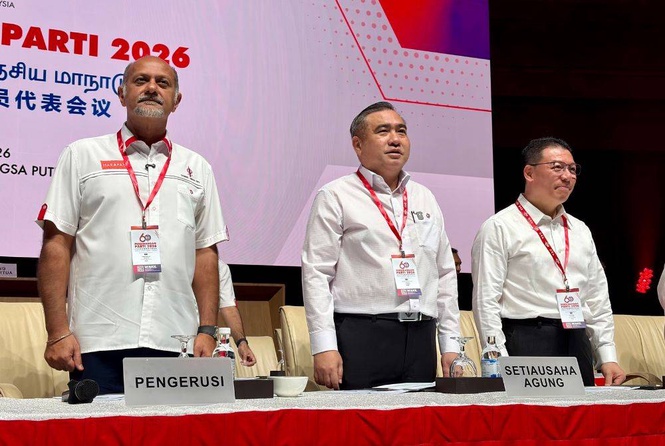
PUTRAJAYA – DAP secretary-general Anthony Loke has called on the party to remain faithful to its founding principles of justice, freedom, democracy and equal opportunity as it marks six decades of political struggle and transformation into a major force in Malaysian politics.
Loke said DAP had evolved considerably since its formation 60 years ago by a small group of highly idealistic activists, eventually becoming part of the federal government — a significant milestone in the party's political journey.
However, he stressed that DAP's growth and participation in government should not cause it to lose sight of the idealism that shaped its establishment.
“DAP was founded as a political movement for all Malaysians, regardless of race or religion, with the objective of fighting for justice, freedom and democracy while ensuring every Malaysian had an equal opportunity to succeed and pursue their aspirations.
“DAP's political approach had never been based on opposing any particular race, despite the party having faced decades of accusations that it represented only one community. Such allegations had remained among the major challenges confronting DAP since the 1970s.
“The party must continue overcoming those political and perception barriers while remaining committed to its founding identity as a party representing Malaysians regardless of background,” he said.
His remarks came as DAP held a historic internal referendum today at the Putrajaya International Convention Centre (PICC), with delegates deciding whether the party's leaders should remain in Prime Minister Datuk Seri Anwar Ibrahim's federal Cabinet or withdraw from their executive positions.
A total of 4,264 delegates representing 1,704 branches participated in the secret ballot to determine whether DAP's five ministers and seven deputy ministers should remain in the Cabinet for the rest of the parliamentary term.
The referendum was held against the backdrop of a difficult period for DAP and Pakatan Harapan (PH), following poor electoral performances in Sabah, Johor and Negeri Sembilan.
The defeat of Loke in the Chennah state constituency, which he had represented for more than a decade, was particularly significant for the party.
The setbacks have also fuelled internal frustration over the pace of institutional reforms under the unity government, while public criticism intensified following the dropping of corruption charges against Deputy Prime Minister Datuk Seri Ahmad Zahid Hamidi.
DAP's Central Executive Committee had initially scheduled the referendum for July 12, but postponed it on June 4 to Aug 16 to accommodate the Johor and Negeri Sembilan state elections.
The internal vote has exposed differing views within the party over its role in the unity government.
Supporters of withdrawing from the Cabinet argued that DAP needed to distance itself from unpopular government policies and decisions while rebuilding its grassroots identity and applying greater pressure on Anwar to deliver reforms.
Opponents, however, warned that leaving the Cabinet could create political instability and potentially strengthen conservative forces ahead of the 16th General Election.
Even in the event of a Cabinet withdrawal, DAP's 40 Members of Parliament are expected to continue supporting Anwar's administration in Parliament, allowing the party to relinquish executive positions without immediately threatening the government's survival.