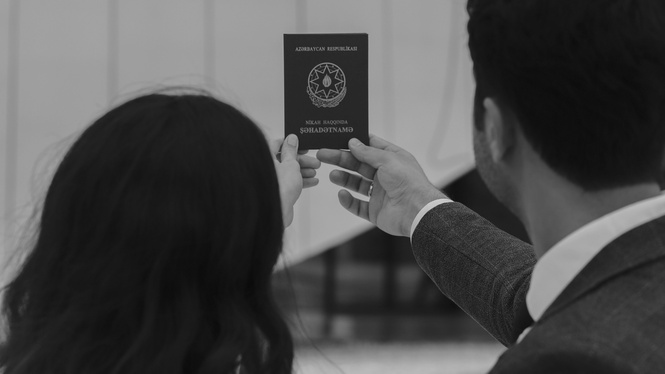
More than a decade ago, an Indonesian woman checked into one of the hostels Marius ran in Rome. She later became his wife.
“I never wanted to settle myself in Southeast Asia, kind of,” Marius told Migrant Times. He described meeting her as the “small little window to Indonesia.” Their son was later born in Bali. Indonesia became home.
Marius’s marriage was part of something much larger.
Cross-national marriage was already far from unusual in parts of Asia. In Singapore, 37% of registered marriages in 2005 involved spouses of different nationalities, according to a review by sociologists Shuya Lu and Wei-Jun Jean Yeung. Two decades later, Taiwan was still seeing them on a significant scale. Nearly one in five marriages registered there in 2025 involved a foreign spouse, almost half of them from Southeast Asia.
The ways people meet across borders have widened, too. Tinder said in August 2026 that Indian users aged 18 to 25 were using its Passport feature in places including Manila, Pattaya and Singapore.
For cross-border couples, immigration status can give the state (and sometimes one spouse) power over the relationship.
Government, would you allow me to marry?
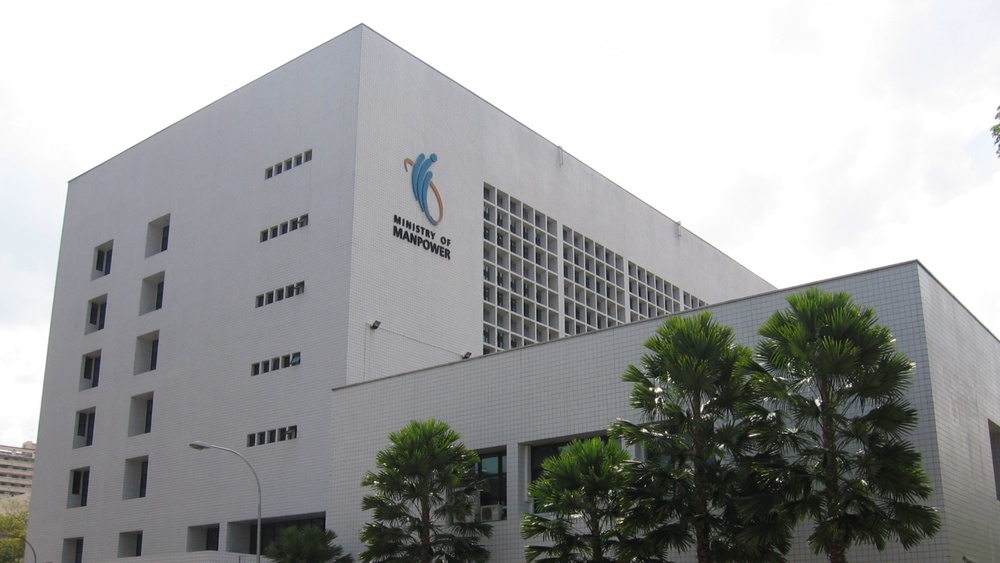
Singapore’s Ministry of Manpower building. Some current and former Work Permit holders require the ministry’s approval before marrying a Singapore citizen or permanent resident. Photo: Terence Ong/Wikimedia Commons, CC BY-SA 3.0.
Sherlita Faith Chua had been working as a domestic worker in Singapore for seven years when she prepared to marry her Singaporean boyfriend. Chua moved from the Philippines to Singapore at 18 and had stayed with the same employer.
In a first-person account published in 2020, she recalled that her employers helped with the paperwork. “At that time, I only had a work permit. They wrote to the Ministry of Manpower so that I could get married,” she wrote.
The permission Chua needed remains part of Singapore’s Work Permit regime. It covers current Work Permit holders and former holders whose most recent Singapore work pass was a Work Permit, whether the marriage takes place in Singapore or overseas.
The requirement can outlast the job itself. MOM says it continues after a Work Permit expires: a former holder whose most recent Singapore work pass was a Work Permit still has to seek approval even if they no longer work in Singapore.
Marrying without approval can cost the foreign partner the privilege of working in Singapore. MOM also warns that the person may be prevented from entering the country for a period of time.
Income is part of the decision. MOM asks for six months of payslips from both partners, alongside financial records from the Singapore citizen or permanent resident.
Between 2015 and 2019, MOM received about 1,200 applications a year and approved roughly eight in ten. Lack of gainful employment and unstable income were the most common reasons for rejection.
The Work Permit rules cover pregnancy, too. A holder is not allowed to become pregnant or give birth to a child in Singapore unless she is already married to a Singapore citizen or permanent resident with MOM’s approval. MOM says the condition continues after the Work Permit expires, is cancelled or revoked.
The requirement follows Singapore’s work-pass hierarchy. Employment Pass and S Pass holders do not need MOM approval to marry a citizen or permanent resident. A former Work Permit holder is also exempt if an Employment Pass or S Pass later became their most recent Singapore work pass.
MP Louis Ng asked about that distinction in parliament in 2020.
Then-Manpower Minister Josephine Teo said Work Permit holders were much less likely than Employment Pass or S Pass holders to qualify for long-term residence. Marriage to a Singapore citizen or permanent resident did not itself provide an automatic right to remain in the country.
In some cases, she said, “it is better to have conveyed a clear signal” by refusing permission to marry.
Nicole Constable, an anthropologist at the University of Pittsburgh who has studied Singapore’s regulation of migrant workers’ marriage and pregnancy, said such a policy is meant to deter Work Permit holders from forming intimate relationships with locals and settling permanently.
“It suggests that work permit holders, as temporary migrant workers, are only welcomed as ‘workers’ but not as full human beings,” she told Migrant Times. For Constable, the rule also sends a message that migrant-worker status can follow someone into their private life even after the job itself has ended.
Love on paper
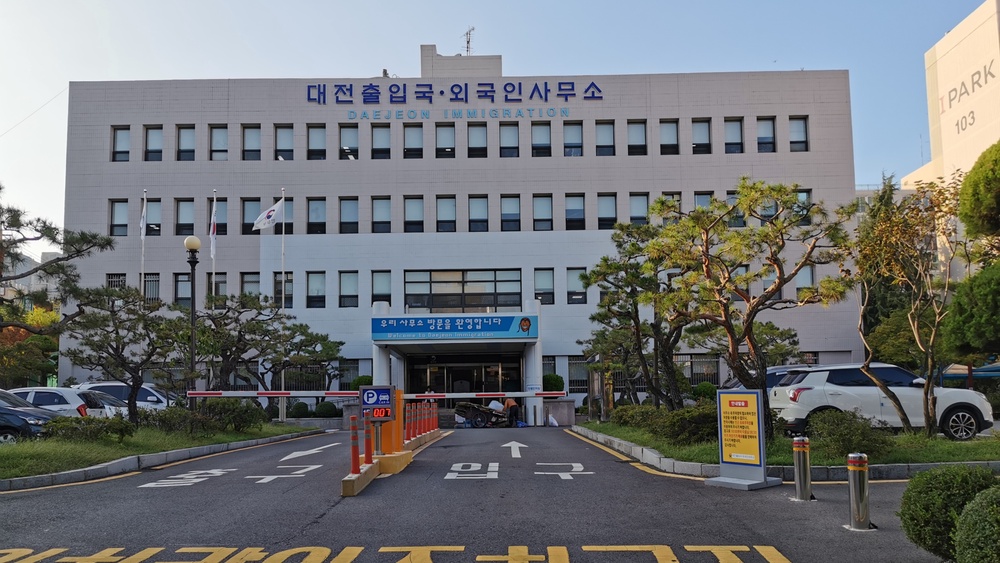
The Daejeon Immigration Office in South Korea in October 2019. South Korea’s marriage-migrant visa process can require couples to provide extensive evidence of their life together. Photo: AhmedAlElq/Wikimedia Commons, CC BY-SA 4.0.
Jeong Se-gyu had already lived with his Vietnamese wife in Ho Chi Minh City for years when they prepared her Korean marriage visa in 2026.
They met at a pub in Da Nang in 2021 and began living together the following year. They registered their marriage in Vietnam in November 2024 and with the Korean consulate a month later. When they applied for her F-6 visa, they were asked to prove that they had actually shared a home.
The administrative agent who handled their successful application later published an interview with Jeong. He said they dug through years of records. Their Vietnamese residence registrations showed the same address. Medical records did too.
Then they found paperwork for their dog. A travel certificate issued when they moved with the animal was submitted as further evidence that they had lived together and cared for the pet as a couple.
For most F-6 applications in 2026, a Korean sponsor in a two-person household has to show at least ₩25,195,752 in annual pre-tax income. The threshold rises with household size, with exemptions and other ways of satisfying it in specified cases.
The file can reach into the rest of their life together. Official guidance can ask where the couple will live, how they communicate and for evidence tracing the history of their relationship, including photographs and chat logs. The relationship evidence can run to five A4 pages.
South Korea recorded 21,450 “marriages of immigrants” in 2024, 9.6% of all marriages that year. The category includes both foreign nationals and naturalised Koreans.
Indonesia widened residence options for some foreign spouses in 2026. On January 26, the government launched Global Citizen of Indonesia, or GCI. Legal spouses of Indonesian citizens are among the foreigners who can qualify for an indefinite permanent residence permit without changing their original citizenship.
Marius had already spent years dealing with Indonesia’s older system. He told Migrant Times that he handled his own visas, KITAS and KITAP instead of using an agent. He found it manageable enough to do himself. “There is regulation on the regulation on the regulation, that’s something else,” he said.
“Imbalanced power relations”
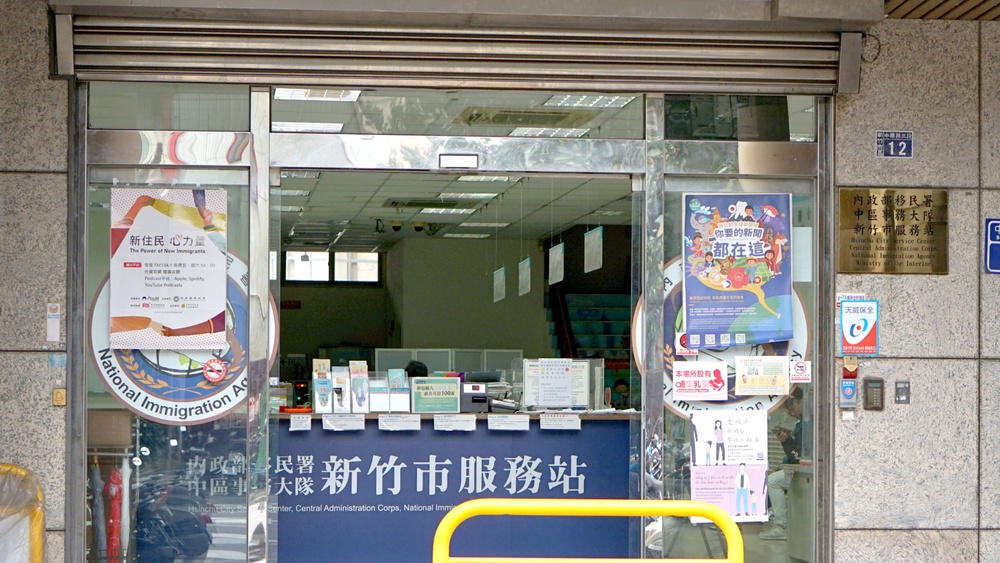
Taiwan’s National Immigration Agency service centre in Hsinchu in February 2025. The island has expanded residency protections for some foreign spouses after divorce, including survivors of domestic violence. Photo: Solomon203/Wikimedia Commons, CC BY-SA 4.0.
In South Korea, 71.2% of marriages involving immigrants in 2024 paired a Korean husband with a foreign wife. Korean wives with foreign husbands accounted for 18.2%.
Across the overall “marriages of immigrants” category, the husband was at least ten years older in 37.3% of marriages. But Hsin-Chieh Chang, who has studied Vietnamese marriage migrants in Taiwan and South Korea, cautioned against treating that age gap as a simple measure of what happens inside a marriage.
Chang said relatively large age gaps can partly reflect two different marriage markets meeting each other. In South Korea, men who remain unmarried or are divorced into their forties can face considerable family and social pressure to marry, and some may come to see transnational marriage as one option.
In Vietnam, where Chang conducted fieldwork in the early 2010s, younger women entering cross-border marriages were often entering their first marriage. She stressed that the landscape may have changed considerably since then.
More broadly, Chang said people do not enter transnational marriages at random. Who enters them, and under what circumstances, is shaped by local marriage norms, economic conditions, gender expectations, migration infrastructures and individual life circumstances and aspirations.
“Aggregate statistics can help us identify broader structural patterns, but on their own they tell us relatively little about an individual woman’s motivations, agency, or relative power within a particular marriage,” Chang told Migrant Times.
Yeung told Migrant Times that socioeconomic position can matter well before a marriage migrant arrives in another country. It can shape whom they marry, their relative position to their spouse, whether they can work, the jobs available to them and the social support around them.
When Migrant Times asked specifically about legal dependence after migration, Yeung was more direct. “Yes, of course, if a marriage migrant does not have citizenship or Permanent Residency status, then she needs to completely rely on her spouse to sponsor her visa and renew that every few years,” Yeung said.
“This dependency tends to create imbalanced power relations and unequal division of labor at home.”
Her research with Lu also warns against assuming that dependence tells us everything about the women involved. “Past literature tends to portray female marriage migrants largely as victims and overlook their agency.”
A breakup can turn that dependence into an immigration problem. On September 8, 2026, the Seoul Administrative Court ruled against immigration authorities after they refused to extend a foreign spouse’s stay following the breakdown of her marriage. Her Korean spouse bore the main responsibility, the court found, and she did not need to wait for a final divorce before qualifying for a separate F-6 status.
A-Yueh, a Vietnamese woman, faced the threat of deportation when she decided to leave an abusive marriage, according to reporting by Taiwan’s Central News Agency. Social workers and pro bono lawyers helped her navigate naturalisation, divorce and a custody fight.
Indah, an Indonesian woman, stayed through years of abuse partly because she feared deportation and losing her son. It was her son’s teacher who eventually discovered what was happening and connected her with Taiwan’s domestic-violence support system.
Taiwan expanded residency protections in 2024. A foreign spouse who divorces a Taiwanese citizen because of domestic violence can now continue residing in Taiwan even without a minor child, provided the legal conditions are met. Divorced spouses can also remain in certain cases involving custody of, responsibility for or regular contact with Taiwanese minor children.
Before January 1, 2024, divorce generally meant needing another legal basis to remain, such as caring for a Taiwanese minor child. Around 2,000 intimate-partner violence reports involving foreign spouses were recorded each year in Taiwan from 2020 through 2024. A 2025 National Taiwan University study cited by CNA found survivors waited an average of 4.2 years before reporting abuse.
Taiwan now allows victims in qualifying domestic-violence cases to apply for residence extensions themselves. Police reports and protection orders can be used as evidence, without requiring the Taiwanese spouse to cooperate.
Taiwan’s National Immigration Agency has warned that residency itself can be used as leverage. A spouse, it said, “might threaten to withhold support for residency extensions or confiscate their residency permits.”