The government’s decision, through the Cabinet Committee on road safety and traffic congestion, to target a 50% reduction in road accident fatalities by 2030 is a welcome and necessary step.
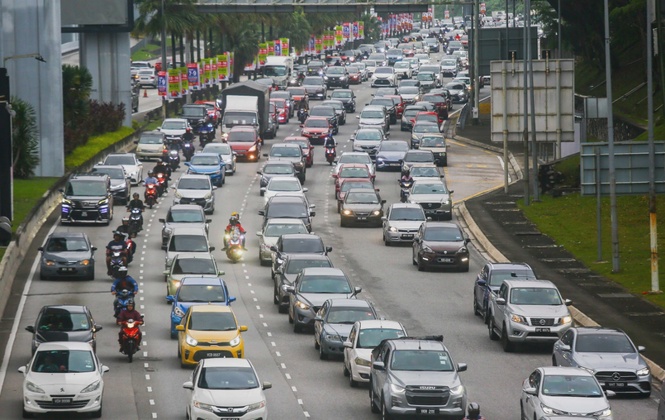
With more than 6,000 lives lost on our roads last year, road deaths remain a serious national public health and safety issue. Even more worrying is that motorcyclists and pillion riders accounted for about 66% of total road fatalities.
Therefore, the 2030 target must not remain merely an aspiration. It must be translated into a comprehensive, measurable and sustained national road safety programme.
In my view, there are several priorities that must be pursued urgently.
First, motorcyclist safety must be placed at the centre of the strategy. Motorcyclists constitute the largest group of road fatalities and, therefore, deserve a dedicated national action plan. This should include safer motorcycle lanes, better road surfaces, improved lighting, stronger enforcement against dangerous riding and greater emphasis on defensive riding and protective equipment.
Second, enforcement must become more consistent, targeted and technology-driven. Dangerous driving, speeding, red-light offences, driving under the influence of alcohol or drugs and reckless manoeuvres must be dealt with firmly. Automated enforcement and other technologies should be expanded, particularly at accident-prone locations.
Third, we must adopt a safe system approach to road safety. We cannot depend entirely on road users to avoid mistakes. Roads, vehicles, speed limits and traffic systems must be designed to reduce the severity of crashes when mistakes occur. High-risk roads and black spots should be identified through data and systematically upgraded.
Fourth, road safety must begin with education and continue throughout a person’s driving life. Road safety education should start in schools and continue through driving schools, workplaces and community programmes. We need to build a culture where respecting traffic rules is regarded not merely as an obligation but also as a civic responsibility.
Fifth, commercial and heavy vehicle safety requires particular attention. These vehicles can cause catastrophic consequences when involved in crashes. Enforcement of speed limits, vehicle roadworthiness, driver working hours and other safety requirements must be strengthened.
Sixth, employers must play a greater role in commuting and occupational road safety. A large number of road crashes occur while people are travelling to and from work. Commuting safety should, therefore, be treated as an important component of occupational safety and health, with employers encouraged to implement safe-commuting policies for their workers.
Seventh, post-crash response must be strengthened. The chances of survival following a serious crash can depend on what happens in the first few minutes. Faster emergency response, greater public awareness of first aid and CPR and wider availability of AEDs can help save lives.
Most importantly, the government should establish clear annual milestones towards the 2030 target. We should not wait until 2030 to determine whether we have succeeded.
The public should be able to see annually whether fatalities are declining, which groups remain most vulnerable, where the high-risk locations are and what corrective measures have been taken.
I also believe that road safety performance should be measured not only by the number of deaths but also by serious injuries, crashes involving vulnerable road users and the effectiveness of enforcement and preventive measures.
The government has now set an important national target. The next step is to ensure that every ministry, agency, local authority, road operator, employer and road user understands its responsibility in achieving it.
Six thousand road deaths a year is not just a statistic. Behind every number is a human life, a family and a community affected by tragedy.
Halving road deaths by 2030 will require political commitment, effective enforcement, safer infrastructure, technology, education and, above all, a change in road-user culture.
Malaysia must move from a reactive approach – responding after crashes occur – to a preventive road safety culture that anticipates risks and prevents deaths before they happen.
The target of 50% fewer road deaths by 2030 is achievable but only if we treat road safety as a national priority and pursue it with determination, accountability and sustained action.
Tan Sri Lee Lam Thye
Member of Road Safety Council