
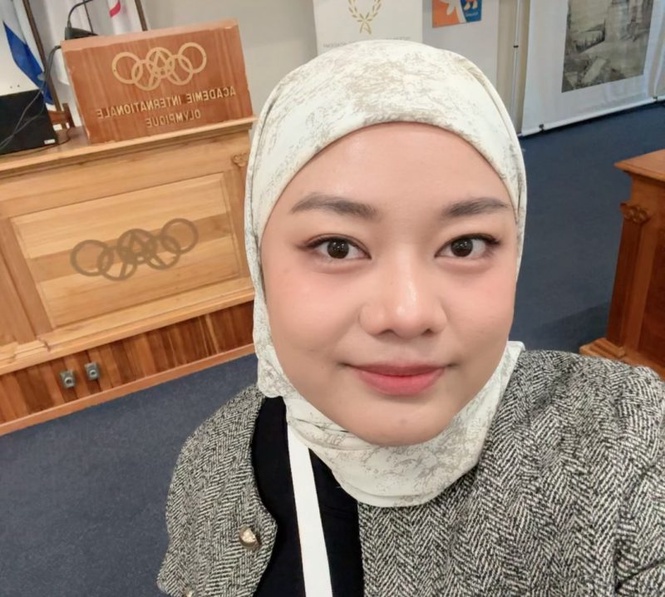
KUALA LUMPUR: “Ramai giler” (So many). That was Nurhidayu Ismail’s immediate response when asked if many other Malaysians were pursuing higher education in sport for development and related fields.
“There are so many of us (Malaysians) in the UK and Europe researching and studying sports. It’s a fascinating field but I admit there aren’t many opportunities back home,” Nurhidayu, 33, added.
Nurhidayu said Malaysia and Southeast Asian nations need more conversations and initiatives on sport for development and good governance.
“We are lagging behind in conversations regarding sports governance and sport for development,” said Nurhidayu in an online interview with Twentytwo13 on Sept 21.
“We need to do much more. Conversations are often happening in Europe but we need to have the same in our part of the world. Perhaps a forum to get more people talking about these subjects that are important at every level of sport – from community to elite.”
Governance woes continue to plague Malaysian sports, with the latest being the recent FA of Malaysia (FAM) election, which was carried out by an “unqualified” electoral committee. The election followed the doctored documentation scandal involving seven footballers that hit international headlines last year.
“My experience here in Europe, it’s very different. They are very transparent. Let me give you an example. There was a white paper for sports governance in Italy, yet those who drafted the white paper sent it to me, requesting my opinion about it. They were willing to allow a stranger to take a look at it and improve it.
“In Malaysia, transparency is lacking. Documents are not readily available in the public domain. And it’s really difficult to reach out to the officials. You can’t even send an email without it being bounced.”
Hailing from Kuantan, Nurhidayu never thought she would become a subject matter expert in sport – specifically in sport for development and sport governance. Yet she is now just a few months shy of completing her PhD at Canterbury Christ Church University in Kent, UK.
“Why sports? Well, I grew up with sports,” she said.
“I started playing hockey when I was 11 and never looked back. I actually wanted to read law. But I continued to play hockey and my circle kept telling me to pursue an education in sport.”
A product of the Pahang Sports Council, Nurhidayu represented her state in the Malaysia Games. She pursued a diploma in sports studies at Universiti Teknologi Mara (UiTM) in Shah Alam, and went on to do a degree in sports management at the same university while representing UiTM in the Higher Learning Institution Sports Games.
Upon completing her degree, Nurhidayu worked for a while. She then considered pursuing her master’s at UiTM, but Covid-19 struck.
“But I wanted to study and I then looked outside Malaysia and ended up doing my master’s at the University of Edinburgh. Now I hope that I will be able to complete my PhD by February next year.”
Her research focused on the participation of young girls in sports, with her subjects being hockey players from Temerloh and lacrosse players in Ranau, Sabah.
“I also spoke to the teachers and coaches. The girls, they love to participate in sports. They feel confident and empowered,” explained Nurhidayu.
“But it is conditional. While they love to do sport, they still feel the need to follow the norms of society, culture and religion. This is unlike in the West where girls are free to express themselves.”
Nurhidayu said the best practice would be to refer to European models but ensure they are tailored to local norms so girls can continue to participate confidently in sports.
“We can’t just copy and paste. That’s the reality. But what we can do is to adapt and adjust accordingly.”
She also pointed out a massive difference between student athletes and students who simply want to play sports.
“Student athletes have goals while others want to do it because they want to have fun or be healthy. My concern is with the student athletes as while it is good to have goals, they must be reminded that not all of them will end up with the national team. So they need to always prepare for the backup plan.
“Truth be told, most of them don’t have a backup plan.”
Nurhidayu highlighted that safeguarding is important in creating safe sporting environments. Safeguarding in sports is the act of protecting the health, wellbeing and rights of all those participating in sports.
“But those who should know more about safeguarding are parents, kids and teachers. That’s not really happening in Malaysia. There are efforts being carried out, but more needs to be done.
“I feel the best party to push for awareness regarding safeguarding should be the state sports councils.”
Nurhidayu said there should be a neutral party that can act as an ombudsman to look into issues or complaints.
“The composition of the neutral platform must be that of former athletes and those without a sporting background. Both types of people bring their respective values … former athletes bring their perspective while those without a sporting background will be able to point things out that are seen to be normal in the sporting sense.”
Nurhidayu hopes to see more Malaysians embark on careers in sports.
“To do so, we need those established in the scene to go back to Malaysia and inspire our younger generation. The best place to inspire is in schools, so that our younger generation know there’s life beyond being an athlete.”
And what is her advice to those wanting to pursue sports?
“Go by all means. Go play sports, go study sports. But never ever neglect your studies and I truly hope you do way better than me,” she said.
