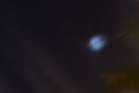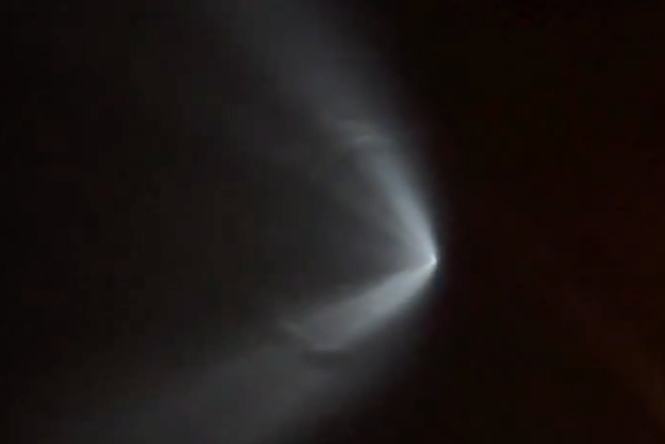
A strange, jellyfish-shaped bright light spotted in the pre-dawn skies above Sabah was from a Chinese rocket launch operation, the Malaysian space agency MYSA said.
The mysterious glow is linked to the launch of the Chinese Long March 12 rocket from southern China’s Hainan province on Monday.
“The Ministry of Science, Technology and Innovation (MOSTI), through the Malaysian Space Agency (MYSA), has confirmed receiving preliminary information regarding reports of a bright light sighted in the airspace over Sabah early this morning,” MYSA said in a statement on Wednesday.
“The sighting of the bright light has been confirmed to be the result of the launch of a Long March 12 rocket by the People's Republic of China, which took place at the Hainan International Commercial Launch Centre in Wenchang, Hainan, at 4.24 am (local time),” the Malaysian space agency said.
China’s Long March 12 is a two-stage rocket powered by burning kerosene and liquid oxygen, and can deliver about 12 tons of payload to low Earth orbit.
Penampakan Benda Bercahaya di Langit terekam kamera warga,
— NyxNara (@NaraSenyap) November 10, 2026
Senin, 9 November 2026 sekitar pukul 04.30 pagi.
📍Kota Kinabalu, Sabah, Malaysia. pic.twitter.com/Vvwyu8o5Tq
Sightings of the strange glow had sparked concerns over potential debris across northern Malaysia.
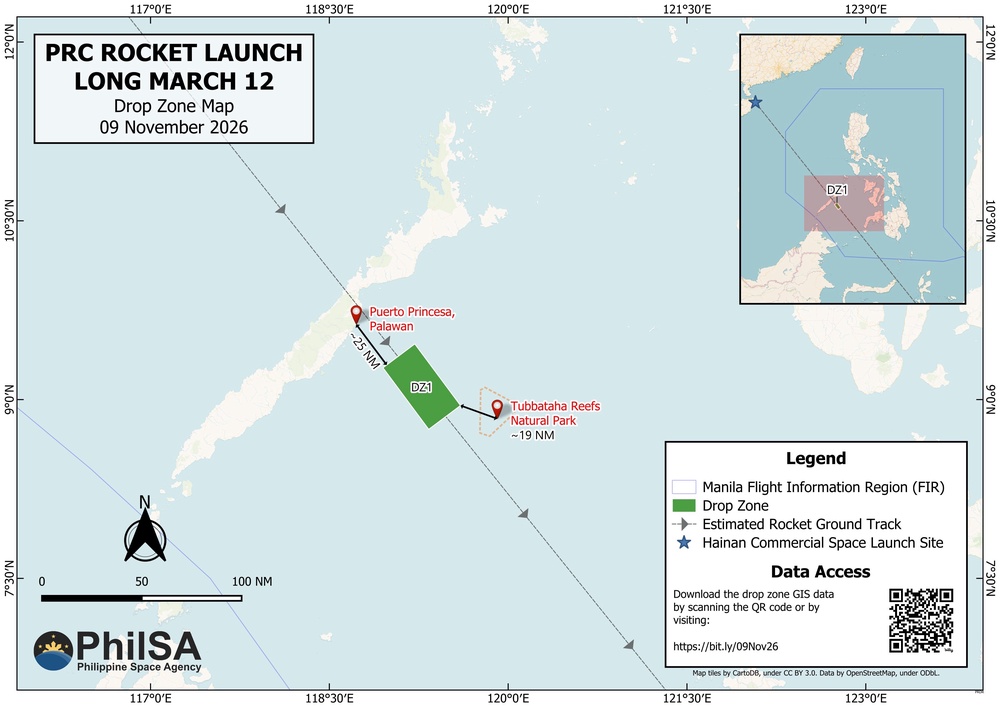
The Philippines space agency had also raised concerns about the possibility of fragments from the launch missing the safe fall zone in the sea.
“The debris impact zone is estimated to be approximately 25 nautical miles from Puerto Princesa, Palawan, and 19 nautical miles from Tubbataha Reefs Natural Park – within Philippine territorial waters,” the Philippine space agency PhilSA said in a translated statement.
The falling debris poses danger and potential risk to ships, fishing boats, aircraft and other vessels that pass through the fall zone, the Philippine space agency said earlier.
“Unburned debris from rockets, such as the booster and fairing, is designed to be discarded as the rocket enters outer space. While not projected to fall on land features or inhabited areas, falling debris poses danger and potential risk to ships, aircraft, fishing boats, and other vessels that will pass through the drop zone,” PhilSA said in a statement.
Social media users in northern Malaysia’s Kota Kinabalu city posted their sightings online, asking if others knew what the phenomenon was.
The phenomenon is usually called the space jellyfish effect and occurs when rocket exhaust gases expand at high altitude and are illuminated by sunlight.
It causes the plume to look like a glowing jellyfish, with a bright central point and giant translucent tentacles.
So far, no reports have emerged on the discovery of rocket fragments from the launch within Malaysia, MYSA said.
“The public is advised to immediately report to the Space Regulatory Division by calling 03-8885 8685 or emailing bpadg@mosti.gov.my should they discover any debris resulting from the aforementioned rocket launch,” the Malaysian space agency said.
The Philippines space agency has warned the public that suspected debris may contain residual rocket fuel and advised people not to approach or retrieve it.
In recent times, Chinese rocket debris falling back to Earth has sparked concerns in many parts of the world.
In July, debris from the Chinese Long March 6A rocket launched from northern China’s Shanxi province fell near Northern Luzon in the Philippines.
Last year, a smouldering metal object discovered in the Australian outback was found to have come from a Chinese rocket.
Earlier in 2023, a Chinese rocket broke up over the US after it lost control and its remnants fell over Texas.
Nasa has accused China of “failing to meet responsible standards regarding its space debris”.
“As global launch rates continue to accelerate, debris shed during staging events and the uncontrolled re-entry of large rocket upper stages pose growing hazards – not only to other spacecraft, but to civil aviation and to populations on the ground,” PhilSA said.
Read More