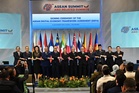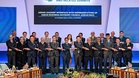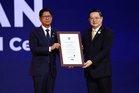
FERDINAND Marcos Jr. handed the Association of Southeast Asian Nations (Asean) its first legally binding digital rule book three days before Donald Trump landed in Manila. The Digital Economy Framework Agreement (DEFA), signed by the bloc’s ministers on Nov. 14, sets common terms for data flows, electronic payments, data protection and cooperation on artificial intelligence (AI) across 11 economies. When Trump reached Malacañang, the sequence held. Asked about the Pax Silica framework deal, Marcos kept it short: “There is no signing. No, not on this trip.”
It would be easy to read that line as a snub. It was nothing of the kind. Manila joined Pax Silica in April, Marcos pitched the initiative as the centerpiece of the country’s AI ambitions in his State of the Nation Address, and both governments are still aiming to sign the framework before the year is out. What Manila’s timing shows is more useful than defiance. Southeast Asia settled its own terms first and left the sales pitch for later.
The pitch, when it came, was specific. Trump offered to work with Asean governments on what his administration calls superintelligence, and the deals that followed were small in dollars and wide in reach. A US consortium will help build Malaysia’s sovereign AI cloud, with Washington offering $50 million in support. Brunei’s national network operator plans a data center tender with nearly $1 billion of spending sourced from American vendors. The Philippine Defense department agreed to a $37-million contract for AI-enabled mission support, and a $63-million initiative to modernize its defense cloud.
What changes hands in these deals is not hardware. A chip can be replaced at the next procurement cycle. A ministry that runs its records, payments and citizen services on one foreign model cannot switch so easily and, for obvious reasons, its supplier knows it.
The region got a reminder of that risk this year, and it came from Washington. On June 12, the United States Commerce Department ordered Anthropic to bar all foreign nationals from its two most advanced models, and the company took them offline for every user worldwide to comply. Commerce lifted the restriction at the end of the month. For nearly three weeks, any government that had built a public service on those models would have had nothing to run it on. The models came back. The lesson did not leave.
That episode helps explain why the region’s response to Pax Silica has been so measured. It had 24 signatories by its second summit in June, yet only the Philippines and Singapore have joined from Southeast Asia.
Beijing has made its own offer. At the Asean-China summit that Marcos co-chaired, Premier Li Qiang pledged to make the 2027 Year of Asean-China AI Cooperation a success, and the upgraded free trade agreement between the two sides takes effect on Dec. 1. We must expect that offer to find takers, and it should. Southeast Asia gains when two large suppliers compete for its business. It loses only when it bargains with each of them alone.
This is where DEFA earns its place, and it changes the bargaining in three ways.
First, it turns 11 markets into one. The pact covers nearly 680 million people, and Asean expects it to help the regional digital economy reach $2 trillion by 2030. A vendor that wants that market now meets one set of rules on data and payments rather than 11 separate negotiations. Scale is bargaining power. Asean finally has some.
Second, the terms came before the vendors. The rules were settled over 14 rounds of talks among the members themselves, not drafted contract by contract by a seller’s lawyers. The order of events is the whole point.
Third, nobody outside the region wrote it. Washington and Beijing will both have to sell into DEFA. Neither held the pen.
Manila deserves credit for getting the pact over the line. Trade Secretary Cristina Roque called DEFA a major economic priority of the Philippine chairmanship. There is a historical rhyme here, and it also began in Manila. At the Asean Plus Three summit in the Philippine capital in November 1999, leaders set up the finance cooperation that produced the Chiang Mai Initiative six months later. The 1997 crisis had taught them the price of depending on a single outside lender. Chiang Mai, later multilateralized and doubled to $240 billion, was the region’s answer. June 12 taught the same lesson about software.
The argument has a pricking point, and it sat in plain view during summit week. DEFA is signed, not yet in force, and Asean aims to roll out its first projects only in early 2027. In the same week the pact was signed, Malaysia, Brunei and the Philippines each struck their own AI arrangements with Washington. If every capital keeps buying cloud contracts on its own, DEFA becomes a trade agreement with a hollow AI chapter.
Kuala Lumpur has already shown what a better contract looks like. Its statement on the US cloud deal says the infrastructure and the data it hosts will be located in Malaysia, governed by Malaysian law and kept under Malaysian control. That is a sound clause. Signed by one government, it is also a lonely one.
Asean should make it regional and take it one step further. Before DEFA takes effect, members should add one common condition to DEFA’s AI cooperation work: Any foreign model running a member government’s public services, from Washington, Beijing or anywhere else, must come with a locally hosted fallback and a contractual guarantee of service for the life of the contract, whatever export controls the supplier’s government imposes later. Eleven governments can demand that. One government buying a $50 million cloud cannot.
The calendar helps. Singapore takes the chairmanship on Jan. 1 with digital integration among its stated priorities, and Marcos, handing over the gavel, said progress endures when “each chair[man] builds on what came before.” Manila can table the clause in its last weeks as chairman, and Singapore can carry it through DEFA’s first year.
If that clause is in place when DEFA takes effect, Southeast Asia will have done for AI what Chiang Mai did for liquidity, and every supplier will be bidding for its market on its terms. If it is not, the next June 12 will not darken a research lab. It will switch off a ministry in Manila.