
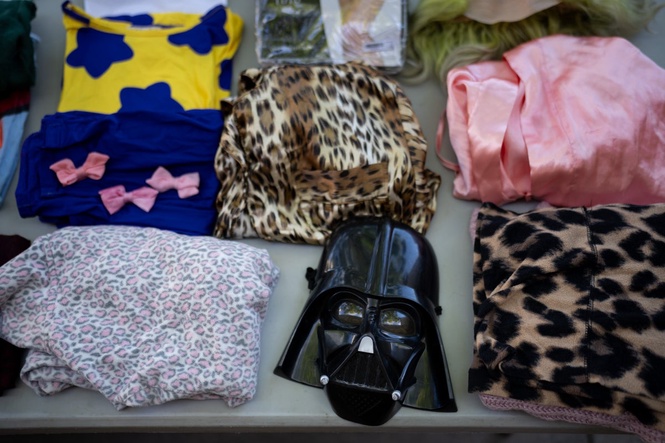
- Americans were expected to spend roughly $4.4 billion on Halloween attire this year but most single-use costumes end up in landfills shortly after the holiday.
- Halloween costumes mirror fast fashion, as they are frequently manufactured cheaply from synthetic petroleum-derived plastics that generate significant carbon emissions, industrial wastewater, and persistent microplastics.
- An estimated 80 percent of mass-produced Halloween costumes end up in landfills, contributing to the broader issue of textile waste that reached 11.3 million tons in the United States in 2018.
- Community costume swaps and thrift initiatives, such as Lexy Silverstein's Ultimate Halloween Swap in Southern California and university pop-up markets, are expanding to keep pre-owned outfits in circulation.
- Sustainability advocates urge consumers to reduce their environmental footprint by thrifting, borrowing from friends, renting, or choosing garments made from plant-derived fibers like cotton or linen.
IN FULL