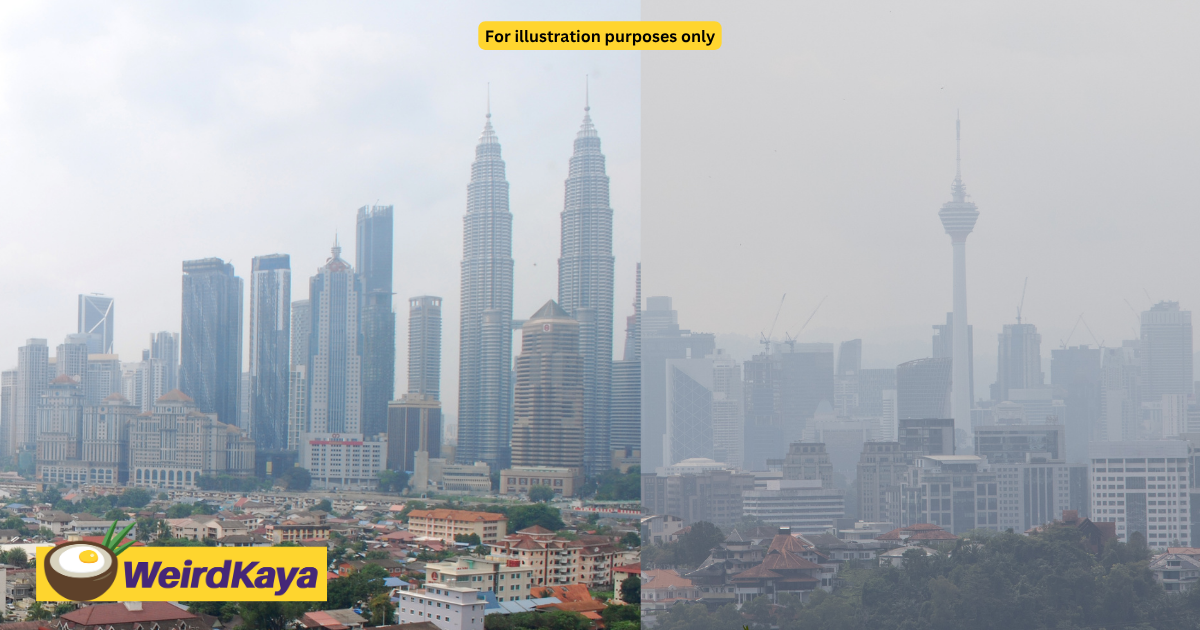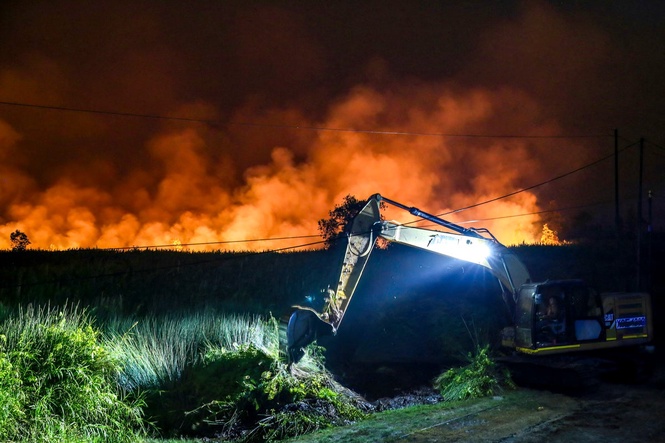
Wildfires raging across Indonesia are pushing air quality to hazardous levels in cities hundreds of miles away, as officials warn the crisis is set to worsen with the El Niño weather pattern peaking this month.
Indonesian forestry minister Raja Juli Antoni said hotspots across Kalimantan and Sumatra had fallen by the end of August, but warned the fight was far from over.
“Our problems are not over. September is the peak of El Nino," he said. "September is the main fight for us."
The wildfires burned more than 200,000 hectares of land across the country between January and July, including 95,000 hectares in July alone, as average temperatures for the month reached their highest in 35 years.
The fires are raging across a region that is home to endangered Bornean orangutans, leaving them writhing on the ground, fighting to even breathe, as air quality continues to plummet to hazardous levels and the haze spreads into neighbouring countries.
Mr Antoni said “super El Nino" conditions were deepening the drought in the country, fuelling the fires, and that the disaster was largely man-made, with blazes deliberately set by individuals or companies to clear land for agriculture or other economic activity, a practice that remained common despite periodic government crackdowns.
The ministry had fined six forestry permit-holders over their alleged role in setting fires, he said, and a criminal investigation remained possible.
Satellite imaging had identified 42 companies holding land concessions with a high risk of wildfires, according to Rizal Irawan, a senior official at the Indonesian environment ministry.
Police said last week they had arrested 72 people suspected of setting recent fires.
Authorities had deployed weather modification technology to trigger rainfall and used water bombing from aircraft to contain hotspots, Mr Antoni said.
Cloudseeding and firefighting planes are now operating across five provinces of Borneo, much of it covered by fire-prone peatland that can smoulder underground for weeks even after a fire appears extinguished.
In spite of such efforts, fires continue to surge in parts of Borneo. Hotspots in West Kalimantan nearly doubled in a single day at the end of August, rising by 3,553 to 7,377 while active fires increased by 88 to 104 and visibility fell below a kilometre, officials said.
In Central Kalimantan, hotspots fell by 147 to 5,244 over the same period, though fire spots increased by 16 to 72.
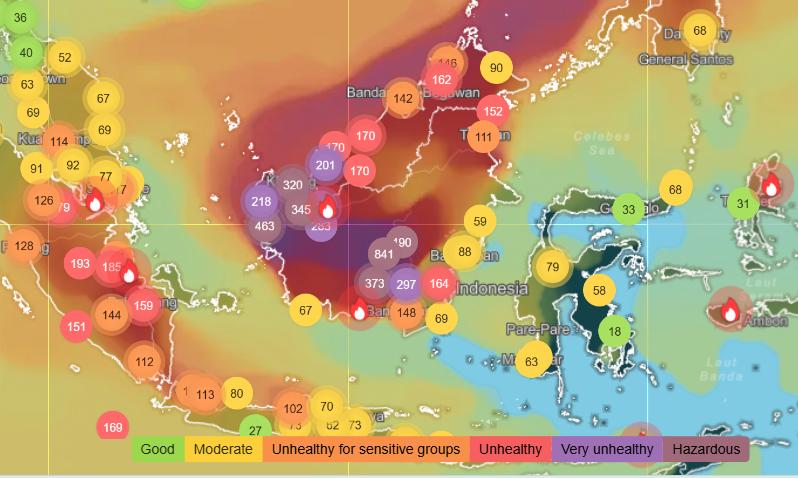
Air quality readings in Palangkaraya, in Central Kalimantan, reached 780 on the index used by IQAir, while Pontianak, in West Kalimantan, reached 593.
The wildfires have already claimed one life among the people fighting them. Akhmad Rijani, a volunteer firefighter who led a team in Palangka Raya, Central Kalimantan, collapsed while responding to a fire on Rungan Road in the city's Jekan Raya district. He was treated at Betang Pambelum Hospital for six days before he died.
"We extend our deepest condolences to the wildfire volunteer who passed away," Berton Panjaitan, an official at the National Disaster Mitigation Agency, said at a press briefing.
Following the volunteer’s death, authorities in Palangka Raya introduced mandatory health screenings for all wildfire volunteers and firefighting personnel.
Indonesia's deputy health minister, Dante Saksono Harbuwono, said around 13,500 people were treated for respiratory infections in July and August alone, while roughly 5.5 million people across Borneo and Sumatra had been directly exposed to the smoke. More recent numbers put the total hospitalisations for respiratory infections over 50,000 since the start of the fires earlier this year.
The fires in Kalimantan are tearing through the same kind of peatland that caused one of southeast Asia's worst environmental disasters a decade ago, raising fears of a repeat. Peatlands act as vast, long-term carbon stores, holding carbon that has built up underground over thousands of years. But that same stored carbon becomes a "carbon bomb" once the land is drained or set alight, releasing centuries of accumulated carbon back into the atmosphere in a matter of weeks.
Indonesia's 2015 peat fires, the worst episode on record, affected an estimated 43 million people and caused more than 500,000 to be treated for respiratory illness, according to the UN Environment Programme, at a cost of $16.1bn, roughly twice what it cost to rebuild Aceh after the 2004 tsunami. At their peak, daily emissions from that year's fires exceeded those of the entire US economy.
A study of Indonesia's 1997 fires, published in the journal Nature, found that peat and vegetation combustion that year released between 0.81 and 2.57 gigatonnes of carbon, equivalent to between 13 and 40 per cent of the world's total annual emissions from burning fossil fuels, from a single country's fires alone.
Drained and burned peatlands already account for up to 5 per cent of all human-caused carbon emissions worldwide, according to UNEP, and Indonesia holds some of the largest peatland reserves on Earth.
.jpeg)
The fires have also taken a toll on wildlife. Volunteers are finding orangutans fighting for survival. On Sunday, a farmer in the Ketapang area in West Kalimantan found an orangutan in need of rescue on a palm-oil plantation near the wildfire.
“It was very weak and I gave it water," the farmer, identified by his first name Jais, told Reuters.
A few days earlier, an orangutan named Mama Yuni and her two offspring had been evacuated from a plantation at Tanjungpura village after flames disrupted their usual habitat and movement routes.
Wildlife rescuers said that they had treated seven orangutans affected by the fires so far this year.
The Bornean orangutan is a critically endangered species. Its population has declined by more than 50 per cent over the last 60 years and its habitat has shrunk by at least 55 per cent over the past 20 years, largely due to hunting and logging. There are only about 120,000 remaining in the wild, according to the World Wildlife Fund. The apes are now found exclusively on the island of Borneo, which is held in part by Indonesia, Malaysia, and Brunei.

The smoke from the fires, meanwhile, has drifted far beyond Indonesia's borders.
The Asean regional bloc has activated its highest transboundary haze alert of level 3 for the southern region, citing rising fire hotspots and prolonged dry weather driven by the intensifying El Niño.
Authorities said this was the region's worst haze episode since 2015, when fires in Indonesia exposed tens of millions of people to toxic smoke and caused more than 500,000 respiratory illnesses.
In Malaysia, six areas of Sarawak state on Borneo recorded hazardous air quality, with readings above 300 on the country's Air Pollutant Index. In Kuching, the state capital, the index hit 407, and in Serian, near the Kalimantan border, it reached 408.
The Malaysian government said it had scheduled cloudseeding operations for early September in an attempt to bring rain to the worst-affected areas.
The smoke compelled the state to cancel its outdoor Independence Day celebrations, and Sarawak's deputy premier, Douglas Uggah Embas, said that any area with a reading above 500 would be placed under a local emergency, with only essential services allowed to operate.
Malaysia’s health ministry reported asthma cases nationwide climbing to 1,811 in the week of 23-29 August, up from 219 the week before. Conjunctivitis cases rose to 720 from 146.
Mia Emylia Hassan, a mother of two in Kuching, said the smell of smoke was inescapable and that visibility from her house had dropped to about a kilometre. "We have not seen blue sky for over a month," she said.
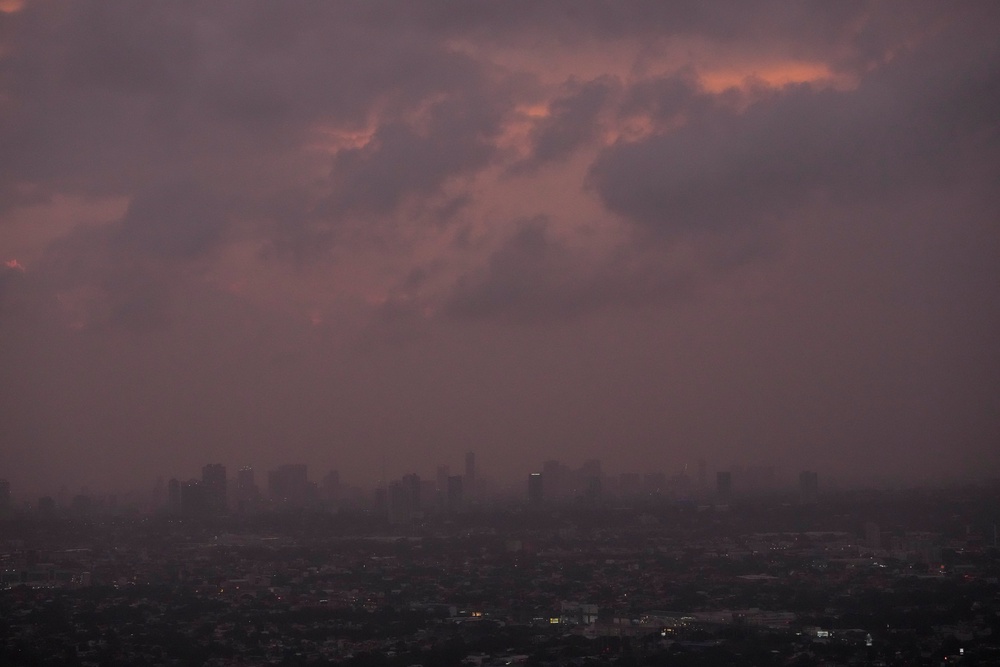
Schools and public life have been severely disrupted across the region. Nearly 600 schools in and around Kuching closed on 20 and 21 August, affecting around 200,000 students and a further 30 schools in Sarawak closed a week later, keeping more than 4,000 children at home.
In the Philippines, seven air monitoring stations across Manila recorded unhealthy levels of PM2.5 on Wednesday, according to the environment department, which said the haze was "possibly associated with smoke and transboundary haze from ongoing fires in Kalimantan”.
Quezon City, the most populous part of Metro Manila, suspended in-person classes and ordered schools to switch to remote learning.
Air quality also worsened in Central Luzon, Calabarzon, Mimaropa and Central Visayas.
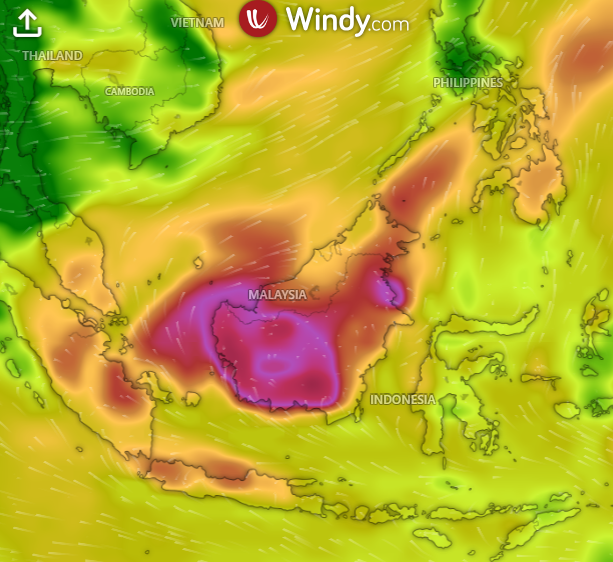
Forecasts from the Europe-based Copernicus Atmosphere Monitoring Service show the smoke's trajectory extending beyond the Philippines, with pollution expected to reach southern Thailand, Cambodia and Vietnam.
"If the fire emissions continue to increase, as would be expected through September into October, the smoke and air quality impacts could persist for several weeks across the region," said Mark Parrington, a senior scientist at the service.
According to the service's fire emissions data, Indonesia generated an estimated 46 megatonnes of carbon between August and September, roughly equivalent to the annual emissions of 45 coal-fired power plants. That is the highest level for the period since 2003, with about 38 megatonnes coming from Kalimantan alone.
Brunei's health ministry issued its own public health advisory, blaming southwesterly winds for carrying smoke from Kalimantan.
Air quality in the capital Bandar Seri Begawan reached “unhealthy” levels, with PM2.5 concentrations 13 times higher than WHO safety thresholds. Singapore's National Environment Agency also flagged the possibility of haze reaching the city-state in the coming weeks.