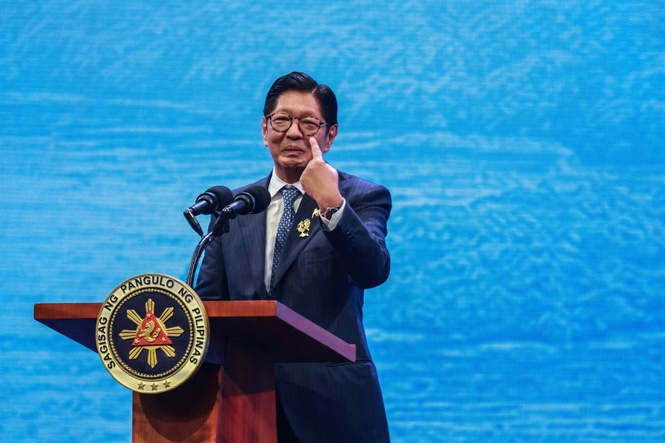
PRESIDENT Ferdinand Marcos Jr. has signed into law Republic Act 12327, or the Basic Education Voucher Assistance Act, that extends aid to students from middle- to middle-income households and below.
“Under the Basic Education Voucher Assistance Program, students enrolled in participating private basic education institutions charging school fees shall be provided by the government with vouchers in such amount as deemed sufficient to ensure reasonable access to private basic education,” the law read.
It also mandates the creation of the Bureau of Private Education under the Department of Education (DepEd) to oversee regulatory standards, quality assurance, policy formulation and developmental grants, particularly for small- and medium-sized private schools.
The agency’s task is to determine voucher rates based on commissioned research, and their review at least every three years to account for inflation.
Priority will be given to students attending DepEd-identified congested public schools, as well as learners living in areas without a public school — or a senior high school offering their chosen track — within a 3-kilometer walkable distance.
Under the law, participating schools are deemed to have waived admission requirements for qualified voucher beneficiaries, provided they enforce nondiscriminatory retention policies.
“A participating school that willfully fails or refuses to comply with the provisions of this Act shall, after due notice and hearing, be disqualified by the DepEd from the Program. Such disqualification shall constitute a bar from participating in any other program administered by the DepEd,” it read.
Participating private schools are strictly prohibited from withholding report cards, diplomas, transfer credentials, examinations or enrollment from students due to delayed or partial voucher reimbursements from the government. Violators face disqualification from DepEd programs and administrative fines ranging from P100,000 to P500,000.
They are, however, allowed to increase their tuition fees, granted that they have consulted the parents of their learners.
At least 70 percent of any increase must go toward salaries and benefits of teaching and nonteaching personnel, while at least 20 percent must be allocated to facility modernization and operational costs.
The government is mandated to disburse voucher payments to participating private schools within 60 days from the submission of complete documents.
To ensure that the allocated funds are protected, the law mandates a centralized verification system, as well as whistleblower protections and strict penalties.
Submitting fraudulent claims or reporting fictitious “ghost” students will be penalized, alongside full restitution of defrauded amounts and prosecution under the Anti-Graft and Corrupt Practices Act for colluding public officials.
The implementation of the expanded voucher program for the kindergarten and elementary levels was set for school year 2027-2028, subject to fund availability.
The DepEd will release the implementing rules and regulations of the new law within 60 days.
“The law institutionalizes voucher assistance from Kindergarten to Senior High School for learners from middle-middle-income households and below, offering higher subsidies to low-income families while safeguarding current ESC and SHS voucher recipients,” DepEd said in a statement on Friday.