
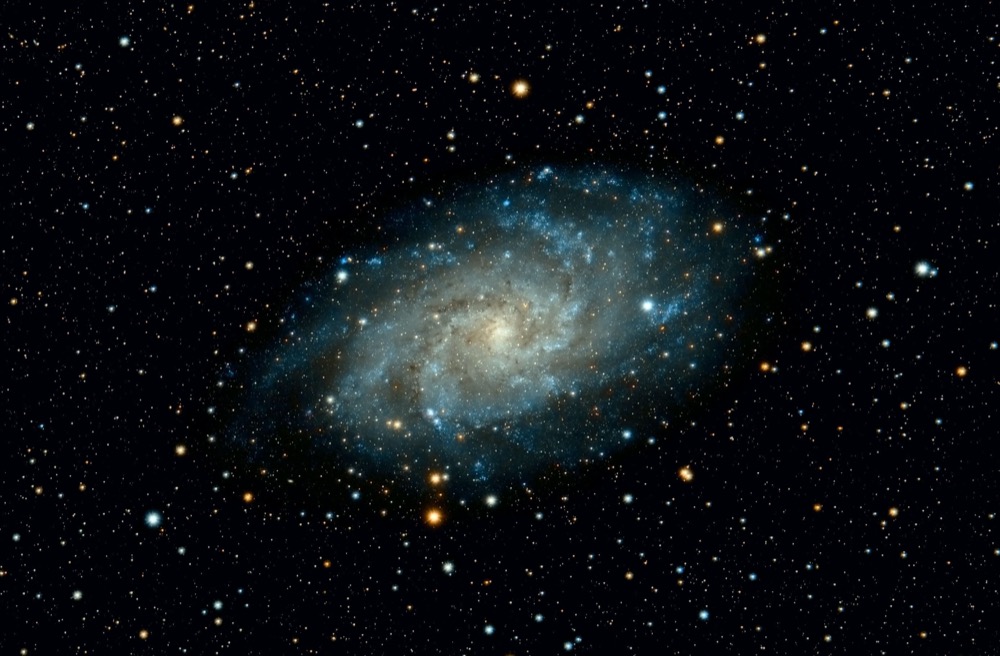
Astronomers using the James Webb Space Telescope (JWST) have uncovered a massive stellar bar in a distant galaxy, GN20, seen just 1.5 billion years after the Big Bang. This structure defies conventional theories of galaxy formation, revealing complex dynamics in the early universe. The discovery was detailed in a recent paper submitted to arXiv on May 14, 2026.
Stellar Bars: Cosmic Engines of Galaxy Evolution
Stellar bars are elongated features of stars that stretch across a galaxy’s center, rotating as a single unit. In nearby galaxies, they are common and play a critical role in shaping galactic evolution. As they spin, they act like cosmic funnels, channeling gas inward toward the galactic nucleus. This inflow can trigger intense star formation, feed central black holes, and build up dense cores. Even our own Milky Wayhosts a stellar bar, which influences its central structure and star formation patterns.
However, the early universe was thought to be inhospitable to bar formation. Young galaxies were extremely gas-rich, and the conventional models suggest that high gas fractions suppress or delay the development of bars. Bars were also expected to require billions of years to grow to significant sizes, making the discovery of a seven-kiloparsec bar in GN20 both unexpected and revolutionary.
Peering Through Cosmic Dust With JWST
GN20 is faint, distant, and enshrouded in thick dust, which has historically made detailed observations nearly impossible. Using JWST’s Mid-Infrared Instrument (MIRI) and Near-Infrared Camera (NIRCam), astronomers could see through the dust and map the galaxy’s internal structure in unprecedented detail. The imaging revealed a clear bar-shaped feature, confirmed independently through isophotal analysis, a technique that measures how light intensity stretches and rotates from a galaxy’s center outward.
Further observations from the Northern Extended Millimeter Array (NOEMA) revealed a striking alignment between the stellar bar and a similar bar in the dust distribution. This alignment underscores the intimate connection between stars, gas, and dust in driving the galaxy’s evolution. The findings were published on arXiv, highlighting the potential of JWST to challenge long-held assumptions about early galaxy formation.
Breaking the Rules of Galaxy Formation
The presence of GN20’s bar defies expectations in three key ways: first, bars in high-density systems are prone to collapse under their own weight; second, growing a seven-kiloparsec bar should take billions of years; and third, high gas fractions were thought to delay or prevent bar formation.
“Our new results demonstrate that all three of these obstacles can be overcome by a single ingredient directly implicated by the observations: the presence of highly turbulent gas across the inner disk at high gas fraction,” the team writes in the paper.
The turbulence appears to stabilize the bar and allow it to grow quickly, providing a pathway for early galaxies to develop these complex structures far faster than previously expected.
Bars as Engines of Star Formation
The bar in GN20 is not merely a structural curiosity; it actively shapes the galaxy’s evolution. Observations show that where the bar connects with the outer disk, gas accumulates, igniting a hotspot of intense star formation. At the galaxy’s core, the bar channels material inward, feeding a nuclear starburst and potentially a supermassive black hole.
“Part of this high SFR is likely being driven by the bar funneling gas and dust into the center, where it triggers an intense nuclear starburst in the gas-rich disk, and fuels the potential active galactic nucleus,” the team explains. With a star formation rate exceeding 1,000 solar masses per year, GN20 provides a glimpse into how massive, rapidly evolving galaxies may have grown in the early universe.
A Missing Link in Galaxy Evolution
GN20-like galaxies may not represent a fleeting phase but a critical stage in the formation of massive elliptical galaxies seen today. Once the central star-forming gas is depleted, the galaxy enters a quiescent state. This mechanism could explain how some massive galaxies in the local universe quenched their star formation remarkably early, resolving a long-standing cosmic puzzle.
The discovery underscores the transformative power of JWST in revealing hidden structures in the early universe, providing astronomers with a clearer understanding of how galaxies like GN20 defied conventional cosmic rules to build their stars and cores in record time.