
In 2007, Michel Navas and Enrico Barbasini looked up at a mechanical departure board. The people around them saw their departure times. The two watchmakers saw something else.
You’d know the board if you saw one. Before LCD screens took over train stations and airports, destinations were displayed on split-flaps—rows of hinged panels that clattered through the alphabet every time a service was called, landing letter by letter until a city appeared. The two watchmakers had just founded La Fabrique du Temps, and they recognised something in the motion.
“Looking up at the departure board, we immediately thought of a jumping hour complication,” says Navas. “What we wanted was to take that idea and make it three-dimensional, to give it presence on the wrist. The cube was the answer. Once we had that, everything else followed.”
It was also apt for Louis Vuitton, whose heritage was built on travel. The maison had entered watchmaking in 2002 with the Tambour, a drum-shaped case with flanks that sloped outwards and the house’s name engraved around the caseband.
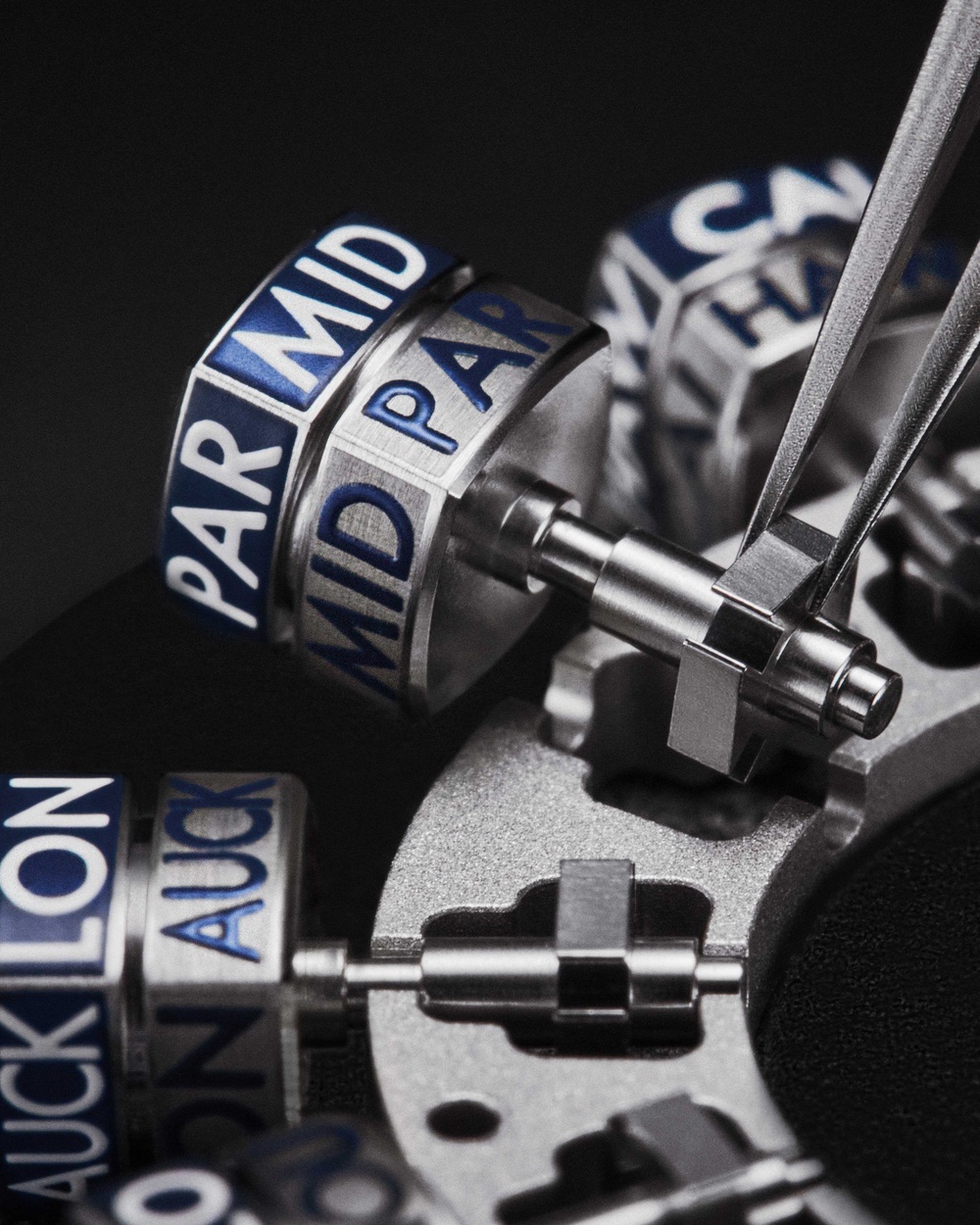
Then, it began working with Navas and Barbasini. Its first collaboration arrived in 2009: the Spin Time movement, inspired by those flapping boards. Twelve cubes orbit the dial. At the top of the hour, they rotate in sequence until one face—lighter in tone than the rest—announces the current hour, while the others hold their neutral position. It was patented, instantly recognisable, and, crucially, not a metaphor.
“The departure board inspired us precisely because it was functional, not decorative,” says Barbasini. “That discipline is what we tried to bring to the movement.”
Two years later, in 2011, Louis Vuitton acquired La Fabrique du Temps and planted its watchmaking flag in Geneva and eventually gathered movement, case, and dial production under one roof in Meyrin. For the complication’s 10th anniversary in 2019, Louis Vuitton excavated the dial and left the cubes floating around the periphery of the movement. It was named the Spin Time Air.
Then, in 2025, six limited-edition references debuted on an entirely new case with a new family of in-house calibres—the first time every element of a Spin Time was conceived and produced under Louis Vuitton’s own roof.
This year, Louis Vuitton unveils five references joining the permanent collection. “When we launched the Tambour Spin Time collection in 2025, we knew it was the beginning of something, not the conclusion,” says Jean Arnault, watch director of Louis Vuitton. “The permanent range is that next step—the Spin Time is no longer an occasion, it is a lasting icon.”
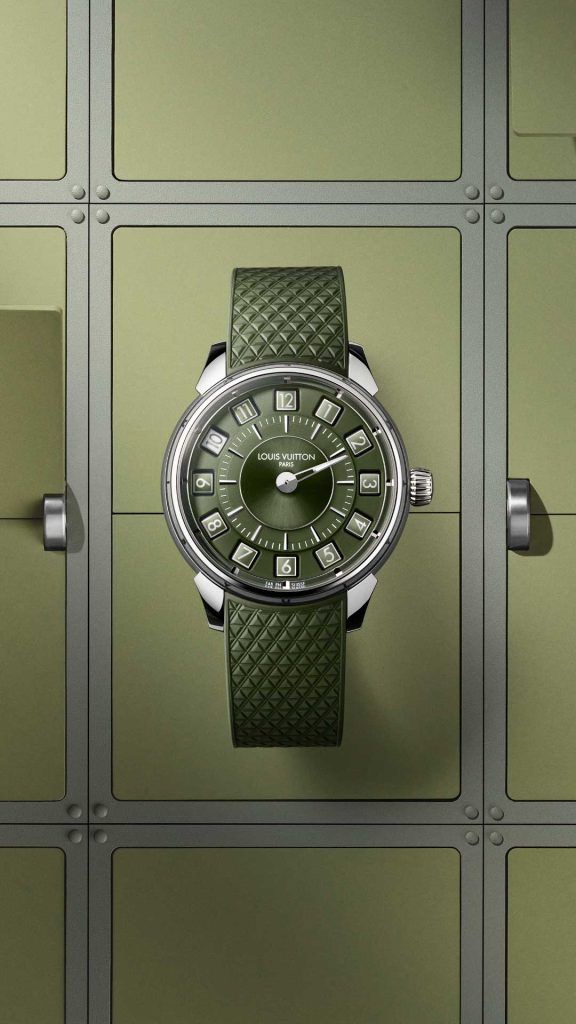
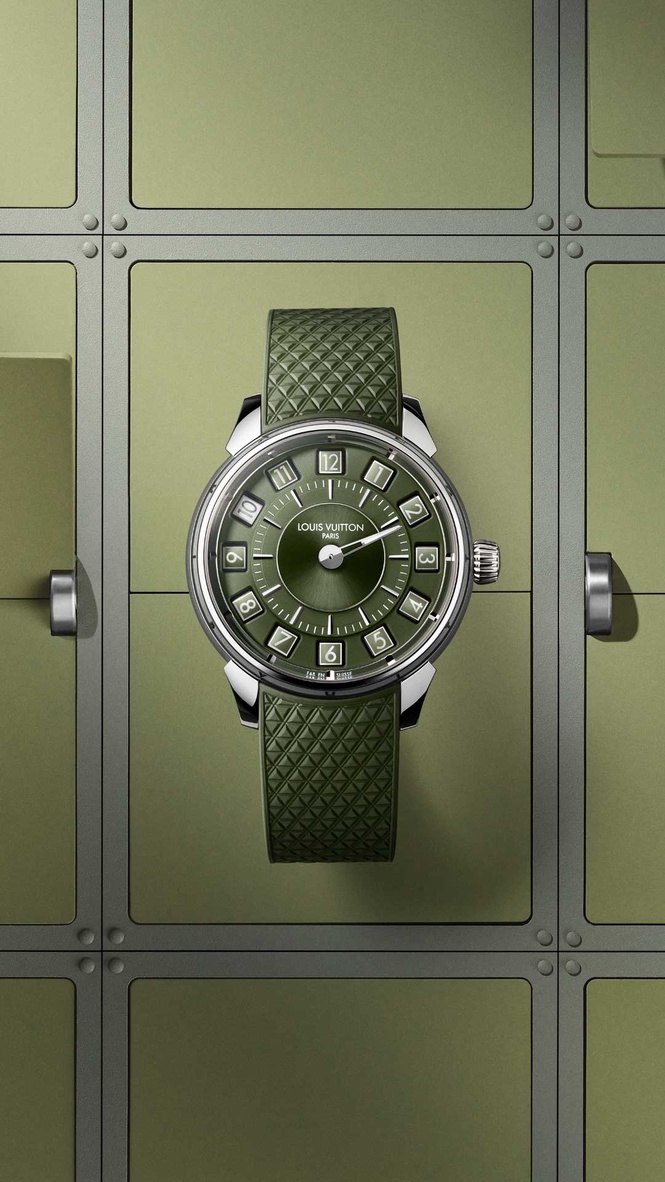
The Tambour Spin Time Green opens the range in a 39.5mm white gold case, its sunray and sandblasted dial finished in a deep, earthy green. Water resistant to 100 metres, it carries a sapphire caseback—a first at this size—that leaves the in-house calibre ST13.01 exposed.
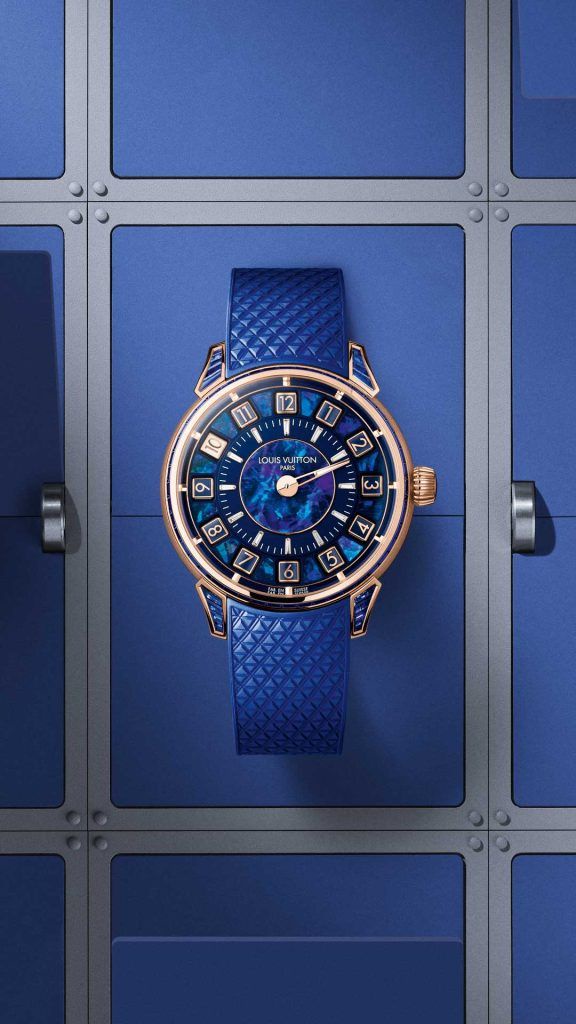
The Spin Time Australia’s Opal is the first Tambour in rose gold, and its dial is cut from blue Australian opal that shifts between indigo, teal, and cerulean depending on where the light falls. “All opal colours can be found in Australia, but it was the blue that caught my attention,” says Matthieu Hegi, artistic director of La Fabrique du Temps Louis Vuitton. “It reflects every colour, but always with blue at its heart.” In-house setters take three full days to set the 82 baguette-cut sapphires and 12 baguette-cut diamonds.
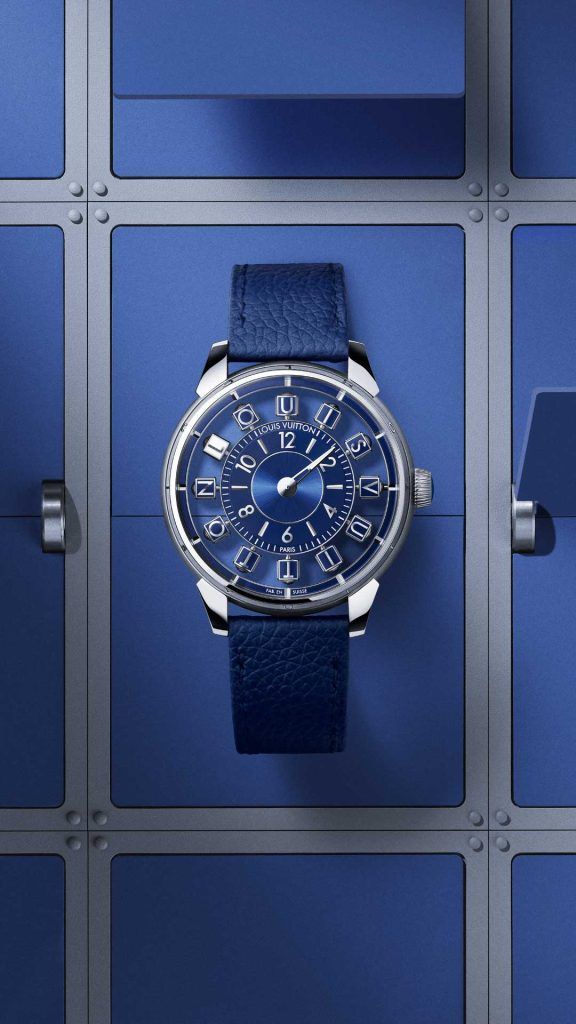
Then, a trio of Spin Time Air timepieces in 42.5mm cases completes the new collection. The Spin Time Air Blue suspends the ST13.01 at the centre of the case so the cubes appear to turn in mid-air; in a neat flourish, the 12 of them spell out L-O-U-I-S V-U-I-T-T-O-N.
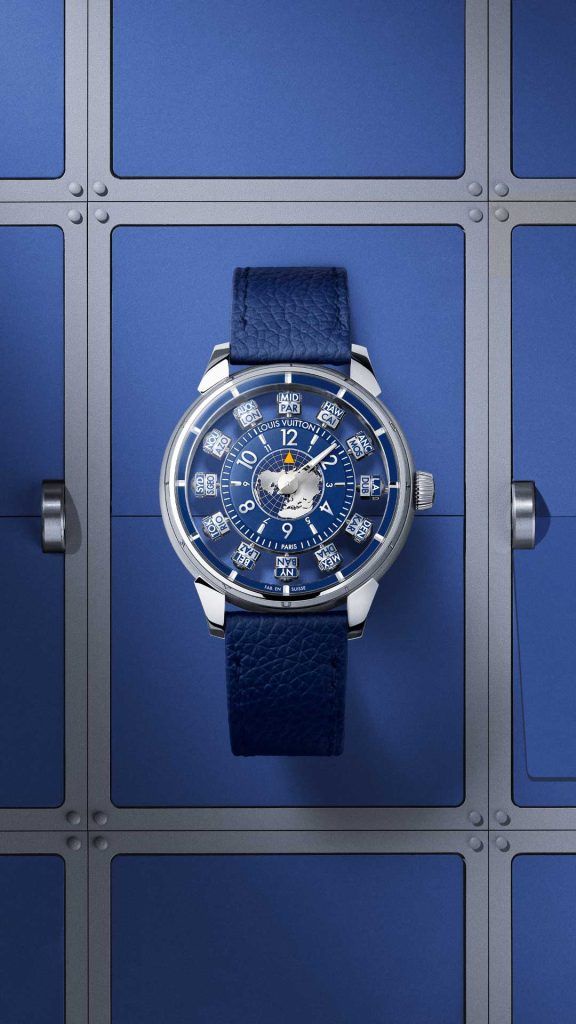
The Spin Time Air Antipode is a clever piece of engineering. It displays all 24 major time zones across only 12 cubes by pairing each city with the one exactly 12 hours away—Los Angeles with Dubai, New York with Bangkok. Each cube’s background colour tells you whether it is day or night there. “With this logic, the complication explains itself,” says Navas. Local time is read off a small yellow pointer, painted in the shade of the stitching on Louis Vuitton’s leather goods.
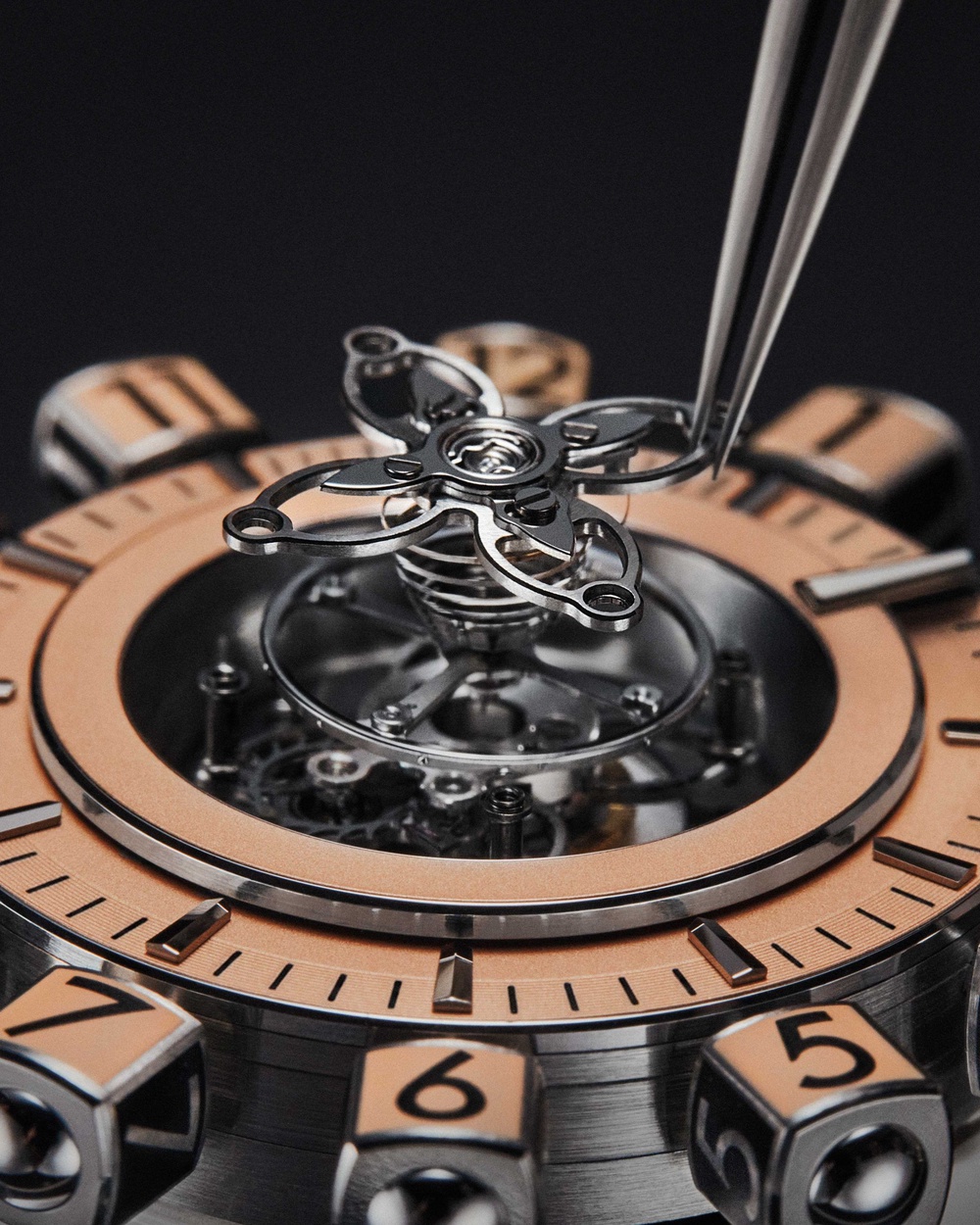
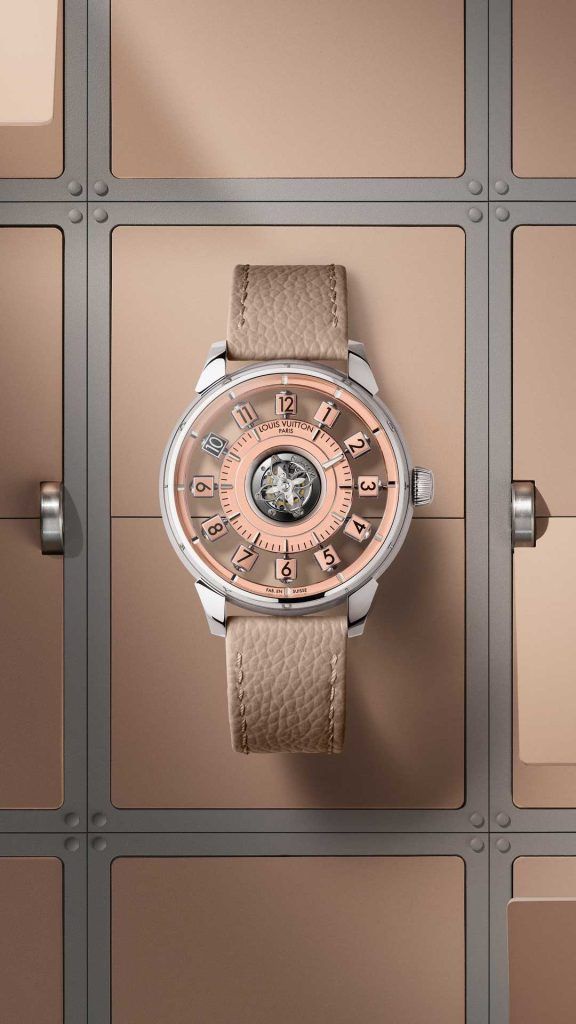
And the collection wouldn’t be complete without a tourbillon, which is a watchmaker’s way of showcasing their prowess. The Air Flying Tourbillon, in platinum with a salmon dial, takes 50 hours to assemble—more than double any other movement in the collection. The cubes are each topped with small, polished studs representing rivets, paying homage to the trunks that the house is known for. But the watch hides its best detail in plain sight: the tourbillon cage is shaped as a Monogram flower. “It is a reminder that this is a Louis Vuitton watch at its deepest level,” says Barbasini, “not just in its case and dial, but inside the movement itself.”
In the airports and train stations, the split-flap boards are mostly gone now, replaced by screens that tell you what you need to know without the sound. But at the top of every hour, on a wrist somewhere, 12 cubes still turn over in sequence. Magic can be found everywhere—all you need are fresh eyes, as Navas and Barbasini did.
Note : The information in this article is accurate as of the date of publication.