

The Duchess of Sussex has paid tribute to her “friend and mentor” American journalist and feminist activist Gloria Steinem after her death at the age of 92.
Steinem, one of the trailblazers behind the US feminist movement, died on Wednesday at her home in New York City.
She dedicated her life to advocating and campaigning for a number of issues including equal pay and reproductive rights.
Tributes have since poured in for Steinem, including from Meghan, who wrote in a post on Instagram: “Celebrating the life and legacy of my friend and mentor, Gloria Steinem, and also grateful to know that in these last few weeks and days she knew exactly how loved and admired she was.
“You all know her many accolades and the way in which she helped shape the world for women and all people – ‘we are linked, not ranked’ she would tell me, and the bracelet she gave me said exactly that. I still wear it with pride.
“Publicly, we did interviews together, called young voters to encourage them to have their voices heard, attended award ceremonies, and brainstormed how to help this beautiful yet complicated world to become more equitable.
“But privately, she was even better than you would imagine – spending Thanksgiving with our family, introducing me to one of my best friends (forever the champion of female friendship), loving our children with her whole heart, counseling me during hard times, and giving extraordinary advice and perspective with a cup of tea and an unrivaled cheekiness and wit.”
Former US secretary of state Hillary Clinton also paid tribute to Steinem and told CBS Mornings: “I’m heartsick, as I think everyone who not only knew her but followed her, was inspired and challenged by her.
“Gloria was at heart an optimist. Her activism was rooted in optimism, and that’s a moral choice. And she made it every day.
“She was one of the architects of the entire structure of women’s equality. Tearing down those obstacles to young women being able to participate where their talents and hard work took them.
“I saw in my own life over the course of about 10 to 15 years, Gloria’s pushing on those doors to finally get them open, not only for her to walk through, but for her to lead literally millions of others.”
Ms Clinton also praised the “incredibly smart, beautiful, talented woman” for pointing out the issues women faced in Ms Magazine, which she co-founded in the 70s and became “the very first opportunity that so many of us had to read articles about the status of women, to understand what the restrictions were”.
She later posted a photograph of the pair together on Instagram.
News of Steinem’s death was announced on Thursday morning in a statement shared on her Instagram account which said: “Gloria’s near-century on earth were years well-lived, and she continued working for equality until the very end.
“Gloria’s greatest gift was her ability to listen to others, to make others feel seen and heard.
“Her words, actions and example gave people permission to be their truest selves. Gloria lived true to her independent spirit, always with curiosity and a great sense of humour.”
Practical Magic star Sandra Bullock posted a black and white photograph of Steinem on her Instagram story and said: “With her bare hands and force of will, she paved the roads that millions of us are able to walk on.”
Hollywood actress Julianne Moore also paid tribute and said the time she spent studying Steinem in order to portray her in the 2020 biopic The Glorias, was “one of the most edifying of my life”.
She said: “Everything I watched, everything I read, everything I observed about her gave me a template for how I wanted to behave.
“Her honesty, her tolerance, her patience, and her insistence on humanism and inclusion as she moved through the world offers us all a moral roadmap.
“Thank you for all you gave us, Gloria.
“We were so lucky.”
American singer-songwriter Patti Smith said: “This is the greatest Gloria. All are grateful for her revolutionary spirit; a lifetime of service.”
US TV presenter Oprah Winfrey praised Steinem for leaving us with “more freedom than she inherited”.
She said: “We as women owe her so much. She challenged a culture that often told us who we could be, what we could do, and how much space we were allowed to take up — and then spent her life making that space wider for all of us.
“And although she was a defining leader of the women’s movement and became an icon, she never wanted the movement to be about her. She understood that real change happens when one woman finds her voice and then uses it to help another woman find hers.
“Every woman who has ever walked into a room knowing she belongs there; every woman who has demanded equal pay, equal respect, ownership of her own body, and the right to make her own choices; every girl who has grown up assuming that her dreams are hers to pursue — whether she knows Gloria Steinem’s name or not — is living, in some measure, inside the progress Gloria helped create.
“She leaves us with more freedom than she inherited and with the responsibility to keep widening that freedom for the women and girls who come next.
“What a life. What a legacy. What a difference she made.”
Born in Toledo, Ohio, Steinem began her career as a freelance journalist in New York City and first gained prominence in 1963 after going undercover as a Playboy Bunny.
The expose for Show magazine revealed the working conditions at Hugh Hefner’s Playboy Club and the sexist and underpaid life of the bunny/waitresses.
Despite making a name for herself, Steinem was still not taken seriously by the heavily male-dominated newsroom.
She went on to write as a columnist for New York magazine where she reported on political campaigns and progressive social issues including the women’s liberation movement.
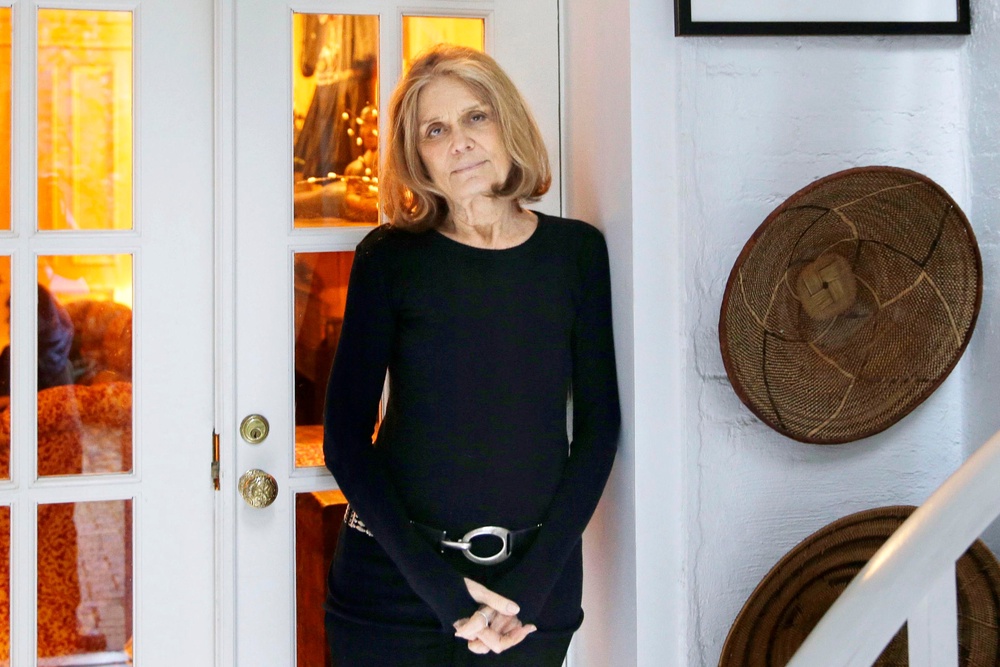
A crucial moment in her advocacy came in 1969 when she spoke out about her own experience of having an abortion when she was 22 years old at an awareness rally.
She quickly became the face of the women’s liberation movement and second-wave feminism – advocating for reproductive rights among many other causes throughout the 60s and 70s.
Steinem also founded the Women’s Action Alliance alongside Brenda Feigen and Dorothy Pitman-Hughes in 1971, a US organisation which supported grassroots activism to fight against sex discrimination.
In 1972, she co-founded Ms magazine – the first magazine owned, run and written by women.
The groundbreaking magazine published stories that broke away from the mainstream tales concerned with homemaking, parenting or beauty.
Steinem helped co-found the National Women’s Political Caucus (NWPC) in 1971, a multi-partisan grassroots organisation dedicated to increasing women’s participation in the political process at a national and state level.
She also played an influential role in the movement to pass the Equal Rights Amendment (ERA) in 1972 which prohibited sex discrimination.
Steinem gave a powerful testimony in May 1970 and told the Senate: “I have been denied a society in which women are encouraged, or even allowed to think of themselves as first-class citizens and responsible human beings.”
Steinem was awarded the Presidential Medal of Freedom, America’s highest civilian honour, in 2013 by former US president Barack Obama.
Read MorePhotos show Gloria Steinem through decades as a leading voice of the women’s movement
Gloria Steinem death: Pioneering voice of modern feminism, dies at 92
Trump says Prince Harry’s treatment of Prince William was ‘terrible’
Former Scottish Labour leader Anas Sarwar takes Lords seat
Campaigners ‘won’t stop’ until moratorium announced on AI data centres
Name of Scottish missionary added to memorial wall at Auschwitz


