.png)
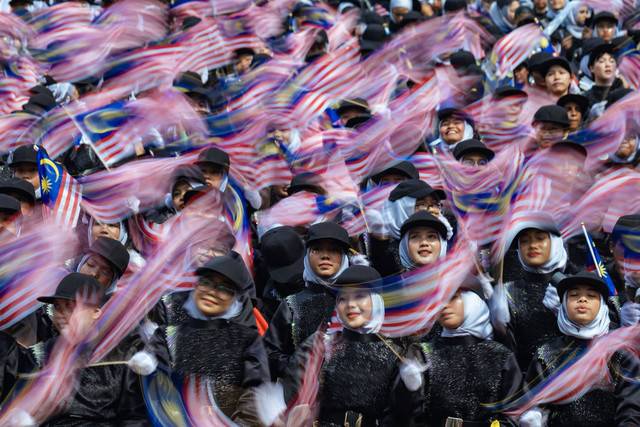
EVERY year, as Aug 31 approaches, we remember Merdeka.
We remember those who struggled, sacrificed and gave so much so that we could once again determine the future of our own land. We remember their courage with gratitude and we honour a generation that refused to believe that the destiny of this country should forever be determined by others.
But perhaps, after almost seven decades of Merdeka, it is time for us to ask a different question.
What exactly did we become free from and what did we become free to reclaim?
I have become increasingly uncomfortable with thinking of Merdeka simply as the moment when a new country became independent. For this was not a land without government before foreign powers arrived.
It was not a land without law. It was not a land without rulers, diplomacy, commerce, religion, institutions or an understanding of justice. They came to a land that was already governed. They entered kingdoms that already possessed political and legal traditions of their own.
Long before European powers established themselves in this region, the Malay world had developed sophisticated systems of governance and international trade. Melaka stood at the centre of one of the great maritime crossroads of its age. Merchants came from across Asia and beyond. Different peoples, languages, cultures and religions encountered one another in its ports.
They did not need to become the same people in order to live beside one another. They traded. They settled. They worshipped. They formed communities. They lived under an established political order. This is something we sometimes forget when telling the story of our country.
We speak so frequently of what came afterwards that we risk forgetting what existed before. The Malay Sultanates were not empty political spaces waiting to be governed. They possessed rulers and ministers, systems of administration, commercial regulations, diplomatic relationships and written laws. Islam provided the moral and legal framework of government, while adat responded to the particular circumstances of Malay society.
The Hukum Kanun Melaka and later the Hukum Kanun Pahang are surviving witnesses to that world. They need not dominate this Merdeka story. Their existence alone reminds us of something important:
"We had law because we had government; and we had government because we had a civilisation."
The laws regulated more than crime and punishment. They addressed the ruler, ministers and officials; trade and commerce; obligations and responsibilities; justice and social order. They belonged to societies that understood that a functioning realm required rules by which ruler and rakyat could live.
That changes the way I think about Merdeka. Foreign powers did not arrive upon an ungoverned shore and teach its inhabitants how to govern themselves. They encountered peoples who already knew how to govern.
The Portuguese conquest of Kota Melaka in 1511 was therefore not the beginning of our encounter with civilisation. It was the violent conquest of the capital of an existing civilisation. The consequences were profound. Lives were lost. Communities were displaced. Political power shifted. The great trading city changed hands. But something extraordinary happened.
"Kota Melaka fell, but Melaka lived on."
Its political traditions travelled. Its people travelled. Its laws travelled. Its memory travelled.
Across the Malay world, new centres of power continued what had existed before. Johor, Pahang, Perak and other Malay Sultanates carried forward different parts of that inheritance. The political geography changed, but Malay civilisation did not disappear simply because a foreign flag flew over Kota Melaka.
Other European powers would follow. They came with their own interests, rivalries and systems of governing territories far from their homelands. They classified populations, reordered institutions and increasingly viewed the societies they encountered through categories of their own making.
Too often, the people of this region were described simply as "natives." I find that word increasingly troubling when I read our history.
Natives of what?
These were people with kings. People with laws. People with faith. People with ports that connected the world. People with diplomatic relationships stretching across seas. People whose rulers corresponded with other rulers and whose merchants traded with peoples of different religions and civilisations.
To reduce such societies merely to "natives" is to look at them through somebody else’s eyes. Perhaps it is time we looked at ourselves through our own. This does not mean imagining that the Malay world was perfect.
No civilisation ever was. There were conflicts, rivalries, wars, injustices and failures. There were good rulers and bad rulers, periods of stability and periods of upheaval. But imperfection does not mean absence of civilisation.
Nor does conquest confer civilisation upon the conquered. That distinction matters. It matters especially when we remember Merdeka. Because perhaps Merdeka was not the moment we were taught how to become a nation. Perhaps it was the moment we recovered something much older:
"The freedom to determine how our own land should be governed."
And that freedom was not won easily. Men and women before us endured hardship, humiliation, uncertainty and struggle so that their children would not forever live in a country whose destiny was determined elsewhere.
For that, we owe them more than an annual celebration.
We owe them remembrance. We owe them gratitude. And above all, we owe them responsibility. They fought for the freedom to govern our own land again.
What have we done with that freedom?
That, to me, is the question Merdeka should ask every Malaysian. Have we used that freedom to build a more just society? Have we protected the institutions entrusted to us? Have we learned to disagree without destroying one another? Have we preserved the ability of different communities and religions to live together in peace? Have we remembered that diversity did not suddenly arrive in Malaysia in the twentieth century?
The ports of the old Malay world had long brought different peoples together. Traders and communities from many lands lived within these kingdoms. Difference was not unknown to our forefathers.
What mattered was order. What mattered was justice. What mattered was knowing that although people might worship differently, speak differently or come from different places, they shared the peace of the same realm.
There is something here worth remembering. Not because we should attempt to recreate the fifteenth or sixteenth century. History cannot be reversed, nor should it be romanticised. But because a people who forget that they once possessed their own civilisation may eventually begin to believe that civilisation was given to them by somebody else.
It was not.
Our forefathers built. They governed. They legislated. They traded. They negotiated. They worshipped. They fought. They failed. They rebuilt. And they endured.
Merdeka returned to later generations the freedom to continue that story on their own terms. That is why I prefer, increasingly, to think of Merdeka not merely as “independence”.
The word freedom speaks more deeply to me.
Freedom to determine our own future. Freedom to govern our own land. Freedom to preserve what is ours while welcoming those who share this land with us. Freedom to build a Malaysia in which different races and religions can live together without surrendering their identities. And freedom to decide what kind of country we shall leave to those who come after us.
But freedom without responsibility can become another kind of captivity.
If we allow hatred to divide us, corruption to weaken us, arrogance to blind us, or ignorance of our own history to define us, then we diminish the very freedom for which earlier generations struggled.
Merdeka therefore carries an amanah. We inherited not merely territory, but a civilisation.
Not merely institutions, but values. Not merely freedom, but responsibility.
The men and women who struggled for Merdeka did their part. They returned to us the right to determine our own destiny. Now it is our turn to decide what we shall do with it.
Perhaps, this Merdeka, we should look backwards before we look forward.
Not to live in the past. Not to claim that everything in the past was perfect. But to remember who we were before others began telling us who we were.
We were not a people waiting to be governed. We were already governing. We were not without law. We had laws. We were not without civilisation. We belonged to one. And through all the invasions, disruptions, wars and transformations of centuries, that civilisation endured because generation after generation carried something of it forward.
Today, that responsibility belongs to us.
One day, our children will inherit the Malaysia that we leave behind. When they look back upon our generation, I hope they will be able to say that we understood the meaning of the freedom entrusted to us. That we did not merely celebrate Merdeka.
"We were worthy of it. "
Tunku Azizah Aminah Maimunah Iskandariah is a master’s candidate at the International Institute of Islamic Thought and Civilisation (ISTAC), International Islamic University Malaysia.