Micron's rush to build new memory chip factories worldwide is lifting more than its own balance sheet. The chipmaker's Taiwan chairman said on October 1 that three homegrown engineering firms have already landed work on Micron projects in the United States, Singapore and Japan, riding the same AI-driven expansion that is reshaping the island's chip industry.
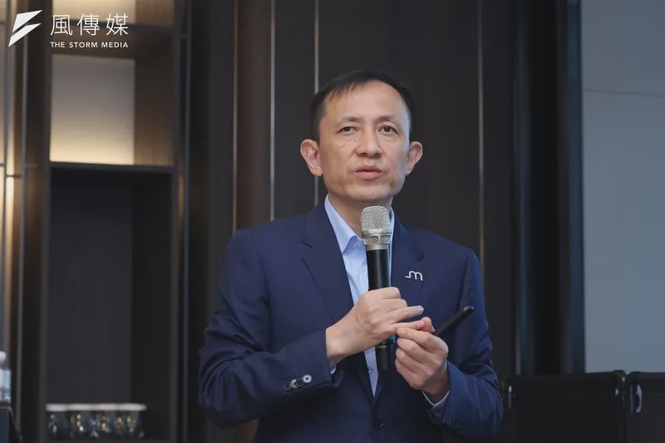
At a media briefing in Taiwan, Lu Dong-hui, chairman of Micron Memory Taiwan Co., described how the company's global factory buildout for high bandwidth memory, or HBM, depends on local partners who built their expertise serving Taiwan's chip industry. Three of them, he said, are now doing that work abroad: Marketech International Corp. is installing cleanroom monitoring and control systems at Micron's new fab campus in Boise, Idaho; L&K Engineering Co. is constructing an advanced packaging plant in Singapore; and United Integrated Services Co., commonly known as UIS, is providing design consulting for Micron's new facility in Hiroshima, Japan.
"A company's success can never rest on itself alone. It has to happen together with its partners," Lu told reporters, summing up the approach with a single English word: "Together." He said the philosophy covers both the technical integration AI systems require and the practice of bringing Taiwanese engineering partners into Micron's overseas construction projects.
Why HBM Needs CoWoS And Nvidia In Sync
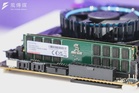
Lu's point about partnership extends to the chip supply chain itself. Even if Micron ships a finished batch of HBM, he said, customers cannot get a complete AI accelerator unless Taiwan Semiconductor Manufacturing Co.'s CoWoS advanced packaging process and Nvidia's computing platform are also ready. CoWoS, short for chip-on-wafer-on-substrate, is the process TSMC uses to bond HBM stacks to the processor dies that power Nvidia's AI chips.
A delay anywhere in that chain holds up delivery everywhere else, Lu said, which is why Micron now coordinates its expansion timeline with its packaging and platform partners rather than scaling HBM output on its own.
Three Taiwan Firms Follow Micron Overseas
The three partners' overseas roles mirror Micron's broader buildout. In the United States, the company is advancing two new DRAM fabs in Boise and has outlined plans for as many as four in New York state, alongside ongoing upgrades at its existing Virginia site. In Japan, Micron broke ground in July on a new fab in Hiroshima. In Singapore, the company is expanding both HBM advanced packaging and NAND flash manufacturing.
Lu said sending Taiwanese partners abroad serves a second purpose beyond keeping Micron's own schedule on track: it gives those firms a foothold in new markets. With land and labor both limited in Taiwan, he said, extending a mature local ecosystem overseas opens room for partners to grow that the home market cannot offer on its own. Micron's long-standing local partnerships span cleanroom engineering, building mechanical and electrical work, equipment integration, circular-economy practices, industrial gas and chemical supply, and workforce training, capabilities Lu said now travel with the company as it builds in new countries.
Taiwan, Japan and Singapore all already host Micron manufacturing and have established regulations, talent pools and supply chains that let projects move faster, Lu said. The United States offers a different advantage: government incentives, plus proximity to the major American AI customers Micron supplies directly.
Skilled Labor And Specialty Materials Are Running Short
The faster pace of construction is straining the workforce Micron depends on. Lu said shortages are concentrated among contractors and their supply chains rather than inside Micron itself, in trades such as equipment installation and removal, facility systems setup and calibration, electrical work, welding, pipefitting and the technicians who fine-tune complex tools.
Materials face similar pressure. High-purity gas piping used in cleanrooms, for example, must meet exacting specifications and cannot be substituted with standard industrial materials, Lu said, adding that the rising scale and speed of construction worldwide is squeezing supplies of skilled labor, specialized materials and other resources at once.
Zhong Lian-bin, a Micron Taiwan vice president who oversees front-end wafer manufacturing, said the timing of equipment deliveries is now one of the biggest constraints on how fast new capacity can come online. At Micron's Tongluo plant in Miaoli County, he said, crews must remove existing tools and install new Micron equipment while the surrounding piping and facility systems remain in place and operating, a far more complex task than building a fab from an empty shell.
Micron's Taiwan Team Now Spans 34 Countries
Micron's talent strategy is going global as well. Zhong said the company partners with multiple universities in Taiwan to train engineers and is recruiting internationally, with its Taiwan workforce now drawing employees from 34 countries. Micron is running its fall hiring campaign now, he said, and Taiwanese staff have the option to transfer to the company's manufacturing sites in the United States, Japan and Singapore.
Lu said he expects customer demand to stay strong for at least two more years, which means Micron's global manufacturing network, production planning and partner ecosystem all need to move faster. For Taiwan's engineering and construction firms, he said, following Micron overseas is a chance to extend capabilities built at home into new markets around the world.
Micron executives said separately at the same briefing that the company's cumulative investment in Taiwan has topped NT$1.6 trillion, or roughly US$50 billion, with a new HBM packaging line in Taichung headed for volume production in mid-November and two fabs in Miaoli County targeted for the second half of 2027.