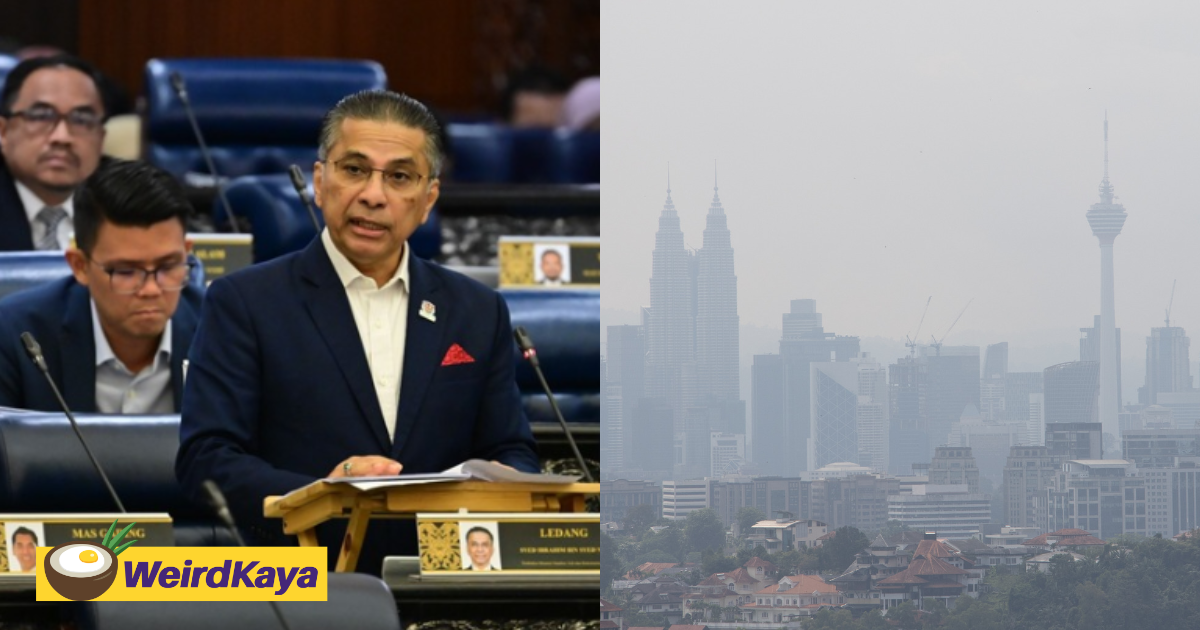
PUTRAJAYA, Oct 22 - The proposed Transboundary Haze Pollution Act must be able to be enforced, rather than just enacted to meet public demand, said Natural Resources and Environmental Sustainability Minister Datuk Seri Arthur Joseph Kurup.
He said a main challenge in enacting the law is obtaining sufficient evidence to identify the source of pollution and parties responsible for fires in other countries.
He added that his ministry has examined the merits of enacting such laws several times, considering aspects like feasibility, evidence requirements, jurisdiction, enforcement and the implications for diplomatic relations with neighbouring countries.
“The main challenge in implementing legislation with cross-border elements is the ability to obtain sufficient evidence to determine the source of pollution and the parties responsible,” he told a press conference on the haze here today.
He said enforcement would require details on the coordinates of areas on fire, land ownership and parties carrying out activities in those areas, as well as evidence linking the fires to the haze in Malaysia.
“Typically, all this information involves the jurisdiction, confidentiality and sovereignty of the country concerned. Therefore, any proposal to enact this new law must be thoroughly examined to ensure its provisions can be implemented and enforced effectively,” he said.
Arthur said the government is learning from an ASEAN member that enacted similar legislation 10 years ago but faces difficulties enforcing it.
“If Malaysia wishes to take a similar step, we must ensure the effort and the proposed legislation will be effective, rather than merely satisfying public perception,” he said.
He said the ministry acknowledges views from various parties, including non-governmental organisations (NGOs), the public and community leaders, who had urged the government to strengthen the legal framework to address transboundary haze pollution.
Arthur said the government continues to use the Environmental Quality Act 1974 to enforce laws against pollution and open burning in the country.
At the regional level, he said the ASEAN Agreement on Transboundary Haze Pollution (AATHP) remains the main framework for cooperation among member states in addressing the issue.
“The agreement recognises each country’s sovereign rights, as well as its responsibility to ensure that activities within its jurisdiction do not cause environmental damage or harm the health of people in other countries,” he said.