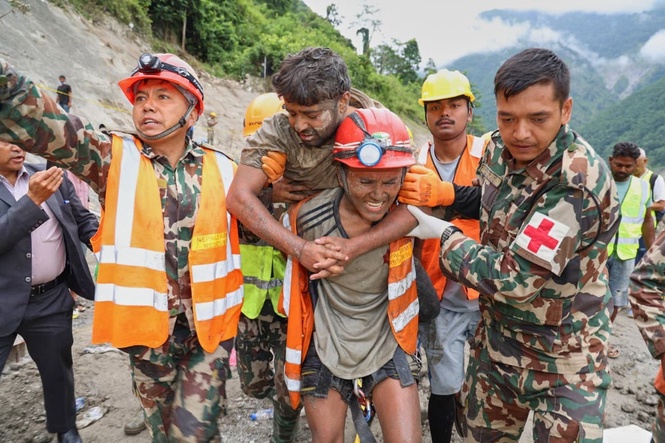
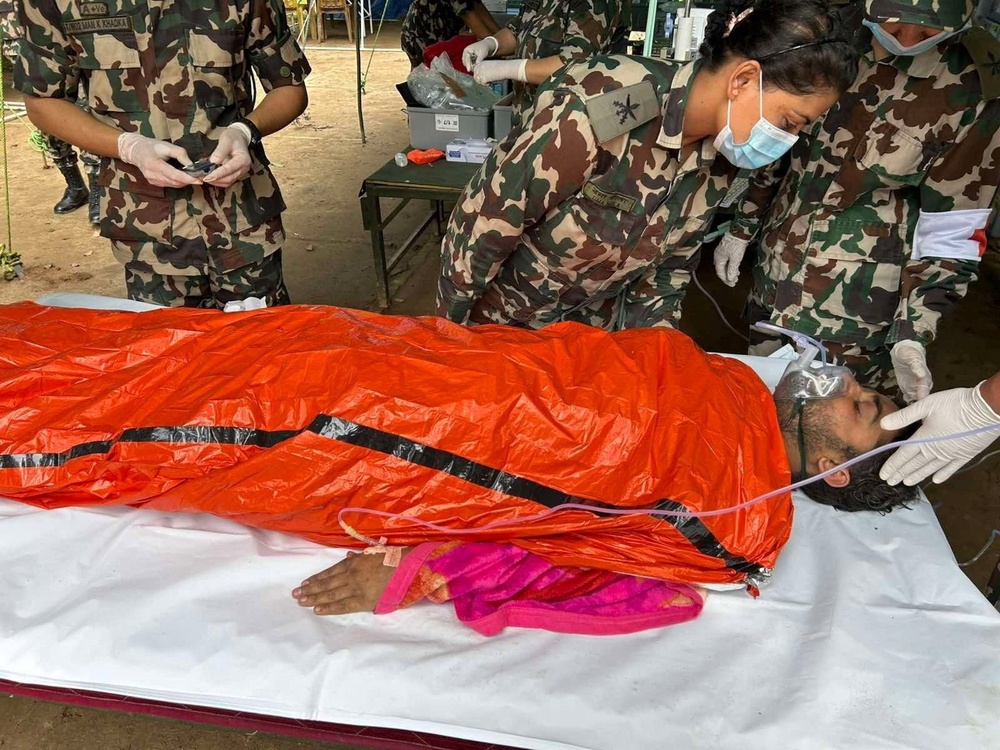
Rescuers in Nepal have pulled two workers alive from a hydropower project tunnel, nine days into an operation to find survivors trapped by the catastrophic flash floods that tore through villages near the Tibet border.
Rescuers first heard faint voices coming from inside a tunnel at the Upper Trishuli 3A hydropower project on Friday morning, confirming that people were alive and allowing them to locate the two men, said Nepali MP Shri Ram Neupane.
An army spokesperson said one of the survivors told rescuers that more people were still alive inside the tunnel.
More than 1,280 people were killed when the flash floods, likely caused by a glacier collapse, devastated entire towns and valleys along the Nepal-Tibet border last Wednesday morning.
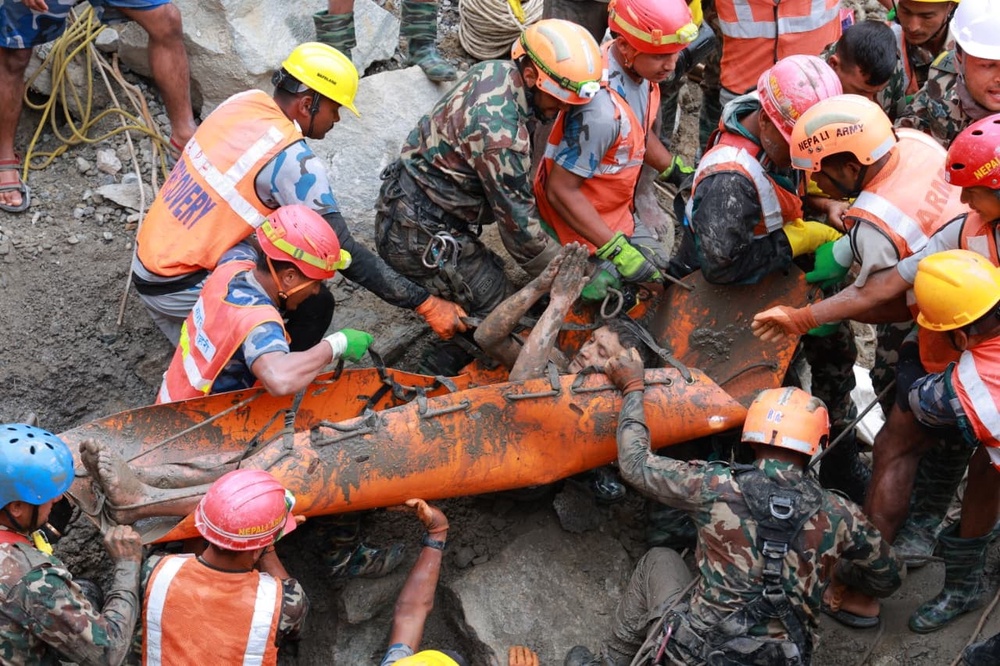
The rescued workers were Sanjay Sah, a mechanical foreman, and Kabir Maharjan, a mechanical supervisor, energy minister Biraj Bhakta Shrestha’s office said in a statement.
Maharjan cannot move his hands and legs, but Sah’s injuries are not critical, officials said. Sah, who was rescued first, was not in a condition to speak, while Maharjan “smiled and was thankful” following his rescue, officials told the BBC.
Sah said he warned his colleagues the moment he learned about the disaster upstream, urging them to flee, but was not able to make it out in time himself.
He told the army officials that for nine days he sat in the tunnel's darkness and chanted mantras (verses from a prayer) to maintain his morale. He managed to stay in contact with three or four other workers somewhere in the tunnel and said others could be trapped deeper into the mountain.
“I was in the control room in the tunnel. Normally there are four to six people there, but there could have been 40 to 45 people that day,” the 30-year-old said.
“My responsibility was to save everyone’s lives. When there was such a big accident, it was not right for me to run away.”
Maharjan’s brother said he had not received any news officially but had been told to go to the hospital. “I have been hearing from the news that my brother has been found. The entire family is very happy,” Amir Maharjan said.
“He has returned with a second life. We are extremely happy,” the survivor’s wife, Hira Shibha, told Kantipur. “It was so difficult to go through these days. We could neither eat nor sleep.”
Shibha said she last spoke to her husband on Wednesday morning last week, shortly before the floods hit. Maharjan had been working at the hydropower project for seven years, she added.
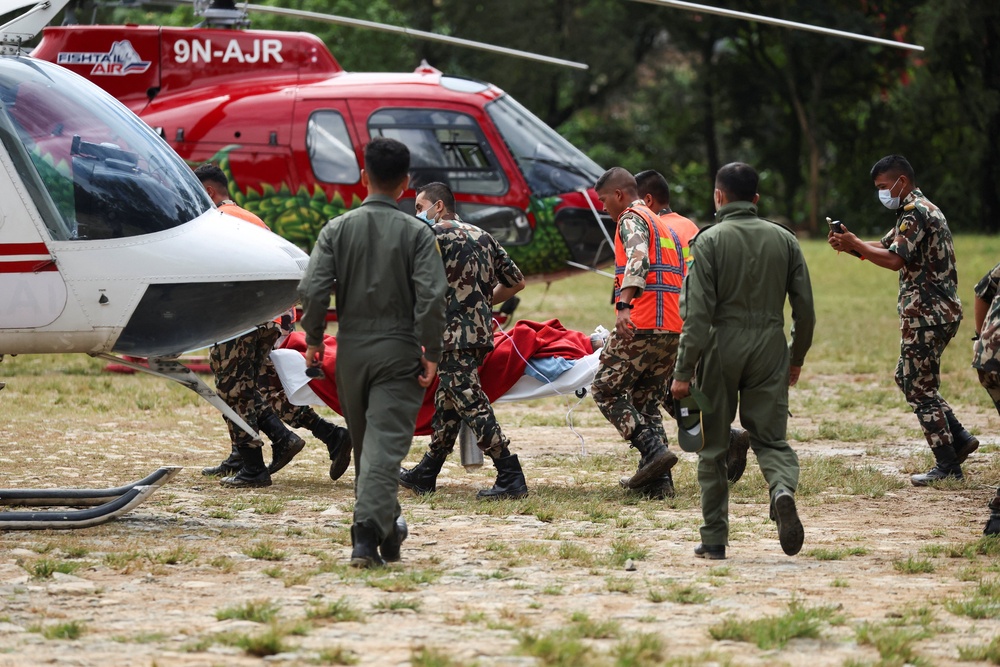
Maharjan was later taken to a hospital in Kathmandu for intensive treatment.
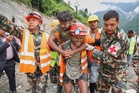
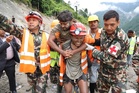
Local television news channels showed images of the first rescued worker covered in mud and being carried from the site on a rescuer’s shoulder.
At least 557 workers are missing from the Trishuli 3A hydropower project along the Trishuli River, with about 115 believed to be trapped in the main tunnel, according to the Independent Power Producers Association of Nepal.
The Nepali army has pressed more teams to expedite the search and rescue operation around the Upper Trishuli 3A project. Rescue efforts were being led by the army and police, with assistance from experts from India, South Korea and China.
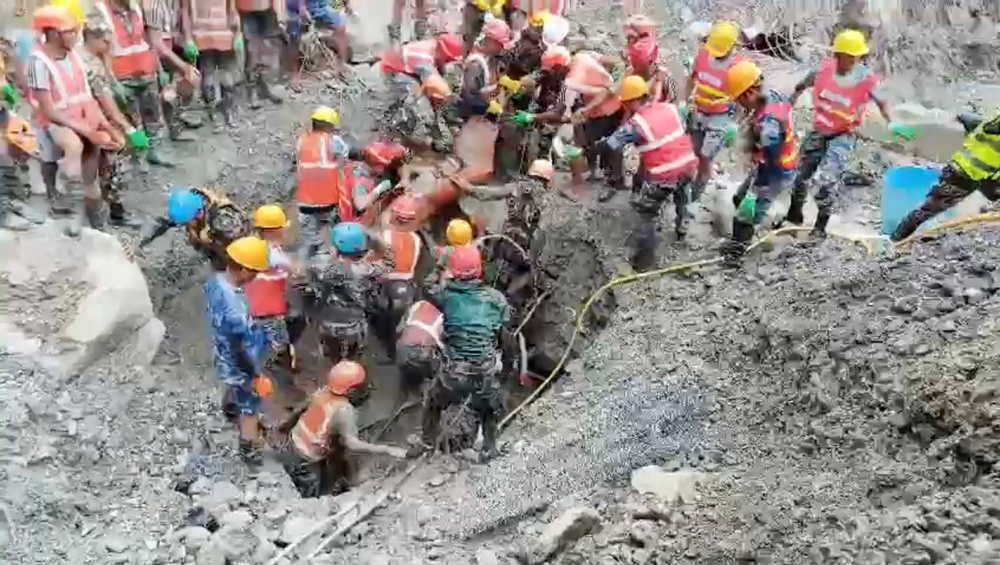
A tunnelling expert told the AFP that prior to rescuing the two workers, the teams had dug through debris blocking the tunnel for 50-60m.
Arnold Dix, president of the International Tunnelling and Underground Space Association, said the rescuers had been hopeful of a breakthrough before they managed to pull the survivors out.
"Right now, I'm 'glass three-quarters full'," he said. "After a week of 24/7 heartache, we might, just, be back in miracle country."
Nepal's communication minister Bikram Timilsina said officials remain hopeful that more workers will be rescued. "We are waiting for the rescue of more and more people," Timilsina wrote on his Facebook page.
Dhan Bahadur Tamang, who earlier escaped from a tunnel linked to the Upper Trishuli 1 hydropower project, said their rescue was a miracle and raised the hope of finding more survivors.
Disaster risk reduction expert Anil Pokhrel said the flooding exposed weaknesses in Nepal's rescue capacity. He said rescuers lost valuable time locating the tunnel's exact entry point and coordinates and lacked heavy equipment training.
"Harsh and remote locations with inclement weather worsened the situation. Also, we didn't have adequately trained human resources to undertake such operations," he said.
Rescuers have struggled to wade through mud, debris and rock to find the entry and exit points of the tunnel, which were sealed shut by the flash floods.
The 26 August floods killed at least 1,259 people and left more than 5,000 missing, according to Nepal’s national disaster management agency.
On the Tibetan side of the border, at least 21 people were killed and 541 were missing, according to Chinese officials.
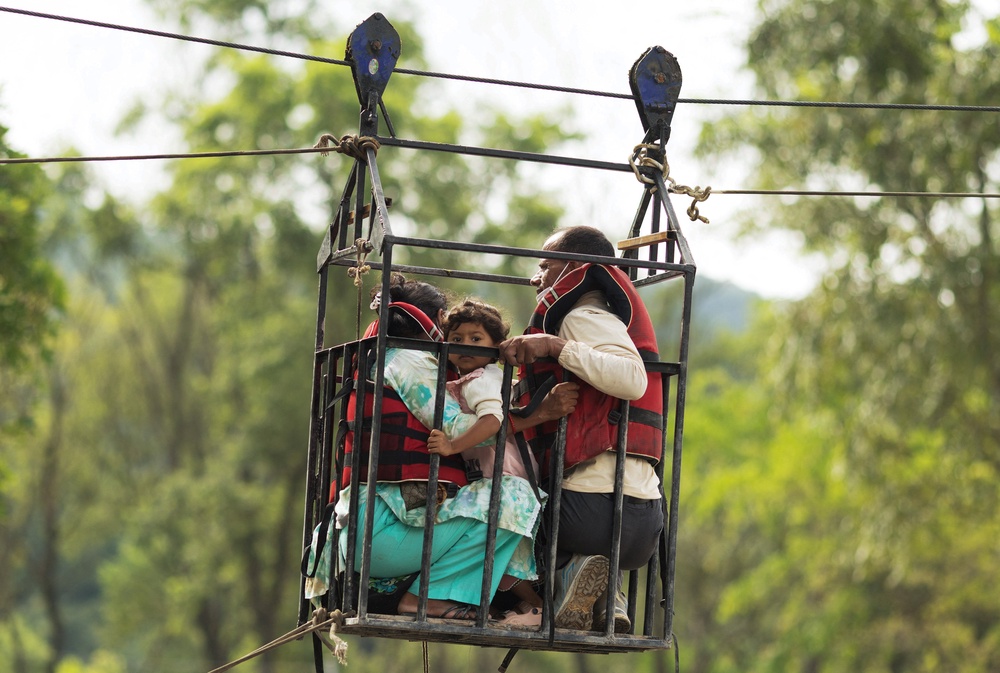
Rescue efforts are increasingly centred on hydroelectric project tunnels along the Trishuli river where authorities believe that many workers remain alive after being cut off by floodwaters and debris.
Nearly 900 workers are still missing from 12 hydropower projects in the country, with 500 believed to be trapped in tunnels, according to local authorities.
At the Upper Trishuli 3A facility, it took rescue workers almost six days to find the tunnels because of thick mud.
Rescuers said there was a dry chamber inside and expected oxygen to be flowing through the tunnel. They were also using pipes to push oxygen inside.
Read MoreInside Nepal’s tunnel rescue operation guided by Whatsapp group of 500 experts
Joanna Lumley says ‘heartbreaking’ Nepal floods ‘could have been predicted’
Dozens of trapped hydropower tunnel workers in Nepal ‘could still be alive’
The women and babies dying because of Trump’s aid cuts in Afghanistan
Climbers are melting Everest’s glacier with their urine, study warns
The ‘wall of the missing’ helping in search for those lost in deadly Nepal flood