Mumbai (Maharashtra) [India], May 22: Mumbai does not give space generously. The city trades in square feet the way other cities trade in land, and anyone who has furnished a Mumbai apartment understands quickly that every piece of furniture is a negotiation with the room. Too large and the space becomes impossible to move through. Too small and the room never quite settles into something that feels like home.
This constraint has made Mumbai one of the most interesting cities to observe from a furniture design standpoint. The limitations are real, but so is the ambition. Mumbai homeowners want their spaces to feel lived-in, well-considered, and genuinely comfortable. They are simply working within tighter parameters than most.
The furniture market in Mumbai has responded to this over the last several years with a range of products and buying experiences that take the city’s specific conditions seriously. Among the physical stores shaping this conversation, the Wooden Street furniture store in Mumbai has established a presence that reflects both the design sophistication and the practical intelligence that Mumbai buyers bring to the purchase.
What Mumbai Apartments Are Actually Working With
A 2BHK in Andheri is a different spatial challenge from a 2BHK in Thane or Navi Mumbai. Older buildings in areas like Dadar, Matunga, and Chembur sometimes offer surprisingly generous room dimensions. Newer constructions in the western and central suburbs tend to be more compact, with bedrooms that require careful planning to hold a standard bed, wardrobe, and any meaningful walking space simultaneously.
The entry-exit points, window placements, and ventilation requirements of Mumbai flats also impose specific furniture constraints. A wardrobe that blocks natural light or a sofa positioned in front of the only cross-ventilation path quickly becomes a source of daily irritation regardless of how well it was made.
Furniture in Mumbai works when it was chosen with the specific room’s circulation pattern in mind, not just its dimensions. This is a more nuanced evaluation than most buyers initially bring to the process, and it is one where physical store visits with proper layout discussions pay dividends.
The Entryway and Storage Conversation
One space that gets underestimated in Mumbai homes is the entryway. In apartments where the front door opens directly into the living area, the transition space between outside and inside becomes important both functionally and visually.
Footwear storage in Mumbai is a practical daily concern. Most households manage multiple pairs across family members, and the monsoon months make organised footwear storage a near-necessity rather than a preference. A shoe rack wooden in construction handles this function while holding up to the moisture that comes with Mumbai’s humidity and the wet footwear that arrives through six months of the year.
The wooden shoe rack category has evolved well beyond the basic open shelf format. Closed cabinet designs with slatted doors for ventilation, seating-integrated bench styles with storage below, and wall-mounted formats for apartments where floor space at the entry is extremely limited are all available and selling well in Mumbai’s furniture market.
The material question matters here specifically because of Mumbai’s coastal humidity. Solid wood racks with a proper moisture-resistant finish outlast lower quality materials considerably in this climate, and buyers who have replaced cheaper options once or twice tend to be more decisive about material quality on the next purchase.
Living Room Reinvention in a Compact City
Mumbai living rooms are required to carry significant functional load. In many apartments, the living room is the primary social space, the television room, the casual dining overflow area during gatherings, and in homes where a dedicated study is not possible, the work-from-home spot during the week.
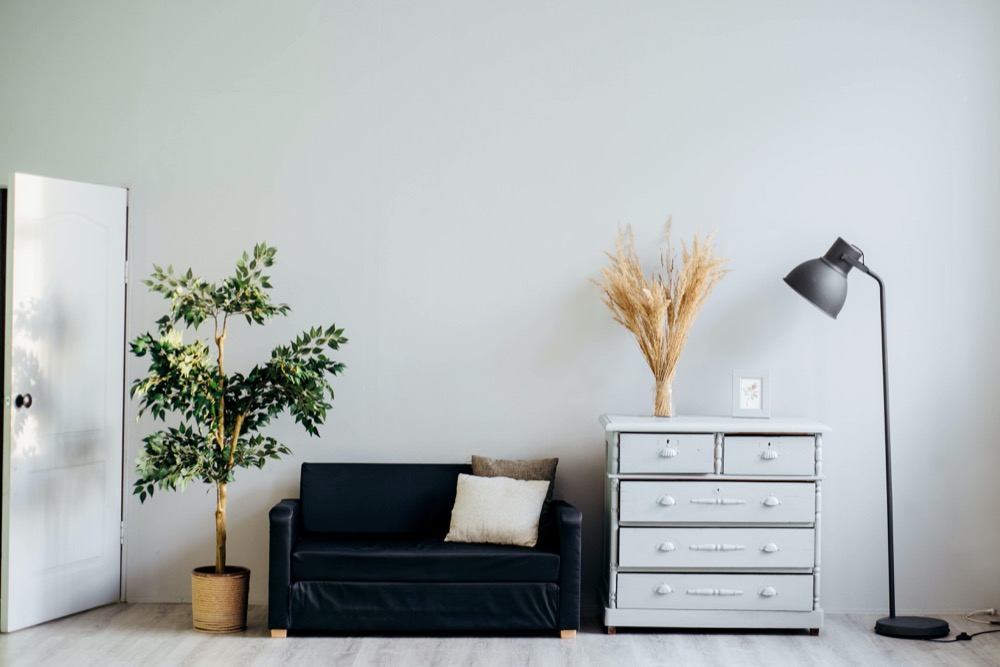
Furniture that works in this context has to be well-proportioned, not too heavy in visual weight, and genuinely comfortable for extended sitting. The sofa decision in a Mumbai flat is one where getting the size wrong has immediate and obvious consequences. An oversized sectional in a compact living room does not feel generous. It feels like an obstacle.
This is exactly the kind of decision that benefits from physical assessment. Seeing how a sofa’s footprint reads in a properly dimensioned room display, testing how much floor clearance remains in a typical Mumbai living room layout, and understanding the difference between measured dimensions and experienced scale are all things a store visit provides.
Storage and the Mumbai Space Problem
The shortage of storage in Mumbai apartments is well established among anyone who has lived in the city for more than a year. Built-in wardrobes in many buildings are decorative at best. The kitchen storage situation in compact kitchens is perpetually inadequate. And the living room, expected to look presentable at short notice, has no obvious place for the accumulated objects of daily life.
Furniture that addresses storage without creating visual clutter is the category that Mumbai buyers return to repeatedly. Beds with deep hydraulic storage, television units with closed cabinet sections, ottomans that hold linens, and wardrobes with customisable internal configurations are all high-demand items for exactly this reason.
Wooden Street’s Mumbai presence has been built around understanding these layered storage requirements and providing options that address them within the space constraints Mumbai homeowners are actually working with.
Where Mumbai’s Furniture Market Is Going
The trend visible in Mumbai’s furniture buying behaviour over the last few years is a decisive move away from purchasing out of convenience and toward purchasing out of conviction. The days of ordering whatever delivered fastest or cost the least are giving way to a more deliberate approach where customers are willing to wait, willing to visit a store, and willing to spend more for something that solves the problem properly.
Mumbai homes are being taken more seriously by the people who live in them. The furniture market is one of the clearest reflections of that shift, and the brands and stores that have invested in genuinely understanding what this city’s homeowners need are the ones finding the most traction.
Disclaimer: The content above is presented for informational purposes as a paid advertisement. The Tribune does not take responsibility for the accuracy, validity, or reliability of the claims, offers, or information provided by the advertiser. Readers are advised to conduct their own independent research and exercise due diligence before making any decisions based on its contents and not go by mode and source of publication.