.png)
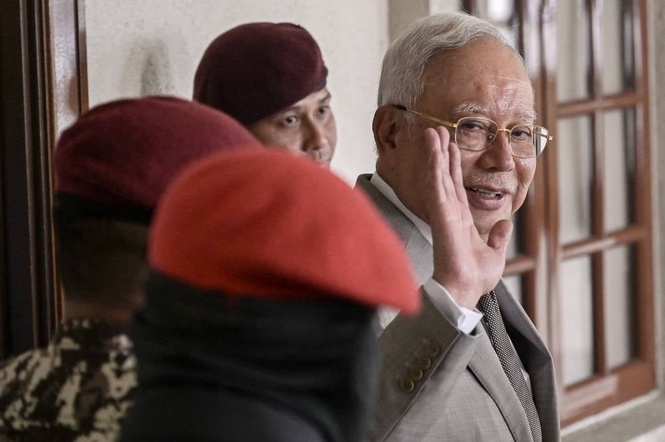
KUALA LUMPUR - The proposal to install barbed wire and floodlights, as well as station armed guards at Datuk Seri Najib Razak's residence to allow the former Prime Minister to serve his sentence under house arrest, has been described as illogical.
His lawyer, Tan Sri Muhammad Shafee Abdullah said such a proposal was inconsistent with the rationale behind house arrest, which should allow an individual to live a normal life.
He said too many views and discussions had been put forward on how house arrest should be implemented, including whether a person's residence should have features similar to those of a prison.
“If there is house arrest, what should the house be like? Should it resemble a prison? Should we put barbed wire around the compound, like the barbed wire around prisoner-of-war camps and so on?
“It's all sorts of things, yes. There are too many unofficial ‘experts’ making statements that are sometimes shocking and completely illogical,” he said during a press conference at the Kuala Lumpur Courts Complex on Friday.
Shafee said if house arrest were implemented for the former Pekan MP, it would not be anything unusual.
“In my view, house arrest, if it happens and if it does happen, is not something extraordinary because it is commonly practised in many cases,” he said.
Commenting on the proposal for Najib's residence to be guarded like a prison, Shafee described it as an overly speculative and unfounded view.
“If you read most of the articles and social media, people are speaking as though they are experts, when in fact they are just talking nonsense.
“So, if you ask me to comment on nonsensical matters, I cannot because they are too speculative,” he said.
Shafee also explained that the implementation of house arrest should not only be viewed in the context of Najib, but should instead become a method that could be applied to other prisoners in accordance with the relevant provisions and conditions.
On Sept 18, Najib received a conditional pardon from the Yang di-Pertuan Agong, Sultan Ibrahim, with the remainder of his prison sentence to be served under house arrest until Aug 23, 2028.
The decision was made at the 64th meeting of the Pardons Board for the Federal Territories of Kuala Lumpur, Labuan and Putrajaya, held on the same date.
According to the Legal Affairs Division (BHEUU) of the Prime Minister's Department, the conditional pardon was subject to Najib paying a fine of RM50 million.
Najib must comply with the conditions set and should he fail to comply with any of the conditions, the conditional pardon will be revoked and he must immediately continue serving the remainder of his sentence in prison.
Najib was sentenced to 12 years in prison and fined RM210 million after being found guilty by the Kuala Lumpur High Court on July 28, 2020, on seven charges involving RM42 million in funds from SRC International Sdn Bhd.
On Aug 23, 2022, the Federal Court dismissed Najib's final appeal and upheld the conviction and sentence.
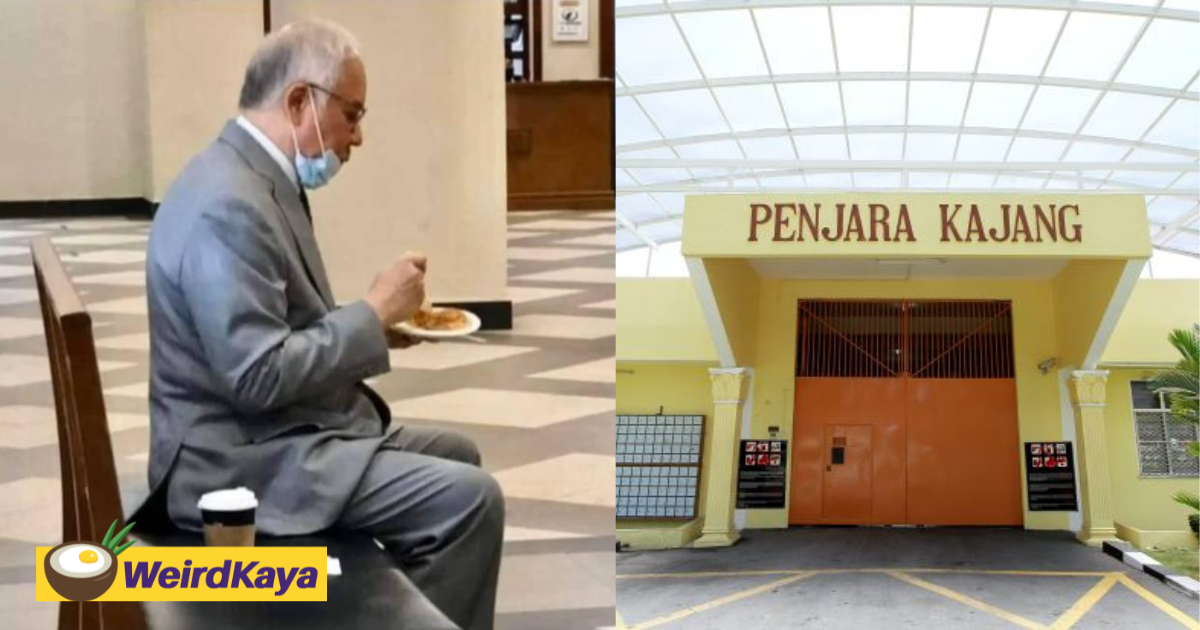
On the same day, Najib began serving his sentence at Kajang Prison.
On Sept 2, 2022, Najib submitted a petition for a pardon to the Yang di-Pertuan Agong. The application was subsequently considered at the Pardons Board meeting on Jan 29, 2024.
On Feb 2, 2024, BHEUU announced the Pardons Board's decision to reduce Najib's prison sentence from 12 years to six years, while the fine was reduced from RM210 million to RM50 million.