.png)
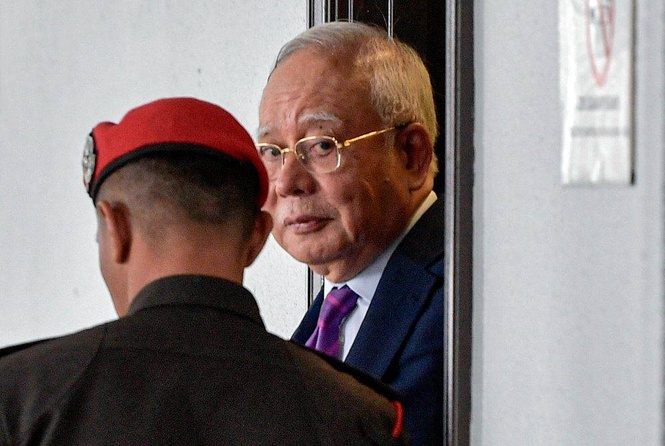
SHAH ALAM – The question of whether Datuk Seri Najib Razak could serve the remainder of his prison sentence under house arrest has resurfaced repeatedly since early 2024, most recently with the Federal Territories Pardons Board's meeting today. Here is what house arrest means, how it applies to Najib's case and how similar transitions have played out elsewhere.
What is house arrest?
House arrest generally refers to a form of detention where a person serves a sentence, or part of it, confined to their own home rather than in prison, often with conditions such as electronic monitoring, restricted visitors or limited movement.
Crucially, Malaysian law does not currently recognise house arrest as a formal sentencing option or a form of clemency. Government sources have said the concept of a royal pardon granting house arrest does not apply because there is no specific legal provision for such a measure, and no legislation allows for house arrest as a form of punishment or pardon in Malaysia.
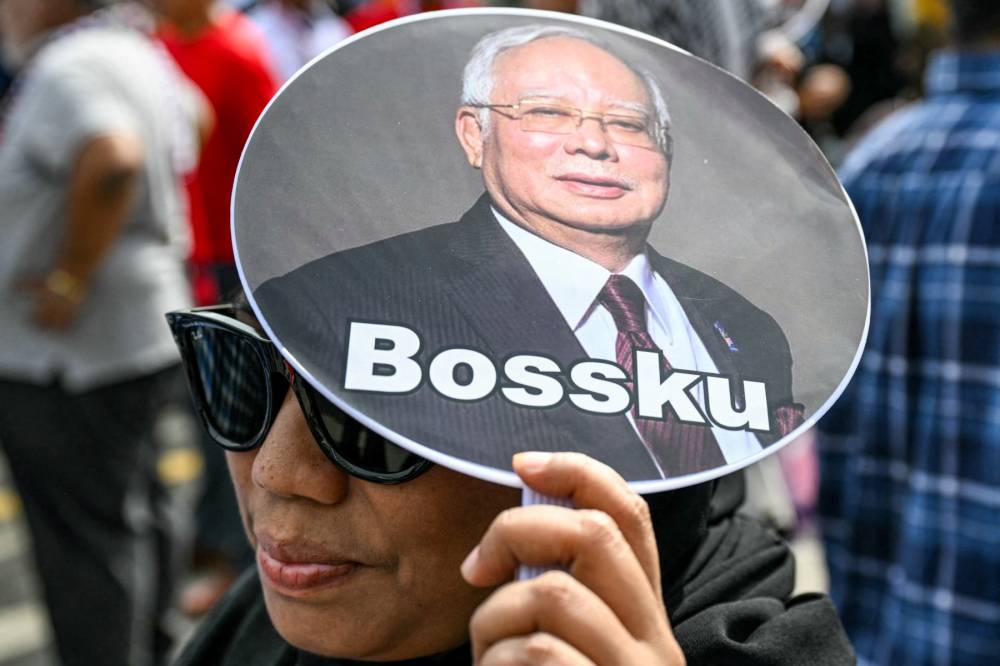
How does the pardons process work?
Under Article 42 of the Federal Constitution, the Pardons Board is tasked with advising the king on matters relating to the exercise of his prerogative of mercy, considering applications for pardons, reprieves and respites. However, its functions do not extend to granting house arrest as a form of clemency. The board's role is advisory: it considers a case and recommends a course of action, but the final decision on a pardon rests with the Yang di-Pertuan Agong.
The Attorney General's Chambers has said any proposal for a prisoner to serve a sentence under house arrest must be submitted through the Pardons Board, following the procedures set out under the Federal Constitution.
The royal addendum and Najib's case
Najib claims that following the Pardons Board's meeting on Jan 29, 2024, the then Yang di-Pertuan Agong, Sultan Abdullah, issued an additional order, or addendum, allowing him to serve the remainder of his sentence under house arrest.
The board's own statement on Feb 2, 2024, which halved his sentence to six years and reduced his fine to RM50 million, made no mention of any such order.
Najib went to the High Court seeking to compel the government to verify and act on the addendum. The court dismissed his bid, ruling that while the existence of the order was not disputed, it was unenforceable because it had not been made in consultation with the Pardons Board, as the constitution requires.
He appealed and on Jan 6, the Court of Appeal granted him leave, in a two-to-one decision, to proceed with a judicial review — meaning the High Court must now hear the case on its merits, though this does not guarantee he will ultimately be granted house arrest.
The Federal Territories Pardons Board's official records on Najib's case have separately been reported to contain no additional document or addendum, according to checks by the Prime Minister's Department's legal affairs division, which serves as the board's secretariat.
How other cases abroad compare
The transition from prison to house arrest is not unique to Malaysia and has featured in several high-profile political and corruption cases elsewhere, often raising similar questions about fairness and political influence.
- Aung San Suu Kyi — On Apr 17, Myanmar's military government moved the former leader from prison to house arrest, citing health concerns amid a heatwave in which temperatures reached 39 degrees Celsius. She was among several elderly and infirm prisoners relocated for the same reason. Her supporters have alleged the charges against her were fabricated and have raised concerns over her limited access to medical care under the military government. The lakeside mansion where she spent fifteen years under house arrest was later reported to have been put up for auction with a starting price of 150 million US dollars.
- Leopoldo Lopez — The Venezuelan opposition leader was placed under house arrest on Jul 8, 2017 after more than three years in military prison. Venezuela's Supreme Court cited humanitarian grounds, including his health and unspecified irregularities in his case. Lopez, 52, had been sentenced in 2015 for inciting violence during anti-government protests, and his transfer came amid opposition calls for the release of political prisoners to help resolve the country's political crisis.
- Hosni Mubarak — Egypt's former president was ordered into house arrest on Aug 22, 2013 following his release from more than two years in detention, a move aimed at easing tensions in a deeply divided country. He remained on trial at the time over the killing of protesters during the 2011 uprising that ended his rule. He was later sentenced to three years' jail for embezzlement in 2014, released in March 2017 and died in February 2020 at the age of 91.
Where things stand
Najib is currently serving a six-year sentence for misappropriating RM42 million from SRC International Sdn Bhd. The house arrest question has continued to surface at Pardons Board meetings since, including one held today, amid a morning of heightened interest surrounding the meeting at Istana Negara.
Vehicles believed to be carrying the Minister in the Prime Minister's Department (Federal Territories), Hannah Yeoh, and attorney-general Tan Sri Mohd Dusuki Mokhtar were seen entering Istana Negara at about 7.48am ahead of the meeting. Former Inspector-General of Police Tan Sri Razarudin Husain was also seen entering the palace grounds before proceedings began. The vehicle carrying Hannah and Razarudin was later seen leaving Istana Negara at about 9.40am.
As of publication, neither Istana Negara nor the Federal Territories Pardons Board had issued an official statement on the outcome of the meeting. Najib's pardon application was previously deferred at the 63rd Federal Territories Pardons Board meeting on Sep 11. At the same meeting, the Yang di-Pertuan Agong, Sultan Ibrahim, granted pardons to 65 inmates.
Throughout, the board's role remains advisory: it considers a case and advises the king, who alone holds the power to grant a pardon, reprieve or respite.