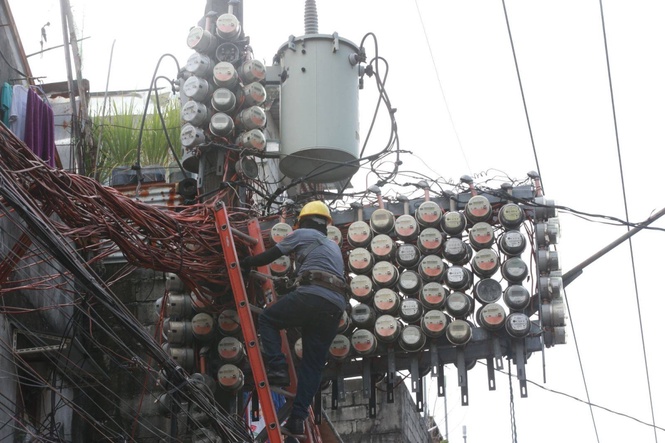
MANILA, Philippines — Nearly half of Filipino adults want the government to shoulder electricity system loss charges that are presently being shouldered by consumers, a survey by Momentum Research showed.
System loss refers to electricity generated or purchased that is lost before reaching end-users. These losses may be technical, such as electricity dissipated through wires and transformers, or nontechnical, including losses associated with electricity pilferage and meter tampering.
Under existing regulations, distribution utilities may recover allowable system losses from consumers, subject to limits set by the Energy Regulatory Commission. Losses exceeding those limits must be absorbed by the utility.
The August 18 to 23 National Momentum Survey found that 49.4 percent of respondents preferred government funding, while 35.9 percent wanted distribution utilities, such as Meralco, to absorb the costs from their profits.
Only 8.4 percent said the system loss charge should remain on electricity bills, while 6.3 percent were unsure who should pay.
Regional preferences varied, with Mindanao showing the strongest support for government funding. A total of 63.1 percent of respondents in the region favored using taxes to cover system loss costs, compared with 54 percent in Visayas.
Metro Manila respondents were more inclined to make distribution utilities shoulder the expense, with 50.2 percent favoring payment from utility profits and 40.7 percent supporting government funding.
In the rest of Luzon, 44.6 percent preferred distribution utilities to pay, while 43.1 percent favored government funding.
Mindanao had the highest proportion of respondents uncertain about who should bear the cost, at 14.4 percent.
The noncommissioned survey was conducted through face-to-face interviews with 1,487 Filipino adults nationwide. It has a margin of error of plus or minus 2.5 percentage points at a 95 percent confidence level.
Momentum Research said that margins of error are larger for regional, political and income breakdowns, particularly among groups with smaller sample sizes.