The Himalayan slope that collapsed and killed more than 1,300 people in Nepal last month had been weakened by decades of global warming, scientists said, triggering destruction that went beyond what the country's existing early warning systems could have prevented.
An international team of glaciologists and climate scientists found that rising temperatures thawed permafrost and thinned glacier ice that had helped hold the mountainside together for centuries.
The freezing line in the region, the altitude above which ground stays permanently frozen, has shifted upward by around 100m a decade, exposing rock and ice deep within the slope to thaw conditions it had not previously faced, scientists working under the nonprofit World Weather Attribution collaboration said.
“Climate warming, as a result of humans burning fossil fuels, is melting ice and snow in the Himalayas, decreasing glacier coverage and thawing permafrost," Bethan Davies, professor of glaciology at Newcastle University, said.
"This is destabilising the mountainsides and leading to an increase in disasters like this one."
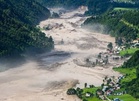
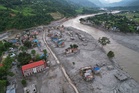
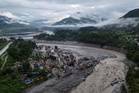
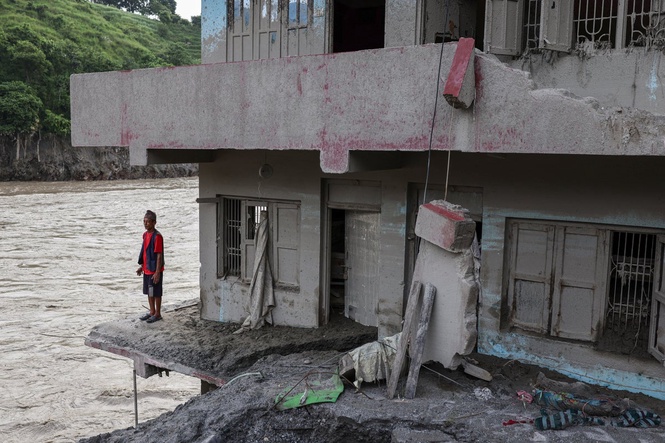
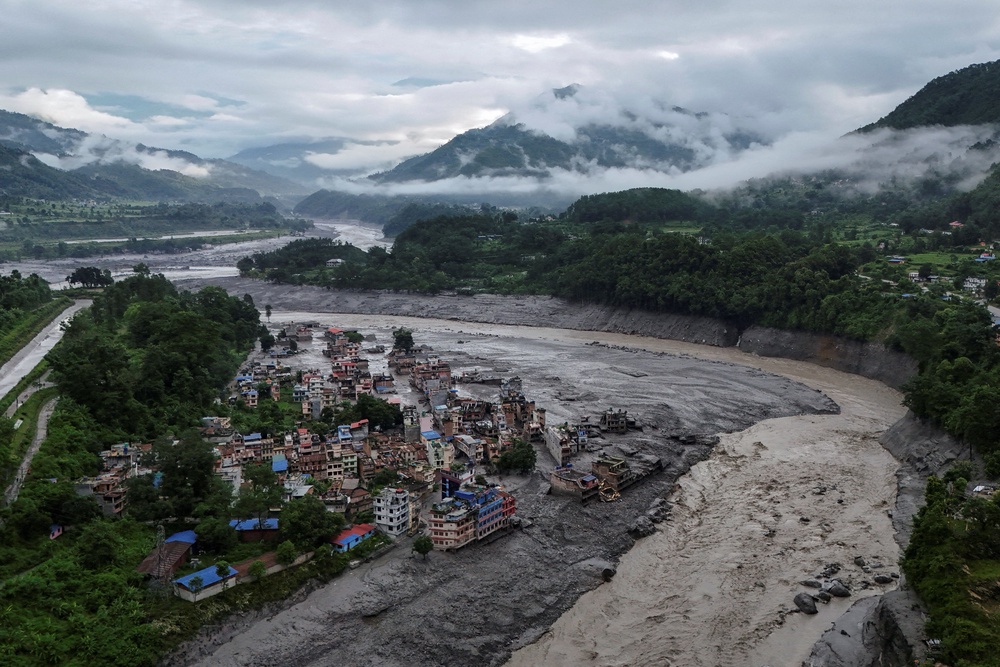
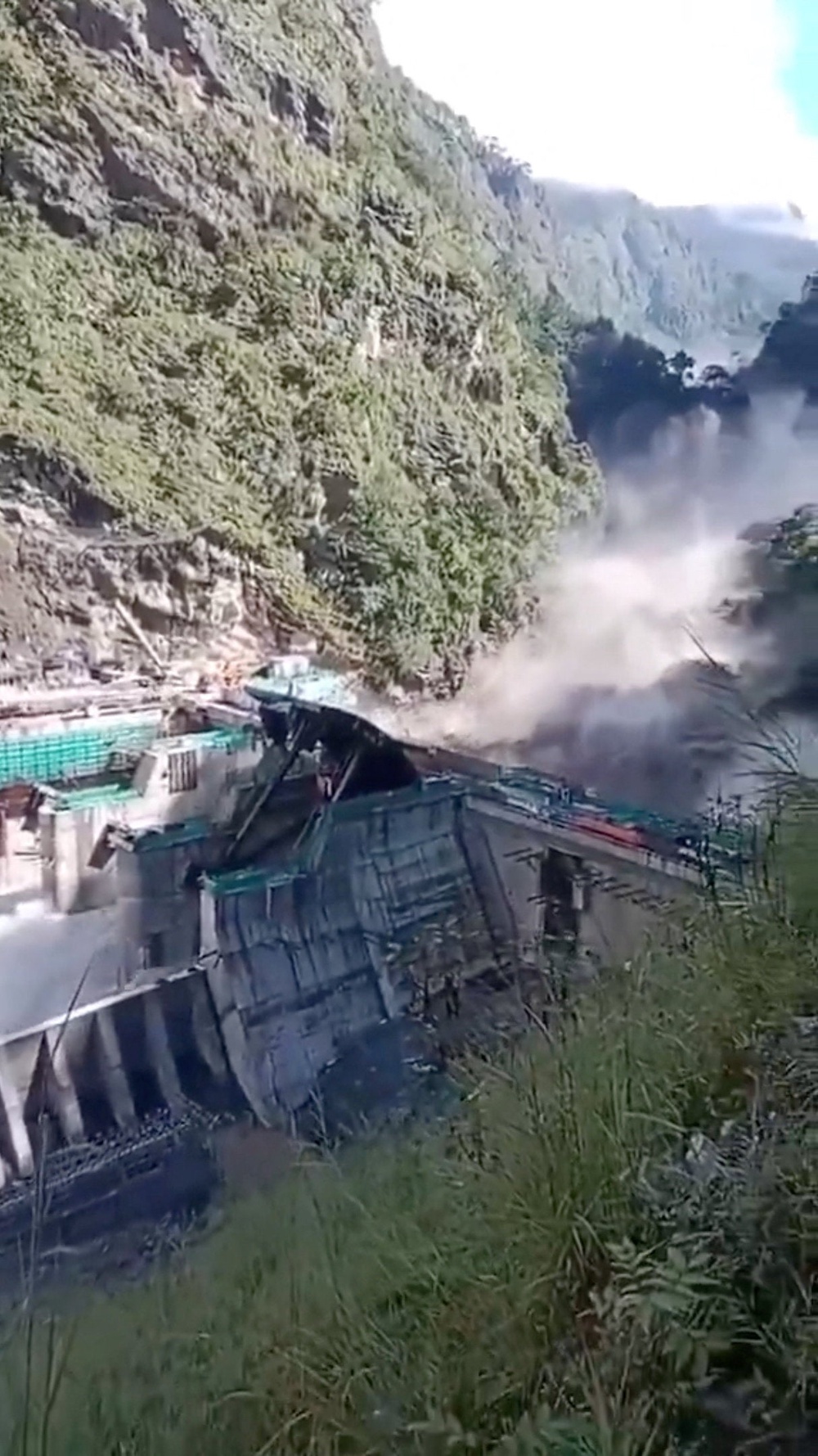
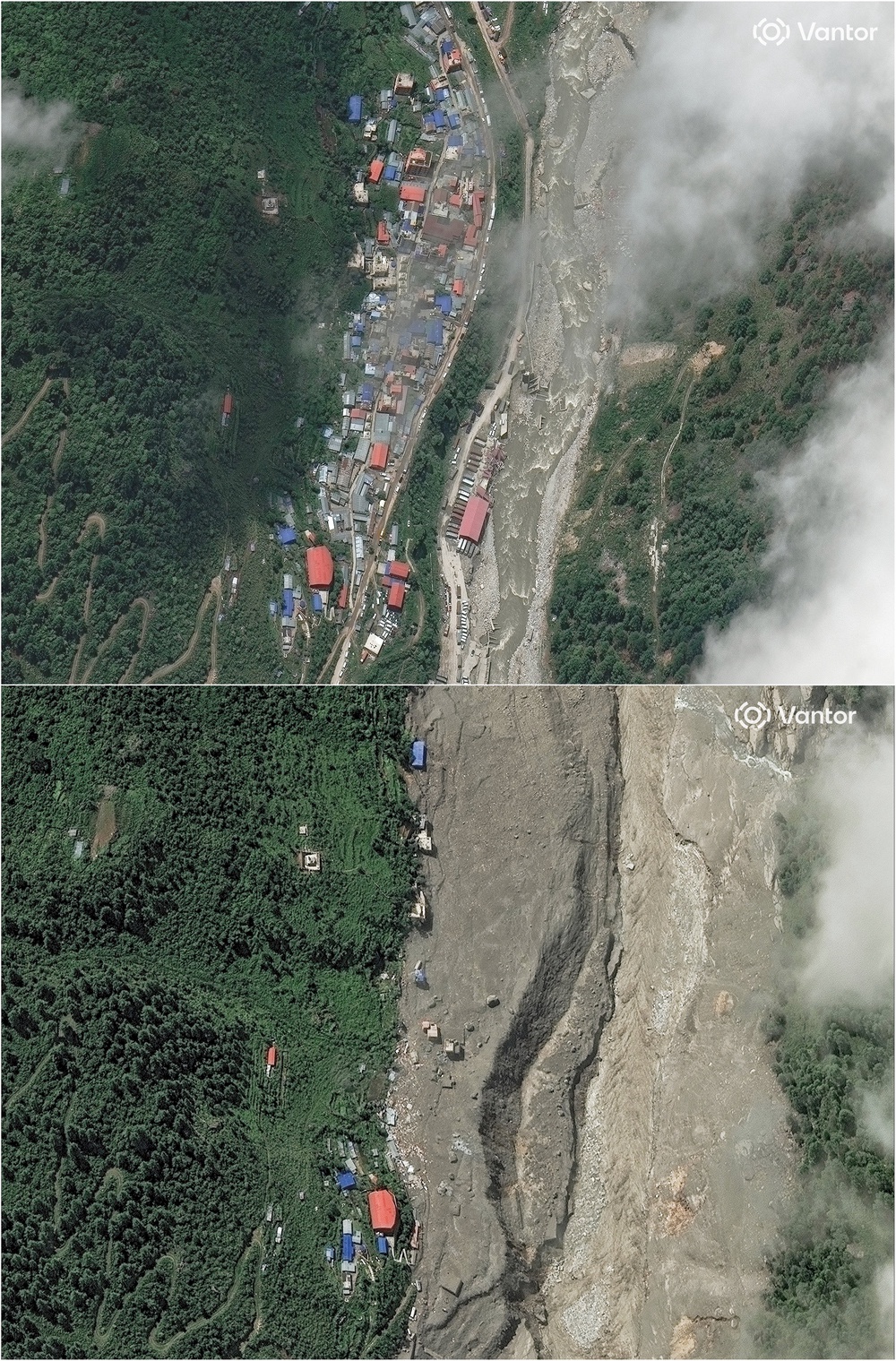
On 26 August a section of overhanging glacier and rock, roughly 116 million cubic metres of material, about a fifth of it ice, broke away from Langtang Lirung mountain on Nepal's northern border and triggered a debris flood that swept downstream at speeds of up to 188kmph.
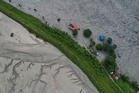
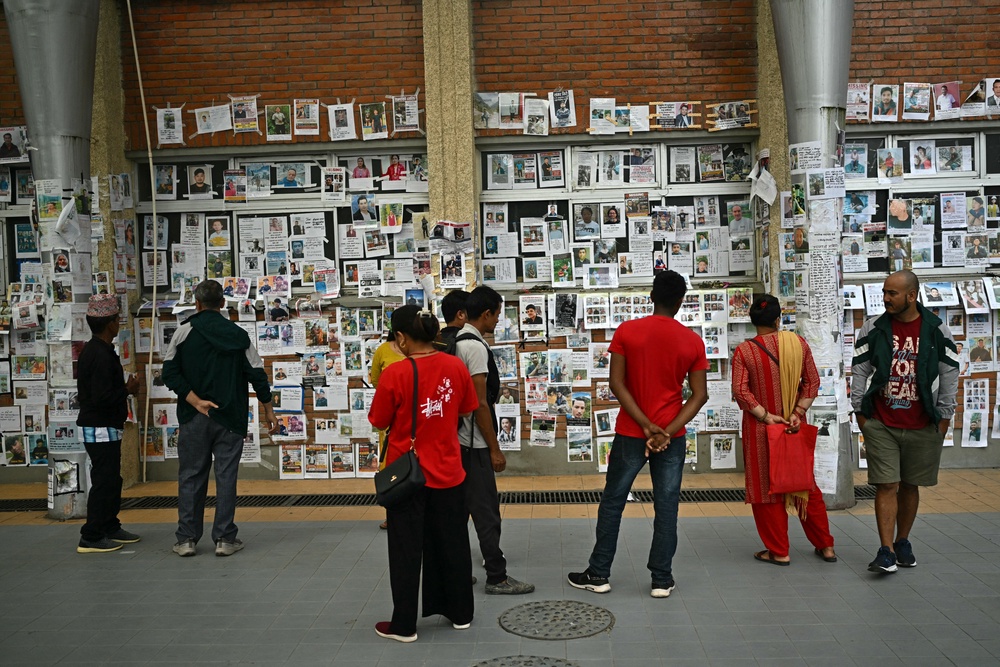
The flood travelled 200km in under seven hours, deposited more than 30 million cubic metres of sediment and debris, and continued into India before it lost force. More than 5,000 people remain missing.
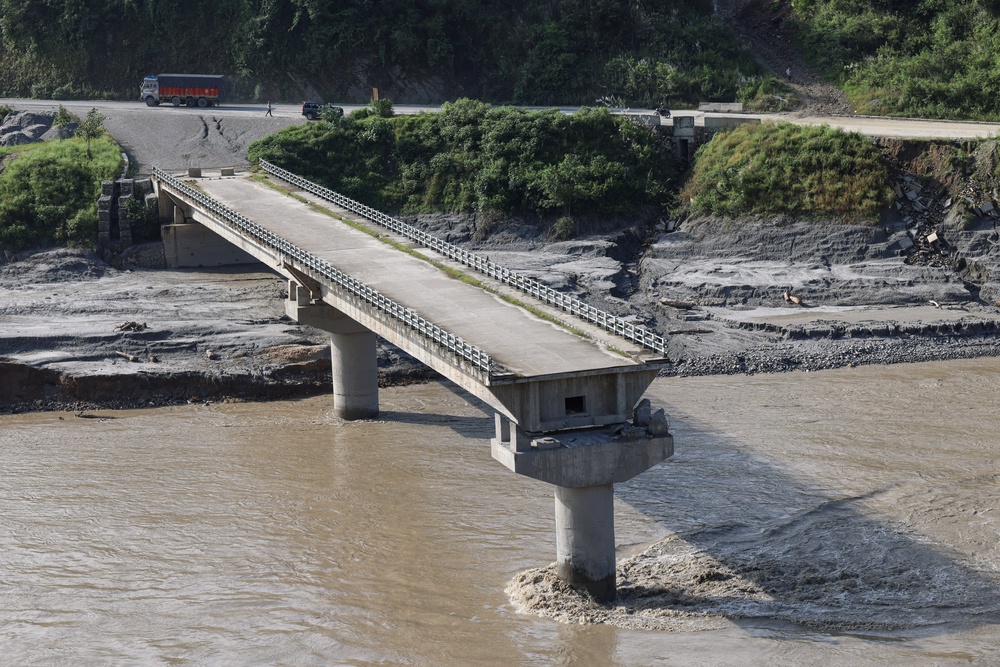
Scientists described the disaster as “unprecedented” in scale but said the warning signs were there.
"The mechanism of the disaster is comparable to what happened in India in Uttarakhand, which is called the Chamoli disaster," Walter Immerzeel, a mountain hydrologist at Utrecht University, told a press briefing.
"But the amount of mass that came down was approximately a fifth of what came down now, and the impact was also much less. I think this is an unprecedented disaster."
A magnitude-7.8 earthquake in 2015 struck the same mountain and triggered a large avalanche on its southern flank, and scientists said it may have weakened the slope that failed this year.
"There was intense ground shaking, and it's possible that has caused damage to the bedrock and increased the number of fractures," Mr Immerzeel said, "but we don't have real evidence to show that. It's likely that that is a possibility."
Scientists could not say whether climate-related factors or the earthquake weighed more heavily in causing the collapse.
"We think these are having an impact," Mr Immerzeel said of the geological factors. "But we do know that the climate processes are definitely having an impact."
July and August, the two months directly preceding the collapse, were the warmest on record at the site.
Ben Clarke, an extreme weather and climate change researcher at Imperial College London, said the team found that human-induced climate change had made the monsoon-season temperatures in July and August around 1.5C warmer than they would otherwise have been, and had raised annual temperatures in the region by around 2C, a faster rate of warming than the global average.
He said the figures held whether the team analysed the specific location of the collapse or the wider Himalayan region.
Professor Friederike Otto of Imperial College London told reporters that while the study had not run a specific attribution model on the Langtang Lirung glacier's thinning itself, other studies, including one in the Peruvian Andes, had found glacier thinning to be entirely driven by climate change, and she saw no other plausible cause in this case.
"To do that in a quantitative way, you would need to look at a glacier model specifically, which we haven't done here," she told The Independent.
"But there isn't much else that we can think of that's not related to temperature and human-induced climate change that would be responsible for that."
This study departed from the usual methods of World Weather Attribution – an international effort to analyse and communicate the possible influence of climate change on extreme weather events – scientists said.
Rather than assessing the likelihood of a single extreme weather event, scientists instead examined the underlying factors, permafrost thaw, glacier retreat, rainfall and temperature, that had built up over years and decades to precondition the slope for collapse, since a conventional attribution of the event itself was not possible with methods currently available.
Much of the floodwater itself did not come from rainfall, Mr Immerzeel said, but from ice.
The force of the initial collapse melted glacier ice almost instantly, he said, while the rock wall fell onto a debris-covered glacier tongue roughly three kilometres long and up to a kilometre wide, scouring away an estimated 10 to 20m of buried ice across that stretch.
Saturated sediment in the valley below, left unusually waterlogged by a glacier outburst flood the previous year, added further volume once the debris flow reached it. Water stored within the permafrost itself, he said, played only a minor role by comparison, since rock has relatively little capacity to hold water.
Nepal has invested in early warning systems and disaster preparedness in recent years, and scientists said these measures have saved lives in more conventional, forecastable floods.
But Mr Immerzeel said a disaster of this kind could not have been predicted with the tools currently available.
"I don't think it was possible to predict a disaster like this," he said. "For the future we have to think about whether we can design an early warning system, but that is a huge challenge, given there are thousands of glaciers in the Himalaya."
He said satellite analysis after the collapse showed the rock between two glacier tongues had begun accelerating roughly two months before the event, using a technique called radar interferometry, but that this kind of warning sign is only identifiable in hindsight.
"That is easy to analyse when the event has happened," he said. "But to do that operationally for thousands of glaciers is a huge challenge."
Madhab Uprety, senior technical advisor and Asia-Pacific focal point at the Red Cross Red Crescent Climate Centre, said the scale of the disaster showed adaptation alone could not protect communities from events of this kind.
"The tragic loss of more than 1,300 lives and many thousands more missing is a devastating reminder that we are already hitting the limits of climate adaptation," he said.
"For a nation that's done virtually nothing to contribute to this problem, it underlines the need to find fairness in helping climate-vulnerable nations cope with the problems they have not unleashed."
Nepal’s government estimate it will take them billions of dollars to rebuild.
It has applied for funding through the UN’s loss and damage fund, triggering a rare emergency clause that will test the global fund’s readiness for helping countries suffering from billion-dollar disasters. A board member of the fund told The Independent they will be holding meetings and the country could receive funding in the next four to five weeks.
Professor Otto said scientific uncertainty over exactly how much of the disaster to attribute to climate change should not be a barrier to loss and damage support.
"There is absolutely no doubt that human-induced climate change played a role here in the preconditioning of the disaster, through permafrost thawing, through thinning of the glaciers, through having more rainfall instead of snow in the precipitation," she said.
"You cannot say ‘you are only eligible for loss and damage relief if you can exactly prove how much human-induced climate change has been related to a specific event’, because that would disadvantage especially the most vulnerable to climate change, because these are complex events, in regions that are hard to monitor.
“From a global climate justice, loss and damage point of view, there is no doubt that climate change is one of the drivers, and it needs to be discussed in that context. It's also one of the types of events that are absolutely outside the limits of what we can possibly adapt to avoid, and that clearly have unavoidable loss and damage."
Manjeet Dhakal, director of Climate Analytics South Asia, said the disaster underlined how urgently emissions need to fall.
"Every fraction of a degree of warming matters," he said.
"Science must now drive urgency: deeper and faster global emission reductions, greater investment in understanding complex mountain risks, strengthened monitoring and early warning, climate-resilient development, and international climate finance support at the scale and speed that frontline countries like Nepal need."
Read MoreNepal floods disaster offers crucial first test of world climate fund
Nepal deploys drones donated by China to deliver aid to flood-hit communities
Hope turns to anger as kin of Nepal’s missing bemoan lack of urgency in rescue work
Nepal cracks down on social media accounts abusing flash flood survivors
Taliban release ‘terrified’ Indian backpacker on her solo trip to Afghanistan
Bangladesh says two stolen lemurs may have been taken to billionaire’s zoo in India