.png)
The footage released by Indonesian Customs is both impressive and deeply embarrassing - for us.
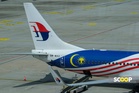
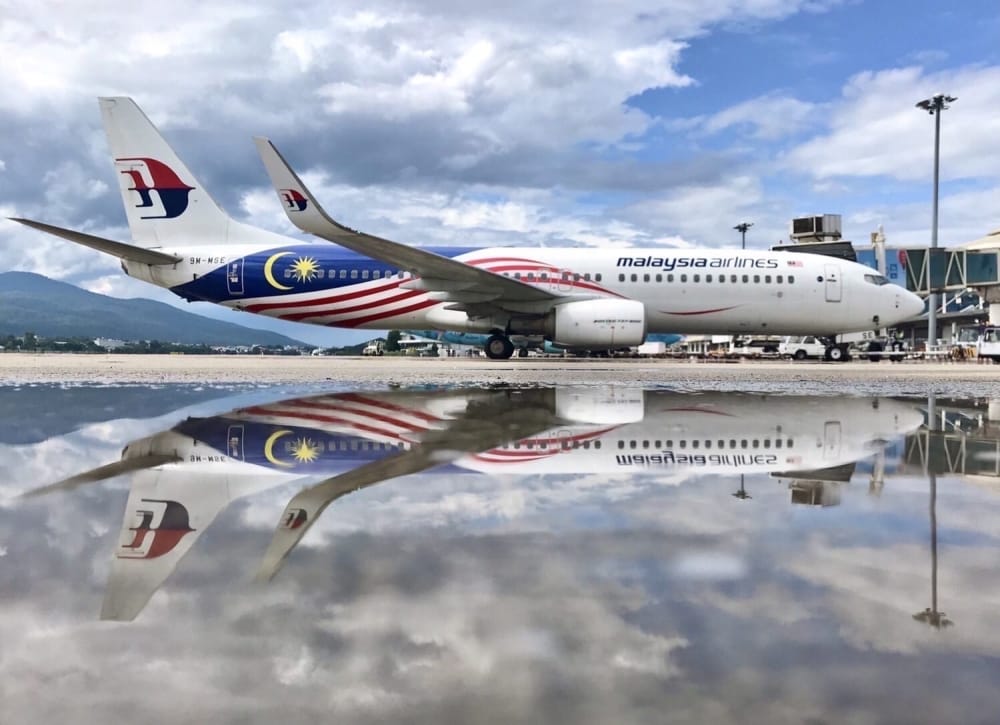
A Malaysia Airlines pilot landed at Soekarno-Hatta International Airport in Jakarta carrying what Indonesian authorities say was 25 kilograms of ecstasy, along with a small amount of methamphetamine.
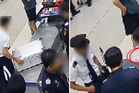
Being airline crew, he was initially directed to the fast-track lane. But Indonesian customs officers didn't simply wave him through because he was wearing a pilot's uniform. They conducted risk profiling, observed his movements and decided he warranted a secondary inspection.
They opened his suitcase.
Inside, they allegedly found more than 70,000 ecstasy pills. They also recovered a small bottle of urine, believed to have been prepared in case a drug test was required.
Now comes the uncomfortable question.
If Indonesian customs officers could identify him as someone worth checking, why wasn't he stopped before boarding the flight from KLIA?
This isn't about pointing fingers or rushing to conclusions. It is about asking whether our security system is working the way Malaysians expect it to.
Airports are built on layers of security. We queue. We remove our laptops. We surrender our bottled water. Sometimes we're even asked to open our bags because of a bottle of vitamins, a power bank or a suspicious-looking lighter.
Many travellers have stories of being stopped over the smallest things.
Yet, in this case, a man allegedly boarded an international flight carrying 25 kilograms of drugs. According to Indonesian police, he also tested positive for methamphetamine, MDMA and cocaine.
And he wasn't just another passenger.
He was the pilot.
Naturally, Malaysians are asking questions.
Did KLIA conduct the same level of risk profiling?
Were airline crew subjected to the same level of scrutiny?
Were all the required security procedures followed?
Or is there a weakness in the system that urgently needs to be addressed?
Malaysia's border authorities have since stated that the pilot underwent the mandatory security screening and that all standard operating procedures were followed before the flight departed KLIA.
According to Malaysian Border Control and Protection Agency director-general Datuk Seri Mohd Shuhaily Mohd Zain, the pilot's baggage was screened using KLIA's AI-assisted scanning system. The system did not detect any suspicious image or generate a risk alert that would have required secondary inspection.
He explained that the screening process combines artificial intelligence with human assessment. The scanner assigns a risk level, after which officers decide whether additional checks are necessary.
In other words, the system worked exactly as it was designed to.
Yet Indonesian authorities have revealed that customs officers in Jakarta decided to inspect the pilot's suitcase after detecting something suspicious during an X-ray scan at the arrivals hall.
That comparison should concern all of us.
Malaysia's system cleared the bag.
Indonesia's system flagged it.
The Malaysian authorities may insist that everyone followed the SOP.
But when two airports look at the same suitcase and arrive at completely different conclusions, the public deserves to know why.
Technology is only as good as the people who design it, calibrate it and decide how to respond to it. Indonesian customs officers didn't rely on technology alone. They combined it with risk profiling and professional judgment.
If they could identify the risk upon arrival, Malaysians deserve to know whether the same opportunity existed before departure.
The authorities don't just owe us confirmation that procedures were followed. They owe us confidence that the procedures are good enough.
Because if another country's customs officers could stop him after he landed, Malaysians have every right to ask why no one stopped him before he took off.
Until that question is answered, this isn't merely Indonesia's drug bust. It is a test of Malaysia's aviation security - and one that KLIA cannot afford to fail.
Fa Abdul (fa.abdul.penang@gmail.com) is a content creator under the Newswav Creator programme, where you get to express yourself, be a citizen journalist, and at the same time monetize your content & reach millions of users on Newswav. Log in to creator.newswav.com and become a Newswav Creator now!
The User Content (as defined on Newswav Terms of Use) above including the views expressed and media (pictures, videos, citations etc) were submitted & posted by the author. Newswav is solely an aggregation platform that hosts the User Content. If you have any questions about the content, copyright or other issues of the work, please contact creator@newswav.com.