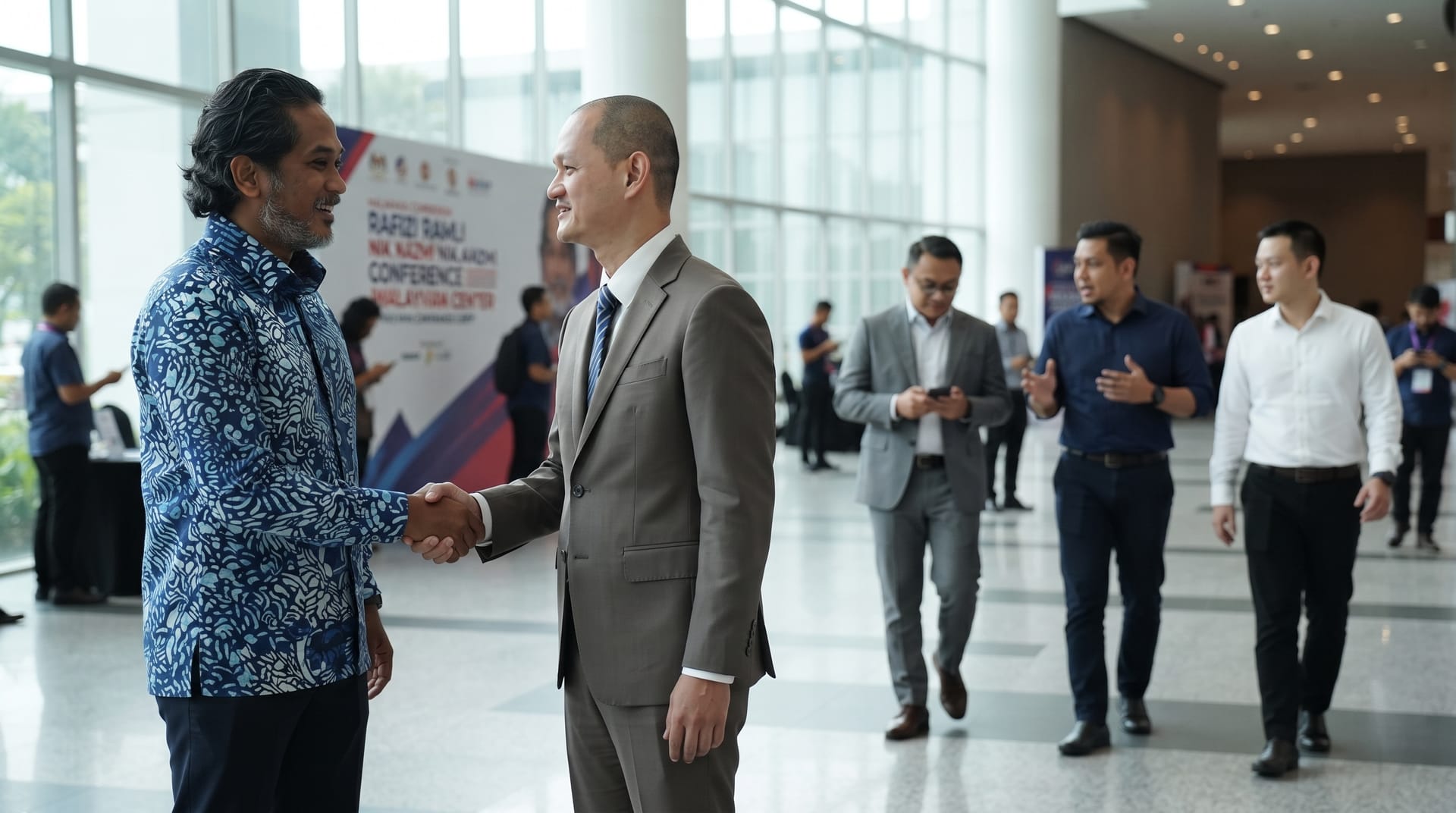
The political landscape shifted on the nation's independence anniversary when Ong Kian Ming formally stepped away from the Democratic Action Party after fourteen years, sealing his exit with a striking declaration: no new party of his own, but a firm commitment to campaign for Khairy Jamaluddin in GE16. This convergence of a quintessential technocratic policy voice and one of the country’s most resilient political operators is more than a personal defection; it is a symptom of a deeper malaise eating away at Malaysia’s party system.
Institutional politics has long demanded a Faustian bargain unquestioning tribal loyalty in exchange for a platform. Yet, figures who prioritize data and structural reform often find themselves colliding with party machinery that prefers managed compromises and insular echo chambers. Ong’s decision to walk away rather than toe an increasingly convoluted party line reflects a growing disillusionment with how political organizations manage internal dissent and strategic direction.
This internal friction is by no means isolated, nor is it restricted to the technocratic tier. The steady exodus of heavyweights from veteran stalwarts like Ronnie Liu, who walked away after four decades over tightening internal controls and an aversion to open dissent, to policy minds like Ong paints a clear picture of an organizational fracture. When a political vehicle begins shedding both its fiery populist veterans and its pragmatic intellectuals, it signals an uncomfortable truth: the party machinery has prioritized synchronized compliance over ideological vitality.
Across the broader political divide, the architects of reform are finding themselves similarly trapped between idealistic campaign promises and the grinding, conservative reality of governance. Figures like Rafizi Ramli and Nik Nazmi have had to navigate the bruising compromises of the Madani administration, where progressive visions frequently collide with institutional inertia, religious conservatism, and the heavy baggage of resurrected political alliances. When the machinery of government forces reform-minded leaders to constantly defend the indefensible from delayed institutional overhauls to questionable administrative compromises the reform agenda risks becoming an exercise in hollow pragmatism.
What makes Ong's pivot compelling is where he has chosen to place his bets. Tying one’s political capital to Khairy represents a wager on cross-divide, personality-driven realignment rather than traditional party branding. Khairy embodies a particular brand of articulate, centrist appeal that resonates deeply with urban, policy-oriented observers, despite the heavy historical baggage of his party affiliations. By choosing to act as an unattached strategist for an external figure rather than building a fragmented third force or hiding within safe institutional harbors, Ong is signaling a new tactic: working through fluid, coalition-style alliances rather than rigid organizational structures.
Of course, this strategy carries immense friction. Critics naturally question the consistency of aligning with figures tied to legacy establishments, viewing such moves through the cynical lens of political survival and opportunism. Yet, this friction exposes a broader truth. When capable minds abandon traditional party silos to forge unconventional partnerships, it reveals that the old tribal boundaries are no longer holding the confidence of the nation's forward-looking thinkers.
The path to the next general election will not be defined by disciplined party lines, but by these fragile, cross-boundary calculations. If institutional politics continues to alienate its independent thinkers, veterans, and reformers, more exits will follow, leaving political coalitions to wonder whether organizational survival is worth the loss of their sharpest minds.
True political realignment begins not when parties reform from within, but when independent minds dare to step outside the tribal walls and redraw the map. - Annan Vaithegi
Annan Vaithegi (annanvaithegi@icloud.com) is a content creator under the Newswav Creator programme, where you get to express yourself, be a citizen journalist, and at the same time monetize your content & reach millions of users on Newswav. Log in to creator.newswav.com and become a Newswav Creator now!
The User Content (as defined on Newswav Terms of Use) above including the views expressed and media (pictures, videos, citations etc) were submitted & posted by the author. Newswav is solely an aggregation platform that hosts the User Content. If you have any questions about the content, copyright or other issues of the work, please contact creator@newswav.com.