.png)
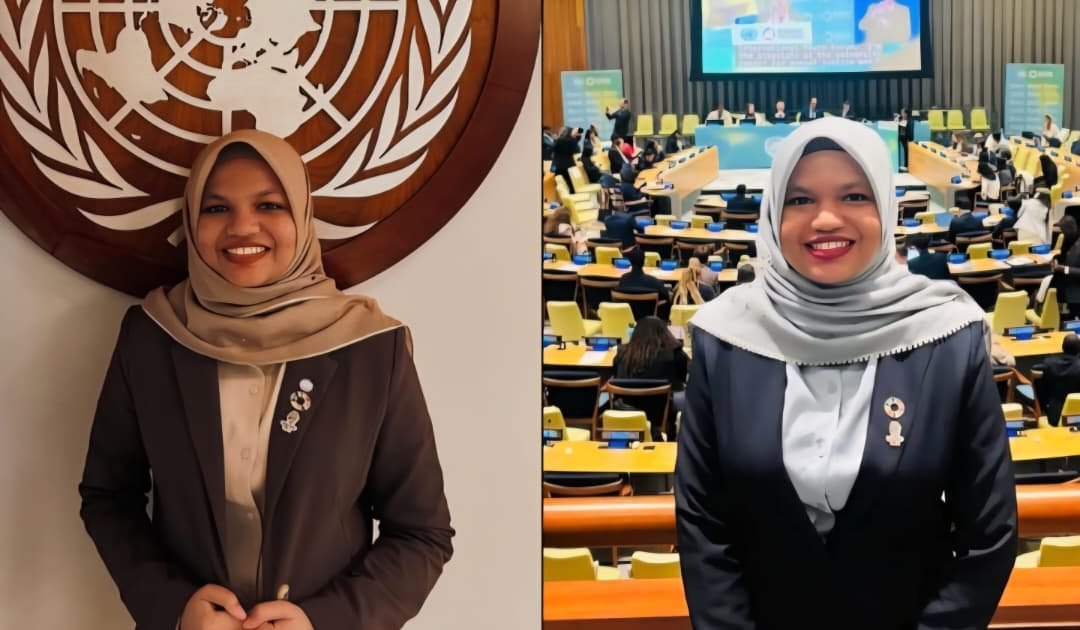
When I wrote about Shameera Nasreen’s appointment, I framed the backlash as a question of identity—whether an Indian Muslim could represent the Indian community.
Many who responded disagreed with that framing.
They argued that the issue was not about her tudung, her religion, or her identity, but about something more specific: lived experience, structural inequality, and credibility in representation.
That distinction matters. And it deserves to be taken seriously.
Because they are not wrong about one thing, in Malaysia, religion is not neutral.
It shapes access. It influences how institutions respond to you. It can open doors for some, and close them for others.
So when some say that an Indian Muslim may not experience the same structural challenges as non-Muslim Indians, they are pointing to a real and uncomfortable truth about this country.
Ignoring that would be dishonest.
But acknowledging that truth brings us to a more difficult question—one that goes beyond one individual.
If representation must be grounded primarily in shared lived experience, then where do we draw the line?
Must a representative have experienced every form of discrimination faced by the community they speak for?
Must they speak the same language, practise the same religion, come from the same socio-economic background?
And if they do not, does that automatically disqualify them?
Because if that is the standard, then representation becomes something much narrower than we might intend.
It becomes less about capacity, advocacy, and responsibility, and more about perfect identity alignment.
And that is where the tension lies.
Redefining representation
Some of the concerns raised were not about identity at all, but about track record—whether there is visible, consistent engagement with the issues affecting Indian youth.
That is a fair question.
Representation should not be symbolic. It should not be performative. And it should not be detached from the realities of the community it claims to speak for.
If there is a lack of visibility, then asking for clarity is not an attack, it is accountability.
But we must also be careful not to let that question quietly shift into something else.
Because woven into some of the responses is another idea—less explicit, but present. That certain identities, by default, cannot fully understand or represent others. That there are boundaries which cannot be crossed. That some experiences are so distinct, they cannot be bridged.
This is not an unreasonable feeling. It comes from history, from pain, from unequal systems that have yet to be resolved.
But if we accept that idea fully, we also need to confront where it leads.
It means representation becomes fragmented. It means trust becomes conditional. It means we begin to see leadership not as a role of responsibility, but as a mirror of identity.
And perhaps most importantly, it means we risk losing the possibility that people can stand for others beyond themselves.
The question, then, is not whether lived experience matters.
It does.
The question is whether it is the only thing that matters.
Because if it is, then we are not just debating one individual.
We are redefining what representation itself means.
When being “Indian” is not enough
If lived experience is the primary requirement for representation, then we need to ask, how far do we take that standard?
Can a fair-skinned Indian represent a darker-skinned Indian, when colourism shapes lived experience so differently?
Can a wealthy, privately educated Indian speak for someone who grew up navigating underfunded schools and economic hardship?
Even within the same community, experiences are not uniform. They are shaped by class, language, geography, education, and yes, sometimes by how one is perceived physically.
If we begin to say that being “Indian” is not enough to represent the Indian community because experiences differ, then we must also accept the implication that no one will ever be “enough.”
And perhaps that is where this conversation becomes less about accountability and more about exclusion.
Because at some point, the line stops being about ensuring good representation, and starts becoming a test of belonging.
And I say this not just as an observer, but personally.
As an Indian Muslim, this conversation has forced me to confront an uncomfortable feeling—that I may not be seen as “enough” to belong to a community I have always regarded as my own.
At what point does protecting representation begin to narrow it so much that we start excluding our own?
Fa Abdul (fa.abdul.penang@gmail.com) is a content creator under the Newswav Creator programme, where you get to express yourself, be a citizen journalist, and at the same time monetize your content & reach millions of users on Newswav. Log in to creator.newswav.com and become a Newswav Creator now!
The User Content (as defined on Newswav Terms of Use) above including the views expressed and media (pictures, videos, citations etc) were submitted & posted by the author. Newswav is solely an aggregation platform that hosts the User Content. If you have any questions about the content, copyright or other issues of the work, please contact creator@newswav.com.
