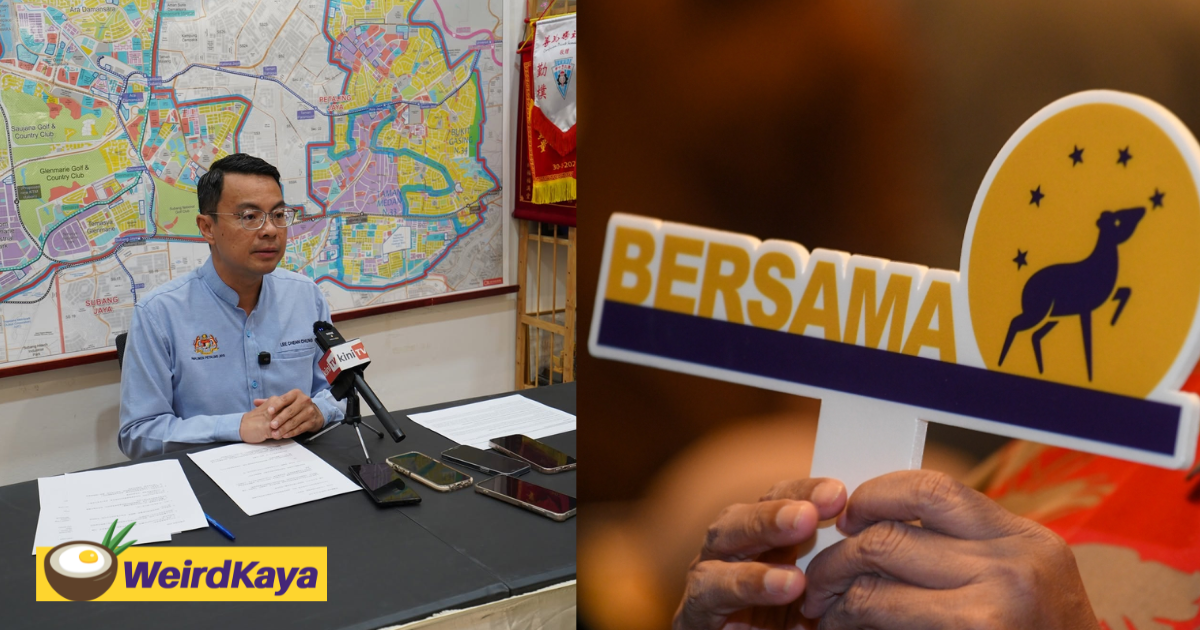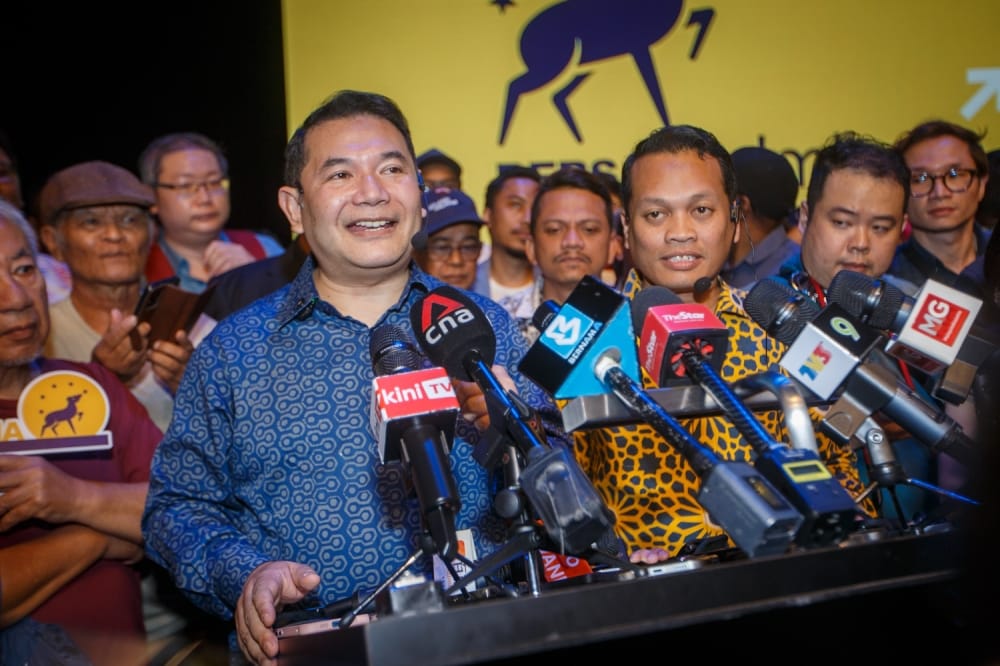
First it was Rafizi, then Nik Nazmi, followed by Wong Chen. Now Lee Chean Chung has taken the plunge. So who will be next to jump off the beleaguered PKR ship?
In the latest twist to the PKR saga, Lee Chean Chung, the party's former Petaling Jaya MP, has officially joined Rafizi Ramli’s Bersama as the latter prepares to campaign in the upcoming Melaka state election—reportedly focused on building machinery in Chinese-majority seats.
Lee, who previously shot to prominence over Selangor's controversial non-Muslim places of worship guidelines and the 30% mandatory Bumiputera tuition center policy, has vowed to help end “dinosaur politics” in Malaysia.
But in realpolitik, is it really that simple to dismantle entrenched mindsets?
After all, just a few months ago, Bersama went into the Johor state polls with guns blazing, confident that it could lay down a marker there.
But what was the outcome?
It lost all 15 seats it contested, with every single candidate losing their deposit. For all its noble reformist intentions, the party fell well short of achieving its goal.
As it turned out, critics blamed the nascent party for splitting votes in tight contests like Perling and Bukit Batu, where PH suffered unexpected losses. In these two seats, it appeared that Bersama had effectively handed Barisan Nasional an unexpected victory on a gold platter.
Shell-shocked, it then wisely opted not to contest in the subsequent Negeri Sembilan state elections. Perhaps it had learned a bitter lesson from that setback.
Probably, one of the lessons it had learned was that Rafizi's brand name alone may not be enough to convince voters to abandon established parties and switch their allegiance to a new party.
The reality is that it is never easy to dislodge the deeply entrenched political culture in this country. Still, undaunted, a re-energised Rafizi and his gang are now ready to come back with a bang.
Saviours or suicide bombers?
It would appear that they are now looking to the future and are believed to be setting their sights even higher—declaring plans to contest all parliamentary and state seats in Selangor with the goal of forming the next state government.
However, skeptics are sure to question whether such a lofty goal is even remotely achievable—especially when the party is running on its own without entering into any political pacts with other parties.
The thing is, as much as many admire Rafizi and Bersama for boldly declaring war on old-guard “dinosaur politics,” what if the venture turns out to be a suicide mission with PH ending up as major collateral damage—and Selangor permanently lost? The consequences are simply unimaginable for the wealthy, multiracial state.
The fact is, despite Bersama's admirable efforts, it does not possess the deep-rooted grassroots machinery and loyal support of other established parties such as UMNO, PAS, PKR, or even DAP.
Furthermore, given that its appeal may be limited to reform-minded Malays and non-Malays in urban and semi-urban areas, frankly, what are the chances its high-stakes gamble will bear fruit?
There is actually a genuine fear that it could only end up splitting the PH vote—handing Selangor to BN and PAS. Surely Rafizi and his generals are aware of this.
That brings us to the ultimate question: So who exactly is Bersama's greatest foe then? Is it BN, PN, or PH?
If the answer is PH, then cannibalizing the latter's urban strongholds could lead to Bersama being branded as spoilers—even traitors—by many non-Malay voters who still look to PH as their saviour.
The truth is, although many non-Malays may have warmed up to Rafizi's party, there are just as many, or even more, who see it as potential disruptors.
In that regard, shouldn't Bersama target Malay-majority, semi-urban, or suburban seats held by PKR and right-wing parties such as UMNO and PAS instead?
This is because by challenging PH—especially DAP—in multi-ethnic urban seats, it is likely to open the floodgates wide for nationalist and Islamist blocs to benefit from vote splitting.
What's more, in multi-cornered fights, there is no guarantee that even its own heavyweights like Rafizi or Nik Nazmi can win back their parliamentary seats.
As such, should Bersama insist on shutting the door on working with other reformist parties, chances are that it could suffer the same fate as it did in Johor.
Could Pakatan Harapan one day become "Pakatan Bersama"—with Anwar and PKR out of the equation?
After all, DAP had recently signalled flexibility over its long-term coalition plans. So, rather than going solo and splitting reformist votes, will Bersama be more open to strategic pacts with like-minded parties before it's too late?
In closing, many Pakatan Harapan supporters and neutrals will be hoping that Bersama considers an electoral understanding with parties such as DAP. The goal? To prevent UMNO and PAS from taking over Selangor—and eventually Putrajaya—by default.
If that happens, it may be too late to stop “dinosaur politics” from reigning supreme in this land for years to come.
Main information source: Malaysiakini, FMT and The Edge Malaysia.
JK Joseph (jtkingsworld@gmail.com) is a content creator under the Newswav Creator programme, where you get to express yourself, be a citizen journalist, and at the same time monetize your content & reach millions of users on Newswav. Log in to creator.newswav.com and become a Newswav Creator now!
The User Content (as defined on Newswav Terms of Use) above including the views expressed and media (pictures, videos, citations etc) were submitted & posted by the author. Newswav is solely an aggregation platform that hosts the User Content. If you have any questions about the content, copyright or other issues of the work, please contact creator@newswav.com.