
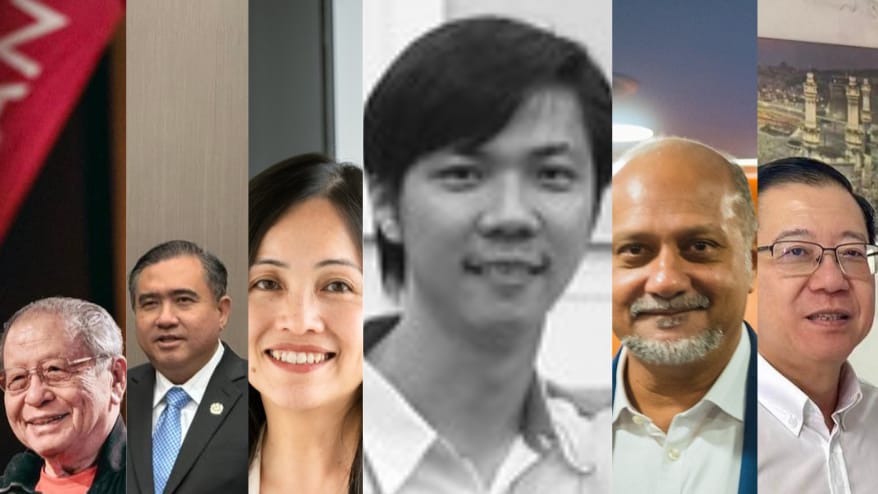
A man walked into a government office and 17 years later, the truth still hasn’t walked out.
Seventeen years.
That is how long a family has waited since a young man walked into Plaza Masalam and never walked out alive.
Time has moved. Governments have changed. Coalitions have risen, collapsed, and risen again. But for Teoh Beng Hock’s family, time has not healed. It has hardened.
Because silence, when stretched this long, is no longer delay.
It is betrayal.
Back then, voices thundered. Leaders marched. Lawyers spoke of justice with fire in their eyes. The name Teoh Beng Hock was not just a tragedy it was a rallying cry.
Today, those same voices sit in power.
And the silence is louder than anything they once shouted.
The family says they were used. Used to build momentum. Used to build narratives. Used to win elections. And when power finally arrived they were discarded.
That is not opposition talk.
That is public sentiment.
A 30-second bow was offered. Cameras flashed. Statements were issued.
But for many Malaysians, that bow felt less like remorse and more like performance.
A gesture without consequence.
A moment without meaning.
A mockery of justice.
Seventeen years on, the case drifts toward “No Further Action.”
Three words.
Enough to close files.
Not enough to close wounds.
And now comes the bitter irony lawyers linked to the same political family that once championed Teoh Beng Hock are now forced to challenge a government that includes them.
This is no longer just a legal struggle.
It is a crisis of credibility.
What changed?
Was justice only urgent when it was politically useful?
Or is power the place where promises go to rest?
The people are watching.
And elections are coming.
GE16 will not be fought only on slogans or speeches.
It will be fought on memory.
Seventeen years of it.
Voters don’t need new promises. They have an old case and 17 years of answers that never came.
The DAP Dilemma: Power, Promise, and Political Will
When a party built on justice must sue its own government to find it, something has already broken.
The latest judicial review in the Teoh Beng Hock case has reopened more than a legal file.
It has reopened a political wound.
At its centre is a dilemma that the Democratic Action Party cannot easily escape.
DAP rose on a platform of accountability. It built credibility by challenging institutional failure. It turned cases like Teoh Beng Hock into symbols of reform.
But power changes the equation.
Today, DAP is no longer an outsider demanding answers.
It is part of the government expected to provide them.
And that is where the contradiction begins.
Public perception is shifting from defender of justice to beneficiary of silence.
Comments across the ground suggest a growing belief that the case was politically amplified when convenient, only to be quietly managed once inside the cabinet.
Whether fair or not, perception is politics.
And perception is hardening.
The legal situation itself borders on absurdity.
A judicial review is now being filed against a government that includes leaders from the same political bloc that once led the charge for justice.
It raises a simple but uncomfortable question:
Where is the political will?
Institutional failure alone cannot explain a 17-year delay.
At some point, delay becomes decision.
And in the absence of decisive action, gestures begin to look hollow.
The 30-second bow, intended as respect, is now read by critics as symbolism without substance.
A public relations moment in place of prosecutorial resolve.
A mockery of justice.
With GE16 approaching, this issue will not disappear.
Opponents will not need to invent narratives.
They will simply point to what has not been done.
And ask voters a question that cuts deeper than policy:
If a party cannot deliver justice on the case that defined its rise, what else will it fail to deliver?
Power didn’t erase the case. It exposed the distance between slogans and action.
What Faith Defends Silence?
A civil government that cannot account for a death in its own house is defending something but it isn’t justice.
A government that calls itself Madani speaks of values.
Of humanity.
Of justice.
Of moral responsibility.
But what does it mean when a man dies inside a state institution and 17 years later, no clear accountability is delivered?
What faith defends that silence?
Teoh Beng Hock died in a place meant to uphold integrity within the premises of MACC at Plaza Masalam.
That fact alone should have demanded urgency.
Instead, it produced delay.
And now, fatigue.
The public has said it clearly: truth is more important than money.
No amount of compensation replaces accountability.
No gesture replaces responsibility.
No apology replaces truth.
This is no longer just a legal matter.
It is a moral one.
And it reaches the highest levels of leadership.
Why has this not been resolved at the Cabinet level?
Why has a closed-door meeting not delivered clarity after 17 years?
Why must the family continue to fight for what should have been established long ago?
These are not opposition questions.
They are national questions.
And they demand national answers.
As the May 18 court hearing approaches, the country faces a choice.
To continue managing the past.
Or to finally confront it.
A nation that calls itself civil must decide: protect its image or tell the truth.
Annan Vaithegi writes what some fear to whisper.
(This op-ed follows from “Remembering Teoh Beng Hock: From Political Aide to Symbol of Justice Denied,”, "We Don't Want Compensation - We Want Accountability”: Teoh Beng Hock’s Family Stands Firm 16 Years On, DAP Leaders and the Legacy of Teoh Beng Hock: From Protest to Power and 5,840 Days Later: Teoh Beng Hock, Indira Gandhi, and the Silence That Failed Them continuing the reflection on how a young man’s death became a national reckoning for truth, power, and conscience.)
Annan Vaithegi (annanvaithegi@icloud.com) is a content creator under the Newswav Creator programme, where you get to express yourself, be a citizen journalist, and at the same time monetize your content & reach millions of users on Newswav. Log in to creator.newswav.com and become a Newswav Creator now!
The User Content (as defined on Newswav Terms of Use) above including the views expressed and media (pictures, videos, citations etc) were submitted & posted by the author. Newswav is solely an aggregation platform that hosts the User Content. If you have any questions about the content, copyright or other issues of the work, please contact creator@newswav.com.